
BRICS summit, sans Putin and Xi, condemns tariffs; Trump fires back
Key BRICS leaders were absent from the group’s annual summit in Rio de Janeiro but still issued sharp rebuke of U.S. tariffs and U.S.-Israel military actions against Iran.
Previously, Trump…
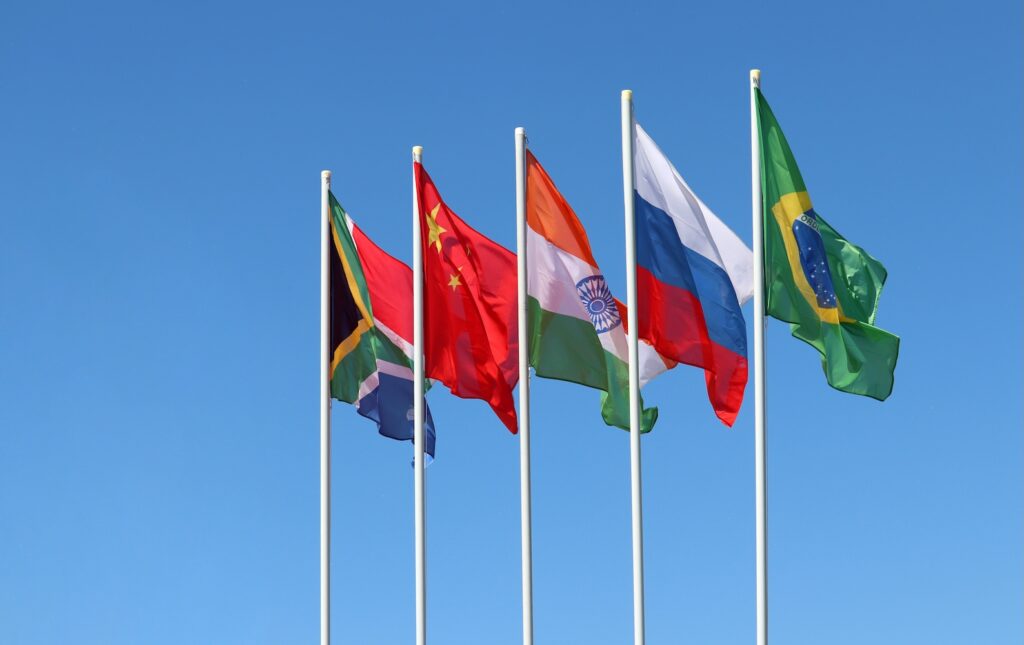
Key BRICS leaders were absent from the group’s annual summit in Rio de Janeiro but still issued sharp rebuke of U.S. tariffs and U.S.-Israel military actions against Iran.
Previously, Trump warned the Chinese- and Russian-led economic group that countries attacking the U.S. dollar as the global reserve currency would face 100% tariffs from the U.S.
BRICS countries have publicly floated the idea of creating their own alternative global reserve currency to attack the U.S.
Missing from this year’s summit are China’s Communist Party General Secretary Xi Jinping, Russian President Vladimir Putin and Iranian President Masoud Pezeshkian.
The Associated Press (AP) reports it’s the first time China’s Xi has missed the annual economic summit since he took power in 2012.
Some have speculated China’s strongman is missing because of economic dissent at home. Others have said that China is trying to deemphasize the importance of the group amidst trade ruffles with Trump.
The AP noted Russian President Vladimir Putin is avoiding travel outside of Russia because of an international arrest warrant relating to his illegal invasion of Ukraine.
Iran sent its foreign secretary in place of the president, after Israel and the U.S. unleashed devastating attacks against Iran’s military infrastructure and leadership.
Still, the 31-page BRICS statement condemned Trump’s imposition of tariffs on their regimes, while neglecting to mention the group’s own anti-competitive tariff system meant to lock the U.S. out of their markets.
“We voice serious concerns about the rise of unilateral tariff and non-tariff measures which distort trade and are inconsistent with WTO rules,” said the statement, noting a key principle of “free trade” under WTO (World Trade Organization) rules is “special and differential treatment (S&DT) for its developing members.”
Under the rule, the BRICS nations get to impose unequal tariffs on U.S. goods, locking America out of foreign markets and generally profiting from an open U.S. economy.
Since taking office for his second term, President Trump has focused on reshaping global trade by imposing reciprocal tariffs on allies and adversaries, fulfilling a key campaign promise. In June 2016, he vowed to end the “trade war against American workers” caused by unequal free trade agreements.
In that speech, Trump singled out China, but he might’ve been talking about all of the BRICS nations.
“If China does not stop its illegal activities, including its theft of American trade secrets, I will use every lawful – this is very easy, this is so easy… I will use every lawful presidential power to remedy trade disputes,” Trump said.
Trump noted that for every dollar of trade deficit, a dollar is subtracted from the country’s gross domestic product.
The BRICS summit statement this year also condemned the U.S. attack on Iran’s nuclear facilities launched last month, which they claim, “constitutes a violation of international law and the Charter of the United Nations.”
“We further express serious concern over deliberate attacks on civilian infrastructure and peaceful nuclear facilities under full safeguards of the International Atomic Energy Agency (IAEA), in violation of international law and relevant resolutions of the IAEA.”
The statement also included wording that closely resembled democracy, equality and inclusiveness language from the Democrat party, and a few questionable claims about the group’s own peace policies.
“We reaffirm our commitment to the BRICS spirit of mutual respect and understanding, sovereign equality, solidarity, democracy, openness, inclusiveness, collaboration and consensus,” said paragraph number two of the Rio de Janeiro declaration.
Paragraphs 24 through 29 broadly condemned Israel’s attack on Hamas and subsequent Israeli operations against Iran in degrading the development of Iranian nuclear weapons.
Russia’s war against Ukraine is mentioned just once, noting peace negotiations should be dealt with in the “appropriate fora” such as the United Nations or the African Peace Initiative, a coalition led by a number of African nations, such as South Africa, Senegal, Zambia, Comoros, Congo-Brazzaville, Egypt, and Uganda, each beset by domestic problems or war.
“We underscore that security among all countries is indivisible and reiterate our commitment to the peaceful resolution of international disputes through dialogue, consultation and diplomacy,” said the BRICS statement. “We encourage the active role of regional organizations in conflict prevention and resolution and support all efforts conducive to the peaceful settlement of crises.”
Shortly after the statement was issued, Trump threatened increased tariffs for any countries aligned with BRICS: “Any Country aligning themselves with the Anti-American policies of BRICS, will be charged an ADDITIONAL 10% Tariff. There will be no exceptions to this policy. Thank you for your attention to this matter!”


