
‘A problem no one can seem to solve’: Summing up the public-school math education crisis
Despite getting good grades in the 2024-25 academic year, Ebony Coleman’s daughter knew she needed help in math.
“When my daughter was in eighth grade, she told me she was probably going…
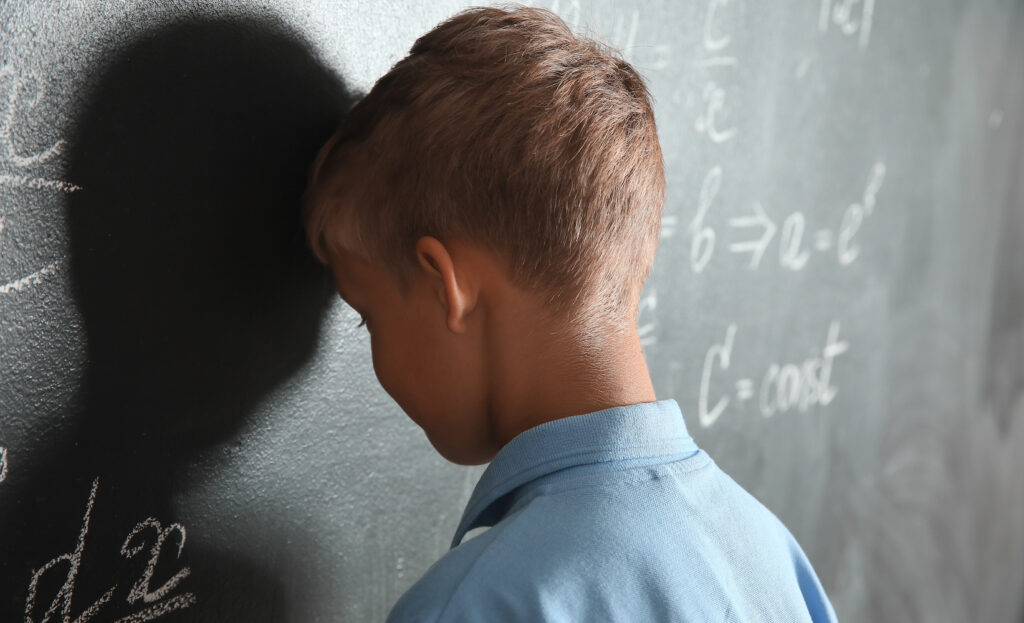
Despite getting good grades in the 2024-25 academic year, Ebony Coleman’s daughter knew she needed help in math.
“When my daughter was in eighth grade, she told me she was probably going to drop out of school,” the Midland, Texas, mom told Christianity Today, noting her daughter reached out to her directly after she couldn’t understand her math class.
This disclosure inspired Coleman to found the parent advocacy group JumpStart Midland, which aims to address locally what the outlet’s writer, Carrie McKean, calls “a problem no one can seem to solve” – creating math literacy for the majority of U.S. students.
“We’re kind of at a crisis as far as where our kids are at in math,” said Dr. Matt Friez, a board member at Midland Independent School District (MISD) and physician. “By the time you get to junior high, 60 to 70 percent of our kids in all our junior highs are two-plus years behind in math. That is just completely unacceptable.”
‘The problem starts in the early grades’
This crisis is playing out not just in Midland, but across the nation, McKean warns.
“According to the National Assessment of Educational Progress (NAEP), which has been tracking student performance since 1990, fourth and eighth grade math scores peaked nationally in 2013. After that, scores modestly declined across the country until the (COVID-19) pandemic—and then plummeted.”
The post-pandemic years haven’t done much to alter the downward trend, according to the article.
“Only 6 percent of children enrolled in American schools tracked by NAEP attend schools that have recovered pre-pandemic levels of mastery in reading and math, with high-income districts being nearly four times more likely to recover than low-income districts.”
Much of the understanding gaps begin to manifest in middle school.
“The problem starts in the early grades, but it shows up in the later grades because you need those building blocks in order to be successful,” Coleman said. “But these days teachers don’t usually tell you that your kid is failing. They just pass them along.”
As a result, Coleman’s daughter lacked the skills to convert fractions into percentages or even read an analog clock by eighth grade, McKean writes.
“I feel like if things weren’t sugar-coated back in elementary – if those teachers had really told me that my child was not doing well – things might have been different,” Coleman said. “Maybe the gap wouldn’t have gotten so big.”
‘Understanding what is broken’
Part of the conundrum revolves around “understanding what is broken,” McKean explains – ranging from lower working memory in students to grade inflation in schools.
“Neuroscientists see alarming trends that indicate Gen Z is ‘less cognitively capable’ than previous generations, with dips in executive functioning abilities and lower working memory,” she writes in the second article of her series.
“These difficulties correlate with growing up in a highly digital age where information like phone numbers, addresses, and multiplication tables is always at our fingertips and therefore doesn’t need to be mentally stored, processed, and recalled.”
Meanwhile, modern teaching caters to this trend by emphasizing technological tools instead of memory recall, according to McKean.
“The last decade of educational practices, instead of pushing against this pattern, have only exacerbated it as school-issued screens have become the norm. And building mental skills is like building muscles: Without practice, we lose capacity.”
Educators also cite changing classroom dynamics with more student misbehavior after the COVID-19 pandemic.
“Multiple teachers talked with me about the difficulty of getting through a lesson when just one or two students are disruptive,” McKean observes.
“Even low-level behavior problems that don’t merit classroom expulsion can derail a teacher’s ability to deliver quality instruction, and until recently, many districts moved away from firm discipline even as student misbehavior increased post-pandemic.”
Children who have low English literacy – whether it is due to bilingual households or other factors – carry this struggle into their math lessons, she writes.
“Kids who don’t speak English fluently … struggle to understand math instruction in an English-only classroom. Low literacy, including among native English speakers, creates a similar hurdle. If students can’t read and understand a word problem, how can they solve it?”
Finally, McKean highlights the increasing pressure for districts to “teach for the test” to maximize funding-related opportunities.
“This often looks like introducing new concepts more rapidly than students can handle, rushing on to a new topic before children master the first.”
A related issue involves “an often-unrecognized philosophical shift in math instruction driven by novel guidance from influential experts and authorities,” according to McKean.
“With the advent of the controversial Common Core instructional standards, which was broadly introduced around the same time national math performance peaked, instructional emphasis moved from ‘drill and kill’ fluency practice to building conceptual understanding.”
Unfortunately, this caused students to lose focus on basic math skills.
“Classroom time is increasingly given over to complex discussions of math concepts, while fundamental math fluency is neglected,” McKean explains, noting many of these students were stumped by something as simple as multiplying 12 by 12 in their heads.
“Grade inflation can ensure students make it to graduation day. But with all these forces shaping their daily instruction and classroom experience, it can’t make them competent and confident in math.”
‘Focus on the fundamentals’
Before the math crisis can be addressed, McKean believes we first need to acknowledge the problem at a household-by-household level.
“The first step is honesty,” she writes in her third article, recalling how Ebony Coleman asked over 100 parents how they thought their children were performing academically.
“She found that only 20 percent of parents thought their children were below grade level in math. In reality, district statistics suggest that upwards of 60 percent are falling behind.”
The next step is “to focus on the fundamentals” such as handwritten computation and direct instruction.
“The teachers I spoke with told me they want to see more paper and pencils and fewer Chromebooks in math classrooms, to see their fellow teachers get out from behind their desks and roam the classes, actively monitoring student work and catching computation errors in real time,” McKean notes.
“Similarly, parents and students alike want to reduce reliance on video lessons and digital tools and increase high-quality direct instruction.”
Finally, math drills should make a comeback in classrooms, she argues.
“All my sources agreed we must bring back rote memorization of basic math facts like the multiplication tables and other commonly used patterns, like the correlation between common fractions and percentages.”
While this may begin as “a difficult conversation for all of us,” McKean concludes it’s “undeniably necessary.”
“Given the challenges of the political nature of public education, and the fact that we have so many students far behind, it is essential that we operate in the sphere of truth and grace,” Dr. Matt Friez said.
“We must recognize and acknowledge the truth – but just as God gives us all grace when we didn’t earn it or deserve it, we need to extend that same grace to teachers, students, administrators, parents, extended families, board trustees, and everyone when we discuss truths that might not always be pleasant.”