Trump admin lists microplastics and pharmaceuticals as possible threats to US drinking water
The Trump administration announced Thursday an initial step to research microplastics and pharmaceuticals as priority threats to drinking water.
The Department of Health and Human Services…
The Trump administration announced Thursday an initial step to research microplastics and pharmaceuticals as priority threats to drinking water.
The Department of Health and Human Services (DHS) and the Environmental Protection Agency (EPA) officials say the EPA’s Sixth Contaminate Candidate List (CCL 6) draft includes microplastics as well as pharmaceuticals such as antidepressants and other drugs that enter water systems.
HHS also announced Thursday the “groundbreaking” launch of a $144 million program to target microplastics in the human body – dubbed Systematic Targeting Of MicroPlastics (STOMP).
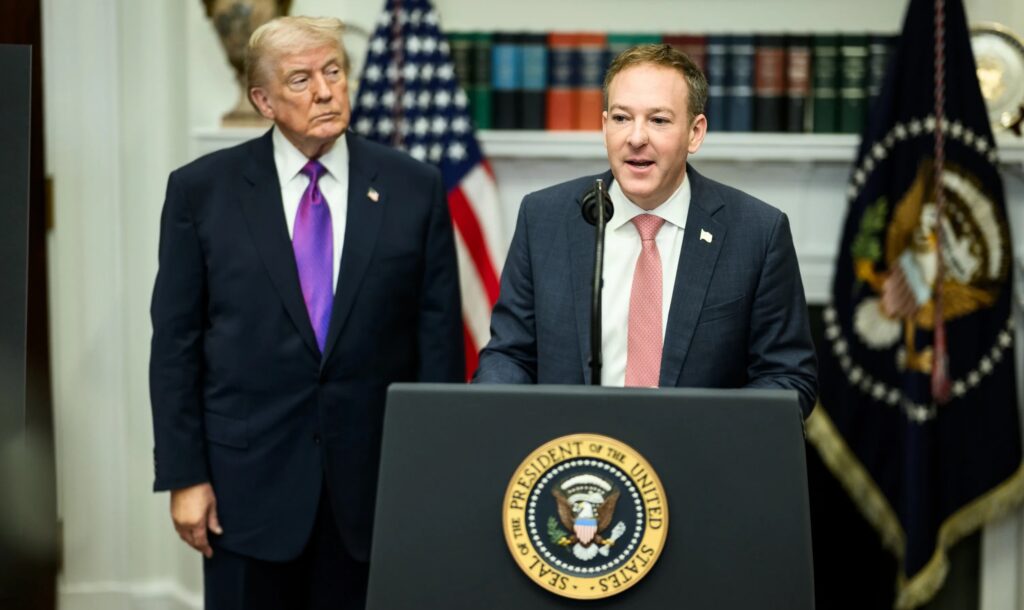
HHS Secretary Robert F. Kennedy Jr. and EPA Administrator Lee Zeldin announced the moves from the EPA headquarters, where The Lion was present. The EPA branded the CCL 6 draft as a “historic step for the Make America Healthy Again (MAHA) movement.”
“For too long, Americans have vocalized concerns about plastics and pharmaceuticals in their drinking water. That ends today,” Zeldin said in a statement Thursday. “By placing microplastics and pharmaceuticals on the Contaminant Candidate List for the first time ever, EPA is sending a clear message: we will follow the science, we will pursue answers, and we will hold ourselves to the highest standards to protect the health of every American family.”
Per-and polyfluoroalkyl substances (PFAS), disinfection byproducts, 75 chemicals and nine microbes that can be found in drinking water are also on the draft list, according to the EPA.
The draft will be available for public comment for 60 days, and the EPA will consult its independent Science Advisory Board before finalizing the list, according to the agency.
“We want your input,” Zeldin said Thursday.
The CCL “helps prioritize funding, research, and information collection to better understand the potential health risks of these substances in drinking water while advancing the agency’s commitment to gold standard science,” according to the EPA.
“Today, we mark a turning point,” Kennedy said Thursday, noting that “we can’t regulate what we can’t understand [and that] … we aren’t going to speculate, we are going to measure … to give the American people clear answers.”
The EPA is also releasing “human health benchmarks” for 374 pharmaceuticals to give states and localities a “critical new tool to assess risk and take action,” though the benchmarks “are not enforceable regulations and are not enforceable on their own,” the agency said Thursday.
Microplastics are “tiny plastic particles that have been detected in human blood, breast milk, and organs,” the EPA noted.
“Microplastics are in every organ we look at – in ourselves and in our children. But we don’t know which ones are harmful or how to remove them,” HHS’ Advanced Research Projects Agency for Health Director Alicia Jackson said Thursday. “Nobody wants unknown particles accumulating in their body. The field is working in the dark. STOMP is turning on the lights.”
Notably, Oklahoma Rep. Josh Brecheen and Sen. James Lankford and 20 cosigners asked Zeldin to probe the full effects of the chemical abortion drug mifepristone on June 18, 2025, specifically on its potential contaminant impact on America’s water supply.
“For the purposes of the draft CCL 6, the EPA considers pharmaceuticals to include any substances defined as a “drug” under the Federal Food, Drug, And Cosmetic Act of 1938,” the pre-publication CCL 6 draft reads.
Photo credit: The White House