Allegations of fraud, false statements, money laundering in Southern Poverty Law Center case
A federal grand jury has indicted the Southern Poverty Law Center, alleging it secretly funneled more than $3 million to individuals tied to domestic terror…
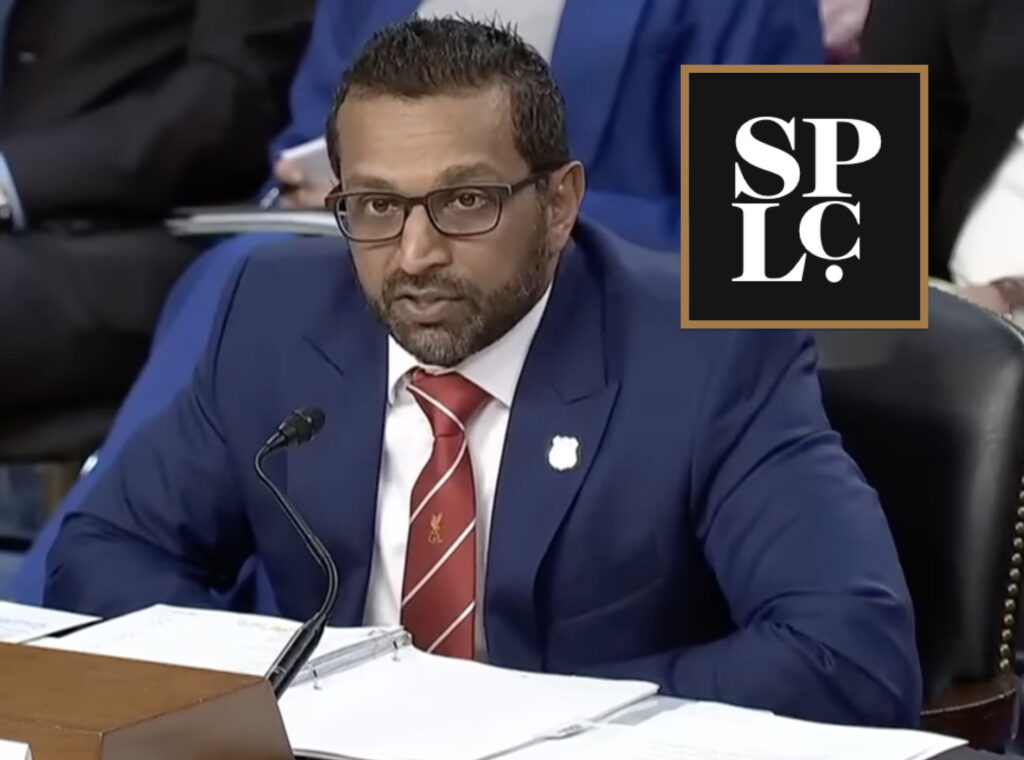
A federal grand jury has indicted the Southern Poverty Law Center, alleging it secretly funneled more than $3 million to individuals tied to domestic terror groups from 2014 to 2023.
The indictment charges the Alabama-based organization with wire fraud, false statements to a federally insured bank and conspiracy to conceal money laundering.
Prosecutors allege the nonprofit crossed the line from paying for information to criminal conduct, including aiding and abetting illegal acts.
According to the indictment, a federal grand jury found probable cause that the SPLC funneled donor funds to individuals affiliated with violent white supremacist and extremist organizations over nearly a decade.
“Donors were not told that some of the donated funds were to be used by the SPLC to pay high-level leaders of violent extremist groups and others,” notes the charging document, “nor were donors ever told that some of the donated funds were used for the benefit of the violent extremist groups or that some of the donated funds would be used in the commission of state and federal crimes.”
The conduct described spans 2014 through at least 2023, suggesting the alleged activity was a sustained institutional practice, not an isolated lapse.
The SPLC accumulated an endowment of approximately $738 million during the same period, according to its most recent IRS filings, as previously reported by the Daily Signal.
Simultaneously the non-profit has parked more than $30 million in offshore accounts in the Caribbean, a financial arrangement that predates reporting requirements.
According to the grand jury, in 2014 an SPLC informant, who was subsequently “secretly paid … more than $1,000,000.00” over a decade, broke into the headquarters of a violent extremist group and stole 25 boxes of documents.
A high-level SPLC employee then coordinated payment for copying those stolen materials with full knowledge of their origin.
The original documents were returned to the extremist group via a second illegal entry by the informant.
The SPLC subsequently published a story on its website based in part on the stolen material, while a separate informant was then paid approximately $6,000 to falsely claim responsibility for the theft.
To conceal the nature of the transactions, SPLC used fictitious accounts designed to obscure their origin.
Money allegedly flowed from SPLC accounts into shell accounts, then across multiple intermediaries before reaching informants.
In some cases, funds were reportedly loaded onto prepaid cards issued under fictitious employment identities.
After a bank investigation in 2020 forced closure of some accounts, prosecutors say the organization shifted to masked electronic transfers labeled to conceal their purpose, further demonstrating the guilty knowledge of SPLC.
Critically, the indictment notes that in September 2021, the SPLC’s own president, chief executive officer and board chair admitted in writing to the bank that the fictitious accounts had been opened for the benefit of SPLC.
That admission, if proven in court, points directly to knowledge and intent, two of the most critical elements in fraud and money laundering cases.
The admission also points to the probability that a suspicious activity report was mandatorily generated by the bank because of the discrepancies, which may explain how the investigation started.
Another informant who was paid over $270,000 from 2015 to 2023 was part of the leadership group behind the controversial 2017 Unite the Right rally.
That individual made racist posts and helped coordinate travel to the rally which ended in violence and served as a cultural flash point with critics on the right and left blaming each other for the violence.
During this same time, an officer in both the National Socialist Movement and an Aryan Nations affiliated motorcycle club received more than $300,000 from SPLC, according to the indictment. And the former chairman of the National Alliance received more than $140,000 during a period that overlapped with his being featured on the SPLC’s own Extremist File webpage. SPLC was simultaneously soliciting donations to stop him, the government noted.
The irony is that the payments didn’t prevent SPLC from sending Chief of Staff Lecia Brooks to testify before Congress in 2019 about stopping some of the practices of which the SPLC itself stands accused.
She cited the Unite the Right rally while demanding online financial transparency, warning government power could be “wielded to surveil and investigate communities of color and political opponents in the name of national security,” even as her organization was allegedly running the operation the indictment now describes.
No individuals have been named as defendants at this stage, a detail that could be significant.
Indictments targeting organizations rather than specific individuals typically signal that prosecutors are still building cases against the people who ran the operation or are in active negotiations with potential cooperating witnesses.
Currently the government is asking for forfeiture of assets tied to the fraud, which could effectively shutter SPLC operations and eventually entangle individuals connected to the indictment.
The charges carry serious penalties for potential defendants.
Wire fraud carries a maximum sentence of up to 20 years per count, while false statements to a federally insured bank can carry up to 30 years. The money laundering conspiracy charge carries up to 20 years.