‘Adapt, shrink or die,’ Trump admin tells UN after $2 billion humanitarian aid pledge
President Donald Trump announced the U.S. will commit $2 billion in humanitarian assistance to the United Nations, a sharp reduction from previous U.S….
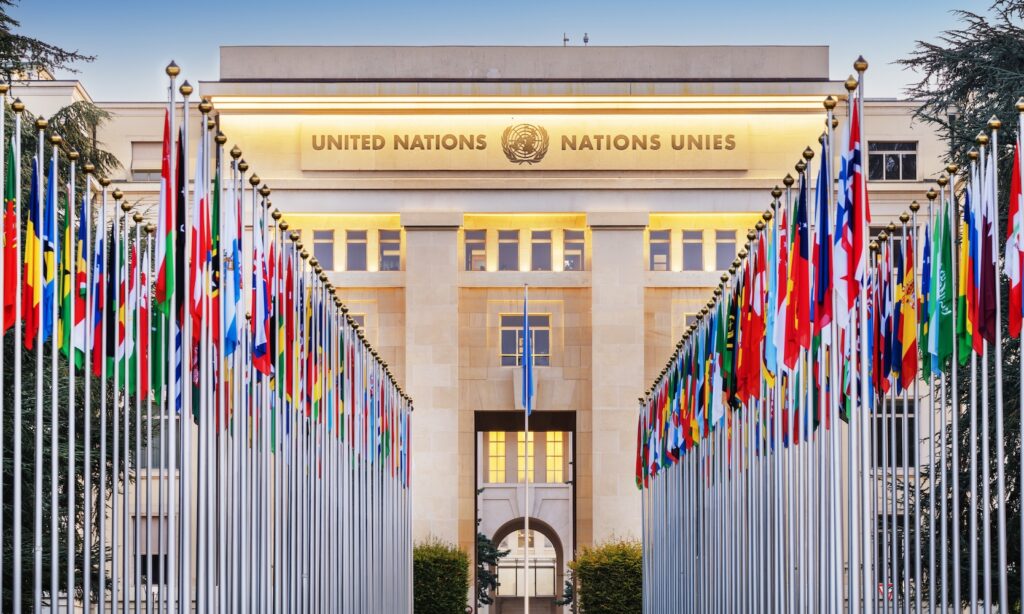
President Donald Trump announced the U.S. will commit $2 billion in humanitarian assistance to the United Nations, a sharp reduction from previous U.S. contributions.
The administration said the amount – $12 billion less than 2024 but still among the most generous – reflects a recalibration rather than a withdrawal from global aid.
“This humanitarian reset at the United Nations should deliver more aid with fewer tax dollars – providing more focused, results-driven assistance aligned with U.S foreign policy,” said U.S. Ambassador to the U.N. Michael Waltz, according to the Associated Press (AP).
The Trump administration has signaled the reduction is tied to longstanding concerns about politicization, lack of accountability and corruption within the U.N.
U.S. officials argue American taxpayers should not be expected to underwrite programs or agencies whose activities conflict with American foreign-policy objectives, American values or represent widespread fraud.
“The agreement requires the U.N. to consolidate humanitarian functions to reduce bureaucratic overhead, unnecessary duplication, and ideological creep,” the State Department said in a statement published by the AP. “Individual U.N. agencies will need to adapt, shrink or die.”
Concerns the U.N. doesn’t share U.S. priorities have sharpened in recent years as some U.N. officials and bodies have taken public positions sharply critical of the U.S.
One frequently cited example is commentary by U.N. Special Rapporteur for Human Rights Francesca Albanese.
Her public statements have drawn bipartisan criticism in Washington for what critics describe as ideological advocacy against U.S. policy on Israel rather than neutral human-rights monitoring.
“The international community is made up of 193 states, and this is the time to give the U.S. what it has been looking for: isolation,” Albanese said in comments shared widely on social media.
Albanese was lashing out about Trump’s retooling of the State Department to follow an America First foreign policy, rallying other countries to give Trump the cold shoulder.
Supporters of the Trump administration’s new approach argue the $2 billion pledge to humanitarian assistance shouldn’t be viewed in isolation.
The administration has proposed rebalancing to make sure more aid gets delivered directly to those people who need the money rather than relying on intermediaries and government bureaucrats.
The reform plan centers on funds designed to channel humanitarian aid toward specific crises and recipient countries, Firstpost reports.
An initial group of 17 countries has been designated for priority funding, including Bangladesh, the Democratic Republic of Congo, Haiti, Syria and Ukraine.
Afghanistan and the Palestinian territories will be excluded, although Gaza will be addressed with a different funding mechanism through the Trump brokered-peace plan, Firstpost said.
Even at the reduced level, the United States remains one of the single largest contributors to U.N. humanitarian operations, according to data supplied by the U.N.
Only two other countries match U.S. humanitarian funding levels: the U.K. and Germany.
In 2024, the U.S. contributed more than $14 billion in humanitarian aid for the U.N. That was 38% of the total aid delivered.
The next highest amount was $2.9 billion contributed by Germany, or 7.7% of all humanitarian aid. The U.K. posted third at $2.3 billion.
Only about 29% of humanitarian aid in 2024 paid for food. Another 10% paid for health services, noted the U.N. data.
The rest was spread over other areas such as housing, protection and education.
The Trump shift reflects a broader change in U.S. foreign policy toward conditional multilateralism, or simply put, engagement without blank checks.
The administration has applied similar logic across international institutions, pressing for reforms, clearer mandates and outcomes aligned with American interests.
The U.S. also provides humanitarian assistance through bilateral agreements outside the U.N.
Heritage Foundation analysts have condemned the U.N. for widespread corruption throughout its programs.
It praised the Trump approach in other U.N. contexts, arguing American leverage has helped curb or end missions and programs seen as ineffective or politically compromised.
“Heritage is glad to see that President Trump and Secretary of State Marco Rubio understand that inertia and business as usual are the U.N.’s modus operandi, and Heritage urges America’s leaders to be vigilant against last-minute mission creep,” the think tank said in a September statement.
Major media outlets and humanitarian advocates were quick to criticize the new U.S. contribution.
However, the administration has defending itself, saying the $2 billion pledge is not an abdication of humanitarian responsibility, but an attempt to rebalance U.S. participation in a system where financial contributions have often outpaced influence and results for American citizens.
“Nowhere is reform more important than the humanitarian agencies, which perform some of the U.N.’s most critical work,” the State Department added. “Today’s agreement is a critical step in those reform efforts, balancing President Trump’s commitment to remaining the world’s most generous nation, with the imperative to bring reform to the way we fund, oversee, and integrate with U.N. humanitarian efforts.”