Alabama school choice critics warn of public-school loss despite mammoth education budget
Local school officials in north Alabama are fighting expanded school choice, arguing it could cost their districts millions.
But school choice supporters say the claim ignores the…

Local school officials in north Alabama are fighting expanded school choice, arguing it could cost their districts millions.
But school choice supporters say the claim ignores the state’s record education funding and misrepresents the program.
Leaders from Huntsville City Schools, Madison City Schools and Madison County Schools raised concerns during a recent “State of the Schools” event. They argued expansion of the CHOOSE Act and universal school choice could cost the three districts a combined $100 million.
School choice proponents dispute that claim.
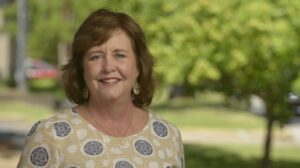
Stephanie Holden Smith, president of the Alabama Policy Institute, said the debate should focus on students rather than protecting school systems.
“It is time to ground this conversation in facts,” Smith wrote in a March 3 analysis. “To characterize parental freedom as a cost to a bureaucracy is to fundamentally misunderstand whom education funding belongs to: it belongs to the children of Alabama, not the systems assigned to them by their zip code.”
Public school spending spikes
Alabama lawmakers recently approved a record $12.2 billion education funding package for fiscal year 2026.
The spending plan includes $9.9 billion for the Education Trust Fund, an increase of about $560 million from the previous year. Lawmakers also approved $419.7 million in supplemental funding and $1.12 billion for facility upgrades and technology projects.
Smith argues those numbers contradict claims that school choice drains funding from public education.
“The $180 million allocated for the CHOOSE Act this year represents a mere 1.4% of the total $12.2 billion education package,” Smith wrote.
Smith also challenged assumptions that large numbers of students will leave public schools.
“The $100 million loss cited by local leaders assumes a mass exodus of students that simply isn’t happening,” Smith wrote.
The CHOOSE Act also lets public-school systems register as Education Service Providers. Districts can accept out-of-district students or offer classes and programs to homeschoolers in exchange for Education Savings Account funding.
Smith said the three districts raising concerns about the program have not pursued this option.
“To date, the participation from these three districts as providers is zero,” Smith wrote.
Smith said the debate should focus on student needs rather than protecting existing systems.
“The real issue we should all be discussing is the cost of a child stuck in a school that doesn’t work for them,” Smith writes. “The real cost is a child’s potential being lost in a fiscal turf war amongst adults who personally benefit from entrapping kids in a system that their parents want them out of.”