Annual LGBTQ report hides the truth: Companies are abandoning woke ideology, returning to business
America’s premier corporate LGBTQ ideology enforcer, the Human Rights Campaign, lost significant sponsorship, engagement and even slashed staff last year, one watchdog group tells The Lion,…
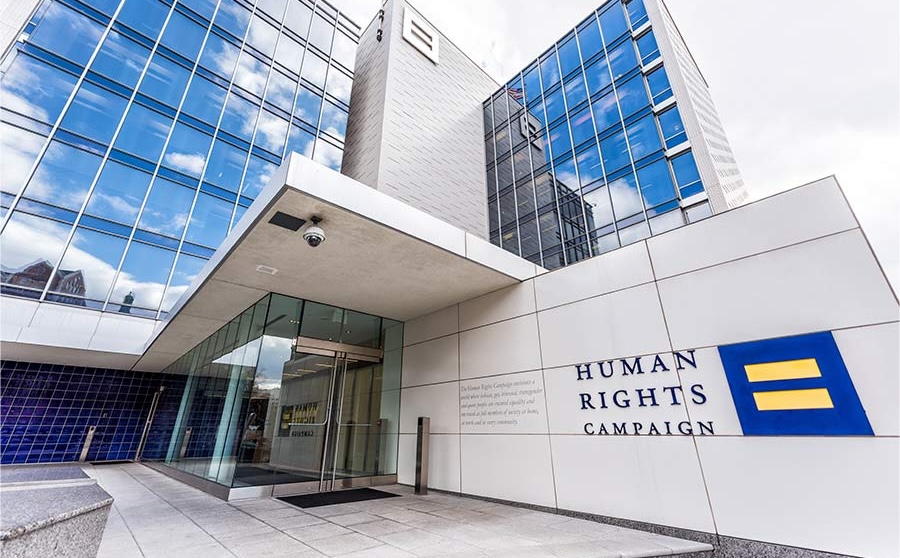
America’s premier corporate LGBTQ ideology enforcer, the Human Rights Campaign, lost significant sponsorship, engagement and even slashed staff last year, one watchdog group tells The Lion, indicating businesses are retreating from corporate wokeism.
But the retreat is obscured by HRC’s own annual report, the Corporate Equality Index (CEI), which grades companies on how pro-LGBTQ they are.
However, a data analysis from 1792 Exchange – a nonprofit advocating corporate America move “back to neutral” on ideological issues – reveals the shocking decline: This year, 61% fewer Fortune 1000 companies and 65% fewer Fortune 500 companies chose to even participate in the CEI.
“Last year, CEI participation essentially plateaued. But this year it’s actually plummeted,” 1792 Director of Research Dustin DeVito told The Lion in an interview.
Furthermore, HRC laid off 20% of its staff in 2026, DeVito said. HRC sponsors have also dropped by 48%. In 2022, HRC Platinum Corporate Partners peaked at 21 sponsors. In 2026, only 11 sponsors – including Amazon, Apple, Microsoft and Disney – fund HRC.
The decline may help explain why for the first time in over 20 years, the HRC’s publicly available CEI data for 2026 provides less information about the details of each company’s scores than ever before.
“It’s procedure for them going back to when it was first released in 2002, and this is the first year they did not release the PDF or brag about who got a perfect score,” DeVito said, adding that “the available information only displays a company’s score but doesn’t specify which sub-criteria the company met.”
Full access to the CEI this year was only granted to HRC members and CEI participants, and companies with a perfect score could “opt in to the distinction and sharing of logos,” according to the website.
But even those perfect scores were easier to obtain this year, which DeVito suspects is an effort to prop up the whole exercise and make companies appear more inclusive.
A perfect score (100) on the CEI indicates a company has provided documentation to prove its ongoing LGBTQ policies. These policies include but are not limited to family healthcare coverage for transgender surgeries and other such interventions, restroom and dress code “inclusion” and LGBTQ trainings for staff.
Not only does the company itself have to promote LGBTQ ideology, but the company’s vendors and supported charities also must demonstrate “non-discrimination based on gender ideology.”
But for a perfect CEI score this year, HRC dropped necessary qualifications by around 75% in two of its four categories. Under LGBTQ “workforce trainings,” for example, companies needed to demonstrate only one of five policies, while in previous years, at least four were required. Additionally, under “outreach and engagement,” only one example of LGBTQ community engagement or promotion was essential for 2026, but previously, companies needed at least five.
As a result, “The numbers look like they’ve somewhat stabilized, but in reality, they’ve collapsed,” DeVito said. “They’ve lowered the bar just to make it look like it’s not as bad as it is.”
According to the 2026 report, 534 companies scored a 100 on the CEI – a 30% decrease from last year, when 765 companies earned a perfect score. But even this number is inflated, given the change in requirements and the inclusion of nearly 100 woke law firms to boost the number, DeVito explained. Additionally, 39 companies, which previously participated in the CEI and did not score a 100, earned a perfect score in 2026.
“This serves as further proof that HRC’s numbers are inflated,” DeVito said.
“[HRC] is one of, if not the most primary group pushing all these issues,” DeVito concluded. “And so to the extent we can get people to connect the dots and not just talk about wokeness as some vague, ethereal term, but realize this is a group concretely pushing transgenderism among children, through schools, through company trainings and through your healthcare plan, then it helps people to then act.”
Public awareness of woke ideology has certainly grown, DeVito added. But action – not merely outrage – produces tangible results.
“We need to work on distancing ourselves from this group, delegitimizing them and exposing them.”