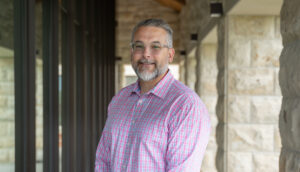
Christian Teacher of the Year: Kit Avery has his students consulting with businesses – and Christ
How many high school students have you ever known who serve actual business clients on the side?
Amazingly, Kit Avery’s seniors do at Southwest Christian High School in Chaska,…

How many high school students have you ever known who serve actual business clients on the side?
Amazingly, Kit Avery’s seniors do at Southwest Christian High School in Chaska, Minnesota.
With his help and that of retired mentors, the “Southwest Christian Consulting Enterprise” has his students create and consult on projects to help Twin Cities businesses in ways only budding young consumers can.
Developed at the direction of University of Minnesota professor emeritus Dr. Art Hill and several others, the consulting enterprise is based on the hands-on principles of an MBA-level college experience.
“It’s not an experience that a lot of high schoolers have the opportunity to be able to participate in,” Avery tells The Lion.
Avery is just the guy to provide that experience, too. He ran the family’s network of women’s apparel stores for years while coaching and teaching – then, after much family prayer, closing the stores so he could teach full-time at his former high school.
It wasn’t easy to close the family business. But it was easier than trying to operate them while teaching and coaching and even teaching in the children’s program at Bible Study Fellowship.
All these are just some of the reasons Avery is one of 12 instructors across the country named 2025 Christian Teacher of the Year by the Herzog Foundation, publisher of The Lion.
‘You teach them‘
It’s hard to say who gets more out of the school’s consulting enterprise – the students or the businesses they consult with.
“What we found is that these companies are so thrilled to be able to have high school seniors working on it because these are top-of-the-top students,” Avery says. “And then on top of that, it’s a fresh set of eyes, and they’re not tainted by corporate America yet. So, they’re coming in and they’re looking at a real business problem, and they’re thinking outside the box — while having the opportunity to serve real people.”
Avery says there are “anchor” businesses that want to be part of the consulting enterprise every year. Meanwhile, those companies that are new to the program may think of it as a ministry, as a way to help the students.
But they find that it’s often the other way around, because the students end up making the businesses better.
“At the completion of the project, many of the companies are blown away,” he says. “These companies love it.
“The students get the opportunity to actually go in and negotiate what is the project charter. They sign it, I sign it, the client signs it. They put together all their own deliverables, everything, and then set up all their kickoff meetings and midpoint meetings, their weekly check-ins with their sponsor and their client, with their mentors, and then their final presentation at the end of the semester.
“The students get the opportunity to do real work, serving real people with real needs.
“So, the students are off site a lot. We do work at Southwest. But they’re off site a lot.”
Some of the students may have struggled in other classes, but flourish in the consulting enterprise.
“All of a sudden, you let them take complete ownership over their education and they just dive into it, and it becomes all-encompassing.
“What we really try to tell the students is, let’s not pontificate with [the business clients]. Give them action items that they can do, and then give them a timeline on how they can do it.
“You teach them,” he tells his students, “because now you are the expert in this work stream. If we’re working with an e-commerce company, you are now an expert in X, Y, Z portion of that company.”
How to be a Christian in business
Besides learning the ins and outs of business, Avery’s students also learn how to bring a Christian identity to it all.
Unabashedly.
“It’s hard,” he says. “You look at corporate America in general, it’s kind of frowned upon to state that you’re a Christian.
“What would happen if, all of sudden, we could switch the rules up? What happens if, all of a sudden, for our students, you could realize that [being a Christian] is a huge asset?
“It’s not a liability. It’s a huge asset that you love the Lord and that you’re trying to be a light for Him, because every single person that you work for is going to know exactly what your moral compass is, they’re going to know exactly what you believe, they’re going to know why you believe it, they’re going to know what your operating rhythm is, and how you’re going to treat other people within that workplace.”
What would the Founders do?
With America already stirring to celebrate its 250th anniversary next July 4th – and with Herzog sending each of the 12 winners to an awards ceremony in Washington, D.C., this fall – Avery says he’s been thinking more about the nation’s Founders.
It’s been a moment of reflection for Avery and his wife, and a teachable one for their sons, ages 11 and 9.
“We’ve been doing a deep dive with my sons on the Founding Fathers and the founding of the United States of America,” he says.
“It’s been studying the Founding Fathers and studying the Declaration of Independence and the history behind that, and realizing that there’s so many Founding Fathers that you don’t necessarily hear of that sacrificed everything.
“What are the little things that we could sacrifice for the greater cause, which is making an impact for Christ within our communities, and our families, in the workplace?”
But what should we do?
Socrates said the foundation of virtue is self-control – something that seems sadly rare today, both in schools and in society.
“I believe Aristotle suggested you are what you repeatedly do,” Avery adds. “I think that that’s something that I’ve tried to live by.
“When I was young, my dad challenged me because I wasn’t a great student, and I struggled at certain things. He said, you know, look, you got to take a look at the parts of your life that you need to be able to do better at and then write it down every day.
“So for me, it’s discipline, simplicity, self-denial.
“If it’s important, do it every day. And if it’s not, then don’t. Sometimes it’s finding out what you shouldn’t do and making it a daily effort to not do it.
“About self-control, I think a lot of it stems from the family. And that’s where it should start first. It should start with a relationship with the Lord – and the Lord teaches us to be able to have self-control, to be able to have discipline.
“And if the family doesn’t do it, then all of a sudden now that onus then falls on the education system.
“There are certain schools that do a better job of it than others, or they’re not able to hold their students accountable, or you show up and you get an ‘A.’ What is that teaching them, and what is that setting them up for in life?’
“If you want something, you’ve got to work for it. I’m a firm believer that you’ve got to meet God halfway, and you have to be able to put your best foot forward.
“I think that’s where it gets tricky, and I feel it kind of puts the education system in a tough spot because we’re forced to be able to do a lot of things that I believe should be happening and should be taught on the home front.”
Teaching virtue through a lens
Avery is clearly reluctant to be critical of other schools, but it’s also evident he believes Christian education has a leg up on the competition.
Particularly when it comes to the teaching of virtue.
“I think some schools do it better than others,” he says understatedly.
Schools can write down all the things they want to be or profess to be, he says, “but what it comes down to is practice in the classroom.
“How well are you actually training your teachers, and then how well are you holding your teachers accountable to teaching that within the classroom?
“I think there are schools that have fallen away from that. I feel very fortunate to work at one that hasn’t.
“When you can view life through the lens of Jesus Christ, it gives you fulfillment, contentment. It allows you the opportunity to be able to feel those deep-seated emotions – love, contentment, happiness, joy – in a way that, if you don’t know Christ and you’re not teaching Him in the school, there’s a little bit of a void there.”
The Christian Teacher of the Year honor is part of the Herzog Foundation’s Excellence in Christian Education award series. Each of the 12 winners will attend a special professional development and recognition event in Washington, D.C.