Drastically reduced prices for IVF treatments will be available for all Americans, Trump says
President Trump announced substantial cost-cuts to in vitro fertilization through his “most-favored nation” (MFN) pricing campaign and the expansion of insurance coverage for fertility…
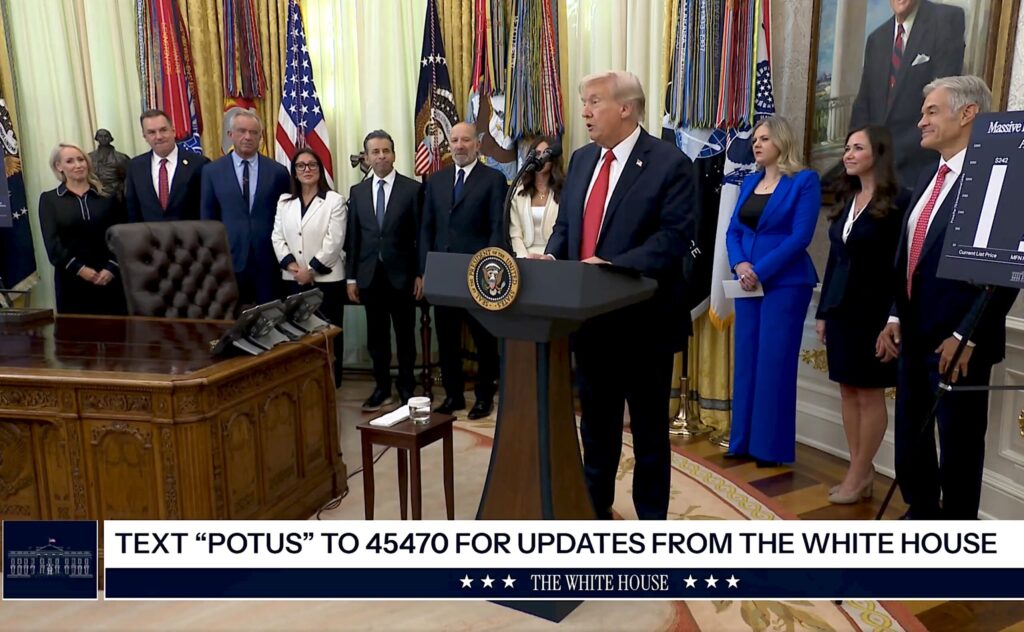
President Trump announced substantial cost-cuts to in vitro fertilization through his “most-favored nation” (MFN) pricing campaign and the expansion of insurance coverage for fertility treatments in a press conference on Thursday.
“There’s no deeper happiness and joy of raising children, and now millions of Americans struggling with infertility will have a new chance to share the greatest experience of them all,” Trump said from the Oval Office.
A single round of IVF treatment can cost more than $25,000, and most families undergo multiple rounds for a successful pregnancy, Trump said. This cost is 700% more expensive in the U.S. than in other countries, and prices will now fall by more than 70% for Americans. The deals will be available on the TrumpRX website, the president said.
“We’re now showing that MFN is a tool that can get other initiatives going as well,” Administrator of the Centers for Medicare & Medicaid Services Mehmet Oz said at the press conference. “We are revealing perhaps the most important MFN opportunity at all, because it’s about procreation. It’s about babies.”
Oz discussed the low birth rates in America, saying 3.6 “million miracles” were born last year. Oz said this number is “half a million less babies than we would ideally have had to replace our current population,” and he thinks the reduction in IVF costs could increase total births.
“They’re going to be a lot of Trump babies,” Oz said. “I think that’s probably a good thing, but it turns out, the fundamental creative force in society is about making babies.”
The Trump administration partnered with EMD Serono (EMD) to negotiate lower prices, eliminating any “middleman,” Oz explained.
EMD Senior Vice President Serono Libby Horne also announced a new IVF therapy for review by the Food and Drug Administration. The therapy would combine two reproductive hormones to reduce the number of injections, and thereby the number of co-pays, she said.
The expansion of benefits to cover infertility treatments will be a decision between employers and their employees, according to Dr. Heidi Overton, deputy director of the White House Domestic Policy Council and director of the Center for a Healthy America at the America First Policy Institute.
“This is a pro family benefit expansion that will transform clinical outcomes by addressing fragmented coverage and care,” Overton said.
“Employers are going to be able to decide how to cover the root causes of infertility, things like obesity, metabolic health and other things that are impacting infertility,” she said in answer to a question later in the press conference.
Secretary of Health and Human Services Robert F. Kennedy, at the president’s prodding, remarked on the severe health decline among American children that likely increases infertility rates. He said low birth rates are a “national security threat to our country,” and Trump is “addressing the root causes.”
Kennedy referenced new reports of a 70% obesity rate, according to a study from Harvard University. Additionally, American girls are hitting puberty up to six years earlier than before, and young boys have 50% less testosterone and lower sperm count than 65-year-old men, he said.
“We’re flooding our kids. We’re poisoning a generation of kids with chemicals,” Kennedy said. “President Trump has instructed us to stop these problems at the root cause.”
Trump became engaged on the IVF issue at the urging of Sen. Katie Britt, R-Alabama, who also spoke.
“Mr. President, it’s your leadership: You are the reason why the Republican Party is now the party of parents. We are the party of families,” Britt said.
When asked about the objection many pro-life organizations have to the IVF industry, Trump said “you can’t get more pro-life than this.”
However, many organizations, such as child-advocacy group Them Before Us (TBU), warn the IVF industry prioritizes adults’ desires above children’s rights and “treats children as commodities.” Only about 2.3% of IVF embryos are born alive, while many either fail to survive or are discarded due to genetic and sex-selection screening, according to TBU.
“Easier access to IVF doesn’t make a society more child-centered; it makes it more adult-centered,” TBU said in a statement released just after the press conference. “A truly pro-family party would prioritize children’s rights, not expand the market that profits from breaking them.”
The organization recommends couples seek “natural alternatives like NaProTechnology” to help with fertility.
“While we appreciate President Trump’s desire to support families, the answer is not found in supporting this profit-centric, rights-violating industry,” TBU said in February. “It is found in better healthcare, better research, and an unwavering commitment to protecting the smallest and most vulnerable humans among us.”