Erika Donalds urges states to opt into forthcoming federal school choice program
The rules process is moving forward and advocates are encouraging more states to join the new federal school choice program, which will begin in January 2027, said Erika Donalds, education…
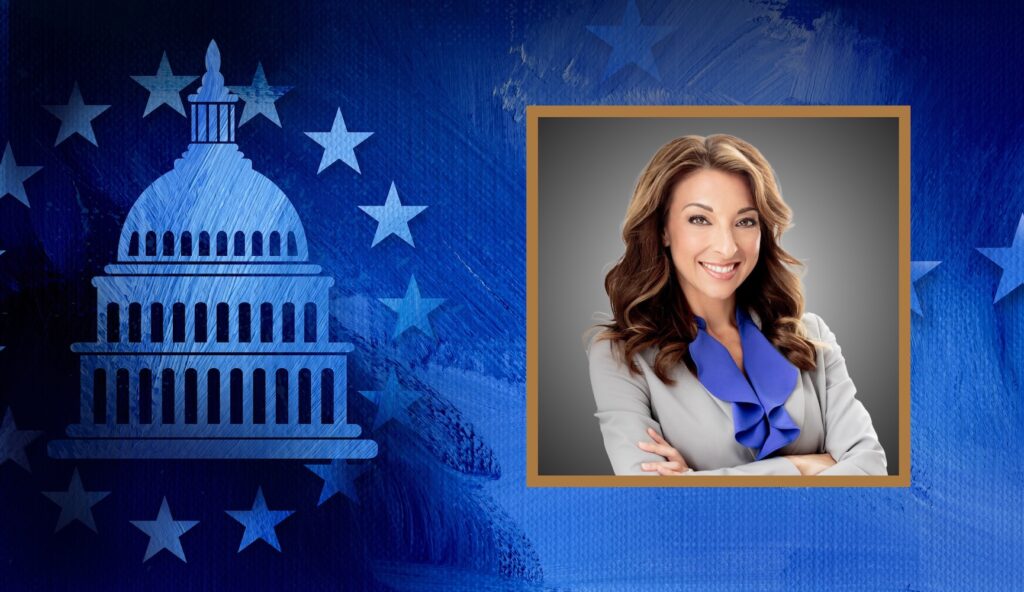
The rules process is moving forward and advocates are encouraging more states to join the new federal school choice program, which will begin in January 2027, said Erika Donalds, education opportunity chair for America First Policy Institute.
The Treasury Department is soliciting input for the program’s rules through Dec. 26, Donalds told The Lion in an exclusive interview Tuesday. Lawmakers approved the tax credit scholarship as part of the One Big Beautiful Bill this summer, but its final specifications are still being developed.
“This is potentially the largest expansion of school choice in the country’s history,” she said of the $1,700 tax credit, which would fund tuition and educational services for private and public school students – but only in states that opt in.
“The Treasury Department just put out a letter asking for feedback from industry groups and advocates for rulemaking purposes,” she said. “They’re going to write the rules on how to qualify as a scholarship funding organization, what counts as a qualified expense and the process for states to opt in. They’ll go through that rulemaking process probably over the next six months.”
Besides providing testimony to help shape the program, her organization is preparing to lobby state lawmakers early next year to participate. Several blue states have already refused, but Donalds said governors can delegate responsibility for the decision, reducing the political pressure.
“For example, a legislature could pass a law saying the process is handled by the department of education, and if scholarship organizations meet specific criteria, they’ll be included on the list submitted to the Treasury Department,” she said. “If the governor signs that law, the governor has effectively delegated that responsibility. That’s what we are recommending. We want states to make this a simple, ministerial, check-the-box process.”
Donalds is also concerned about states adding their own restrictions on participation –something her group is opposing at the federal level.
“In one version of the bill, there was a requirement for religious schools to take students’ IEPs and serve students according to the public school IEP to participate,” she said, referring to individualized education programs. “That would have completely undermined the program because many private schools don’t use the same methodologies or don’t have the resources to provide those accommodations. They should be able to serve students based on the programs they offer.”
She said the same concerns apply to religious freedom and curriculum autonomy.
“As someone who runs classical schools, I only want to enroll families who ascribe to the classical model,” said Donalds, who founded five classical charter schools and now runs a virtual reality classical school. “If a family doesn’t believe in the type of education I’m trying to provide, they’re not going to be supportive in helping the students to succeed.”
Donalds agrees with leading advocate Sen. Ted Cruz, R-Texas, that school choice is “the civil rights issue of our time.”
“We’re taking away the freedom of a lot of Americans by not ensuring they’re prepared to succeed academically and in life,” she said. “We’re not giving them a full, well-rounded education. They’re not civically literate. They’re not even academically literate. And we’re trapping families in schools that may not align with their values or their faith.
“I believe we’ve broken the public trust, not just that these schools would be neutral – I don’t think there is such a thing – but that if you send your kids to school for 13 years, they’ll come out prepared to access the American dream. Two-thirds of our kids are not prepared,” she said, citing NAEP scores, often called the nation’s report card. “I think the only way to solve it is to take it out of the hands of the government as much as possible.”
Donalds said the tax credit scholarship could easily generate billions of dollars nationwide. A previous $10 billion annual cap was removed in exchange for lowering the individual credit to $1,700 and eliminating a corporate tax credit, meaning funds will have to be raised through grassroots donors.
“This is similar to the difference between a super PAC and a city council race,” she said. “It’s harder to raise those small dollars, but so many groups worked to pass this. Advocates, dioceses, private school networks and homeschool families will all be working to spread the word about this opportunity and get those donations.”
U.S. taxpayers in any state may donate, but scholarships can only go to students in states that opt in – something that might push hesitant states to reconsider, she said.
“Often blue-state governors are beholden to teachers’ unions and threatened by families having an option outside traditional public schools,” Donalds said. “But once donations start flowing out of those states, it’s going to be very difficult for governors to look at $1 million or $2 million leaving and continue to refuse those funds for their families, especially because public school students can use them for supplemental services.”
The law limits participation to families earning 300% or less of the median gross income, although whether that will be defined by state, county or region has not been settled. Nationally, the median household income is about $84,000, according to the Census Bureau, with significant regional variation. Donalds expects 85% to 90% of U.S. students to qualify.
Overall, she is confident in the program’s success and potential for impact, as well as the positive market forces introduced by school choice.
“There are tax credit scholarship programs in many states, and that’s where school choice began,” she said. “Choice schools are more effective because they’re subject to competition. They only are paid when they are serving students well, or when parents choose to send their children to that school.
“As a former school board member, I saw that public schools do not have the same incentive to be responsive to parents or to prioritize academic performance. Their incentive is to deliver a one-size-fits-all approach, whether it works or not, and to ignore parents and students who are dissatisfied.”
Donalds is also a mother of three sons – ages 14, 18 and 22 – and wife of Rep. Byron Donalds, R-Florida, a strong advocate for educational freedom.