
EXCLUSIVE: Worried AI will replace you? This tech startup says you can keep your job and ditch the soul-crushing office drudgery
As some communities push back against Big Tech’s energy-hungry data centers and job-displacing AI, a San Francisco startup is taking the opposite approach.
Backed…
As some communities push back against Big Tech’s energy-hungry data centers and job-displacing AI, a San Francisco startup is taking the opposite approach.
Backed by renowned names in the sector such as White House Artificial Intelligence (AI) and Crypto Czar David Sacks as well as leaders from Oshkosh, Bridgestone, Snowflake and Kimberly-Clark, Endeavor is hoping to use the technology to empower American workers. Led by 24-year-old Sami Senapathy, it brands itself as “Silicon Valley AI meets America’s industrial heartland.”
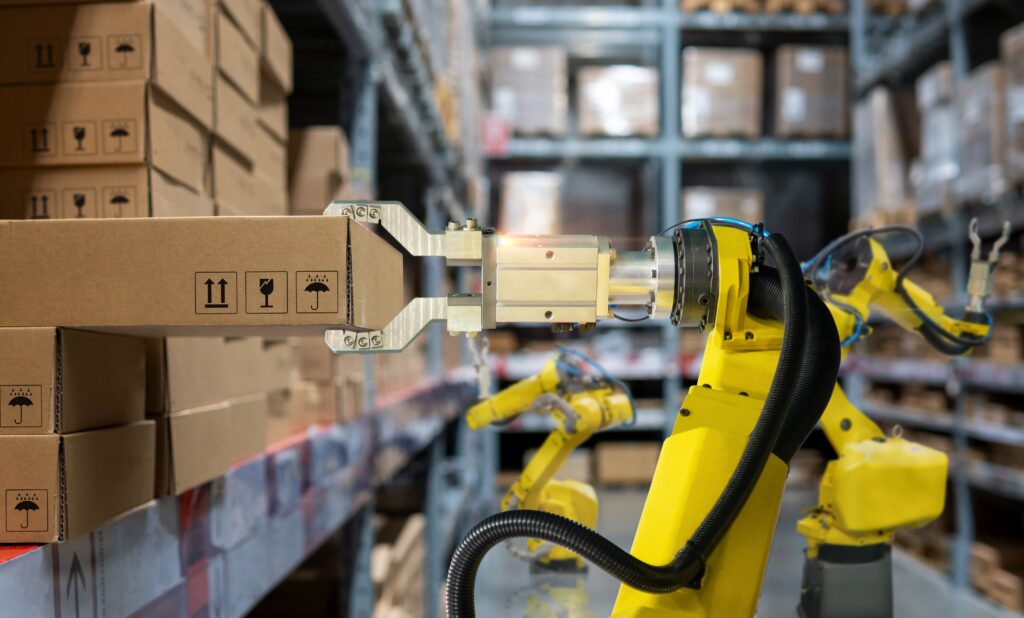
Senapathy told The Lion that his company’s goal is to aid workers at factories and warehouses in operating more efficiently through automating tedious and mundane tasks such as data entry or emails.
“We see AI as being this force so that people can get paid more by focusing on the tasks that matter to the business, not the parts of the job that they don’t want to do, like faxing and making phone calls, but building relationships with their customers, earning better commissions and making their companies operate at a level that they couldn’t before this technology,” Senapathy said.
The tech CEO got his start in the industry at age 11, when he built an application for FEMA. Senapathy is a self-taught programmer who began coding at 7 and later worked with the Air Force, Army and Palantir, where he developed its first commercial generative AI product.
“I tried all the things that most kids do … soccer, painting, violin … and struck out at all of them. The only thing left was coding, which was what my mom did,” Senapathy said, noting he was born in Michigan and grew up around the manufacturing industry. He then launched Endeavor from his dorm room while attending the Wharton School at the University of Pennsylvania.
“We’re 100% U.S.-based, and we really try to work with all our customers personally. We visit our customers in person during the sales process, the implementation process, [and] even after as it’s really important for us to build those relationships, because this is a traditional industry that operates on a personal basis,” he said.
While AI advocates like Senapathy paint a picture of how the technology will free the American worker from the shackles of office drudgery, some critics fear AI could eliminate more jobs than it creates, while energy-hungry data centers strain America’s already-stressed power grid and consume local water supplies.
U.S. politicians remain divided over how to embrace the technology, with the GOP splitting on AI as the November midterms inch closer.
Staunch AI proponents on Capitol Hill include Sen. Ted Cruz, R-Texas, and Rep. Frank Lucas, R-Oklahoma, who chairs the Republican House Committee on Science, Space, and Technology. Both argue that the U.S. must maintain its edge in the AI race, particularly against China, while ensuring that the technology has guardrails and is not allowed to exploit the American people.
Cruz has introduced legislation to protect AI development from overregulation, and several states are considering “Right to Compute” laws, which brands computing as an extension of natural rights.
Rep. Harriet Hageman, R-Wyoming, told The Lion in an interview she agrees the GOP is split over AI but says many lawmakers, including herself, see both sides of the argument.
“We need to move forward in the AI space, because we don’t want to turn this over to malign actors elsewhere in the world, China being an obvious one,” Hageman said. “We’re going to have to go forward with it, but we also need to be cautious, and we need to be very thoughtful of how we do that.”
Hageman suggested legislation related to AI should have a “sunset on it” to ensure Congress revisits the laws they enact on the rapidly evolving tech. The lawmaker also continued to stress that the U.S. must surpass China in AI advancement.
“We just simply cannot turn that over to a country like China,” Hageman said. “The first thing that the CCP [Chinese Communist Party] thinks about is, how do we control our masses? How do we use technology to control our masses? And we don’t want that here.”
Some Christian leaders in the tech space also have concerns but remain optimistic, noting that while AI is a powerful tool, it must be wielded well to minimize harm, The Lion previously reported.
“You can use data right now to predict disease. … You can use data right now in AI to predict divorce. It works. It’s scientifically validated to work. We can use it to identify sexual predators. On and on it goes,” Thomas Osborn, a tech entrepreneur developing AI technology for Christian ministries and schools, previously told The Lion. “We just have to use it carefully and steward it well, just like anything else God gave us to steward.”
Endeavor, meanwhile, continues to pitch its model in pragmatic terms: using AI to automate routine tasks in factories and warehouses while keeping human workers in place, aiming to boost productivity and wages in America’s industrial sectors.