Falling student enrollment triggers closure conversations, highlights strains on half-empty buildings
U.S. public schools are beginning to tackle the problem of severe under-enrollment – a decision delayed by years of federal COVID-19 pandemic relief funding.
“Public school enrollment is…
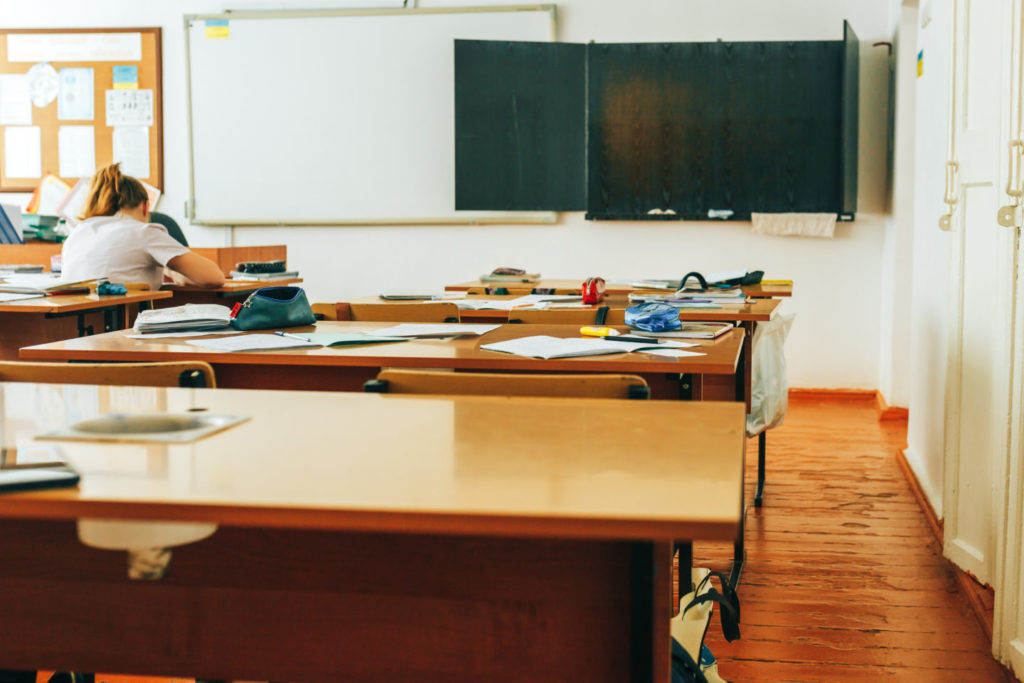
U.S. public schools are beginning to tackle the problem of severe under-enrollment – a decision delayed by years of federal COVID-19 pandemic relief funding.
“Public school enrollment is projected to tumble 5.5% between 2022 and 2031, largely due to changing demographics, according to the National Center for Education Statistics,” explains KVUE-TV in Austin, Texas.
“Other factors include the shift by some students to private education or homeschooling and some immigrant families’ decisions to leave the country.”
Since the $195 billion distributed to public education needed to be spent by 2024, districts nationwide must address this issue formerly cloaked by pandemic relief, according to analysts.
“It’s going to continue to fall for years to come,” said Aaron Garth Smith, director of education reform at the Reason Foundation think tank, of public-school enrollment. “And so generally, state and local policymakers have to adapt to this new reality.”
Declines of 20% or more
The Thomas B. Fordham Institute discovered enrollment from 2019 to 2023 had fallen by 20% or higher at nearly 1 in 12 public schools, according to KVUE-TV.
“Many were chronically low-performing schools in high poverty neighborhoods, the report found.“
One example involves St. Louis Public Schools, where student numbers “plummeted from 115,543 in 1967 to 18,122 last year, reflecting an exodus of families to the suburbs.”
Meanwhile, a deadly May 2025 tornado shuttered seven of the city’s schools this fall because of weather-related damage.
“At a school board meeting in July, consultants argued that the district can’t support all its schools, which on average were built 79 years ago,” the news article noted, adding the city has more than twice the schools required for its size.
“Closures, they said, could free up money for improvements.”
However, school closings often dredge up considerable opposition politically and within affected communities.
As previously reported by The Lion, Chicago Public Schools initiated the largest school closure in the nation’s history in 2013 with about 50 schools affected.
“Afterward, fighting and bullying increased as displaced students settled into new schools, according to a report from the UChicago Consortium on School Research,” KVUE-TV explained.
“Test scores dipped in the schools slated for closure, and while the displaced students’ reading scores eventually recovered, math performance issues persisted for years.”
As a result, the city issued a moratorium against future school closings, which is slated to end in 2027.
“There were a lot of communities pitted against each other,” said Marisa de la Torre, the consortium’s managing director and senior research associate. “It was a very long process, a lot of uncertainty. All of this really affected the staff and the kids.”
However, current “absurdities” of maintaining 900-seat facilities serving fewer than 30 students show officials need to reconsider the new normal, the Chicago Tribune editorial board recently argued.
“(Douglass High School) has become the poster child for a militant teachers union that clearly places a higher priority on preserving and growing its membership than it does on the welfare of Chicago’s public school students,” journalists noted. “Not to mention taxpayers.”