FBI: Michigan synagogue attack inspired by Iran proxy Hezbollah
Federal investigators said an assault on a Michigan synagogue in March was a Hezbollah-inspired act of terrorism driven by ideology tied to Iran’s proxy forces.
The attack…
Federal investigators said an assault on a Michigan synagogue in March was a Hezbollah-inspired act of terrorism driven by ideology tied to Iran’s proxy forces.
The attack specifically sought to target “the Jewish community and the largest Jewish Temple in Michigan,” the government said at the press briefing called to wrap up the investigation.
The attacker’s brother was a Hezbollah commander who was killed in a Mar. 5 Israeli airstrike in Lebanon along with several other family members, reported the Associated Press.
The attacker was previously identified as Ayman Mohamad Ghazali, a naturalized U.S. citizen born in Lebanon, who was admitted to the U.S. under Obama administration, noted the Detroit News.
He was not known to have any domestic or foreign terror ties, said the FBI.
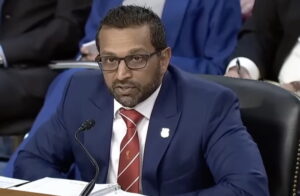
“Despite what has been reported in the media, at the time of this incident, the assailant was not the subject of, or referenced in, any prior FBI investigation, nor was he on the terrorist watchlist,” said Jennifer Runyan, the special agent in charge of the FBI Detroit field office.
Ghazali, 41, spent weeks consuming pro-Hezbollah content and preparing for violence before launching the assault, said the government.
The former Lebanese national parked outside the synagogue for hours before driving a pickup truck through the building’s entrance and into a hallway near a preschool, where children were present at the time.
He then opened fire and engaged in a shootout with armed security before ultimately taking his own life.
Investigators said the vehicle contained gasoline and fireworks, suggesting the attacker intended to ignite the incendiary devices.
The FBI estimated the truck was packed with at least 35 gallons of gasoline, which contains the raw energy equivalent of more than 400 sticks of dynamite if it explodes.
In this case, the gasoline burned rather than detonating.
A security guard was injured, but no children or staff were hurt in the attack – a result authorities credited to rapid response and hardened security.
Critics have complained the funds for such private security programs have been cut off because of the current Democrat government shutdown targeting the Department of Homeland Security.
Runyan said the FBI reviewed hundreds of pieces of digital evidence and interviewed over 100 witnesses in the case.
While no evidence was found directly tying the attack to Hezbollah, officials made clear the ideological influence was unmistakable, if only because his brother was a Hezbollah commander.
The FBI laid out a timeline for the attack that included a significant amount of ideological material tying back to Hezbollah.
Ghazali conducted extensive surveillance of synagogues in the Detroit area, purchased weapons and ammunition and set-up makeshift explosives in the days leading up to the incident.
After arriving at the synagogue at approximately 9:58 a.m., he began posting to social media and sending videos to his sister.
“By 10:34 onward, this where we see a significant amount of his ideology come forward,” said the FBI. “While he’s sitting in the parking lot, he sent his sister overseas 19 videos, photos, and messages that reiterated his intent to commit a mass terrorist attack as well as affirming his Hezbollah-inspired ideology.”
Ten minutes before the attack, he sent two final videos to his sister in Arabic.
“This is the largest gathering place for Israelis in the State of Michigan in the United States,” said Ghazali on the video. “I have booby-trapped the car. I will forcefully enter and start shooting at them. God willing, I will kill as many of them as I possibly can.”
The incident comes amid a documented rise in antisemitic threats nationwide, with federal data showing anti-Jewish incidents accounting for a significant share of religiously motivated hate crimes in recent years.
Separate reporting has linked the Michigan attack to a broader pattern of ideologically driven violence, including an incident on the same day at Old Dominion University (ODU) in Virginia, highlighting what analysts describe as a persistent domestic threat environment influenced by Islamic ideology.
In the attack at ODU, Mohamed Bailor Jalloh, 36, opened fire during an Army ROTC class in Norfolk, killing one person and wounding two others.
Jalloh was previously convicted in 2016 of attempting to provide material support to a foreign terrorist organization, noted the government.
Despite the coincidences in timing, however, the FBI said there’s no evidence that the Michigan attack was coordinated by a terror group, even if it was inspired by one.
“At this stage of the investigation, we have continued to find no evidence of co-conspirators, nor do we have information that indicates a current active threat to the community at this time,” said Runyan.