Fired nurse tells Religious Liberty Commission she was forced to choose between her faith, radical gender ideology
When Valerie Kloosterman, a nurse of more than 15 years, requested a religious accommodation to excuse her from diversity training on gender fluidity and transgender procedures, she…
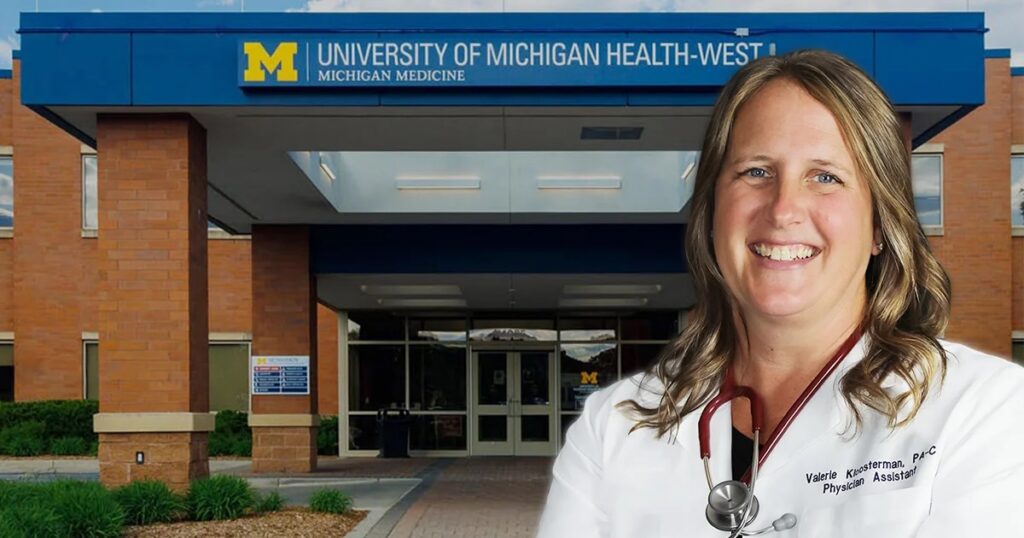
When Valerie Kloosterman, a nurse of more than 15 years, requested a religious accommodation to excuse her from diversity training on gender fluidity and transgender procedures, she was promptly fired.
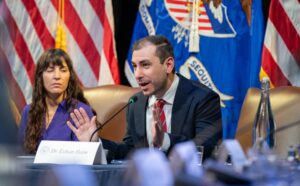
“My faith in Christ led me to enter the healthcare profession to care for patients in a way that honors God and also blesses them,” Kloosterman said Monday at the sixth hearing of the Trump administration’s Religious Liberty Committee.
“And because I am a Christian, that means I am also a Christian physician assistant. I believe and know that everyone is created in the image of God and worthy of love and respect, that God created humans male and female, as a reflection of his image and for His glory, and that God doesn’t make mistakes,” she continued.
The Religious Liberty Commission heard testimonies like Kloosterman’s for more than four hours and will recommend policies to President Donald Trump this May to ensure the protection of Americans’ religious liberty, according to Kelly Shackelford, President, CEO and Chief Legal Counsel for First Liberty, who is also a member of the Commission.
“It’s bad medicine to force religious healthcare professionals like Valerie to choose between their faith and their job,” Shackelford said in a statement provided to The Lion. “It is disgraceful and unlawful to ask any person to violate their conscience rights and religious beliefs that are protected by the Constitution.”
The Religious Liberty Commission is a historic endeavor, the first commission to examine religious liberty solely in the U.S., with a direct report presented to the president Shackelford told The Lion in an interview. Trump announced its formation in May 2025, and the group has heard from more than 100 witnesses, including numerous clients of First Liberty.
The Commission will hold one more public hearing in April and present its recommendations to Trump on May 7, the National Day of Prayer, in The Rose Garden, Shackleford said.
“We need to educate people. We need to put teeth in things to make sure that people who are doing those things are incentivized not to,” he said.
Shackelford cited numerous examples of protections, such as requiring hospitals to post a “notice of rights” that informs employees of their freedom of conscience rights.
“The ultimate goal is getting a decision that makes very clear what should already be clear: that you can’t do this to people. We have religious freedom in the workplace,” he said.
Kloosterman offered her own recommendations to the Commission, suggesting Congress pass a law, such as the recently introduced Conscience Protection Act, that would prohibit employers from religious discrimination and offer a private right of action for those seeking legal retribution. She also recommended federally funded hospitals publish written policies that both define conscience protections and offer employees religious accommodations. Finally, she said these hospitals should inform staff of their conscience rights, adding that staff trainings that violate these freedoms should be abolished.
“If we don’t protect healthcare providers now, the whole entire healthcare profession in 10 years is going to look entirely different, and I dread what that is going to look like,” Kloosterman said, adding she wants her family to visit healthcare providers who value people over ideologies.
Kloosterman worked in the industry for more than 17 years, but the University of Michigan claimed her clinic as “a state operation” in 2021. In May of that year, the university required the clinic to complete “mandatory training” that forced employees to affirm sexual orientation and gender identity ideologies and practices.
Kloosterman requested a religious accommodation, after which the Department of Diversity, Equity and Inclusion summoned her to an interrogation meeting, she said.
“The Department of Inclusion had no space for Christian beliefs,” Kloosterman said.
She cited both her faith and medical judgement as reasons why she could not affirm gender ideology, saying she would refer to these patients by their given names. But one DEI official told Kloosterman she was “evil” for not granting patients’ their requests and said her conduct could lead these patients to commit suicide. He also said she could not “take the Bible or my religious beliefs to work with me,” Kloosterman testified at the hearing.
“I said that patients would experience compassionate care because Christian healthcare providers viewed everyone as made in the image of God, and that we treat our patients with the love described in 1 Corinthians 13,” Kloosterman said before the Committee as the room erupted into applause.
A few weeks after this interrogation, Kloosterman was fired without any opportunity to talk with her co-workers or patients. Kloosterman filed a lawsuit with the help of First Liberty. After five years, she is still awaiting a final ruling, but the court has indicated she has a “likelihood to succeed,” Shackelford said.
“These victims will never really be completely made from everything that they have to go through. But they stand up, really, for other people,” Shackelford said, adding that other employees of faith at Kloosterman’s hospital have avoided religious harassment because of her stance.
“I’m praying that God would use my case to protect religious freedom for my children and the next generation, so that they can freely live out their faith in the workplace and not in fear, ‘For God has not given us a spirit of fear, but of power and of love and of sound mind,’” Kloosterman said, quoting the Bible. “For this case is not really about me; it’s about God and honoring the call that he has given me.”