Historic first: Trump attends Supreme Court arguments on birthright citizenship
The Supreme Court on Wednesday heard arguments over birthright citizenship, in a case widely viewed as the most important left of its term.
At issue is President Donald Trump’s January 2025…
The Supreme Court on Wednesday heard arguments over birthright citizenship, in a case widely viewed as the most important left of its term.
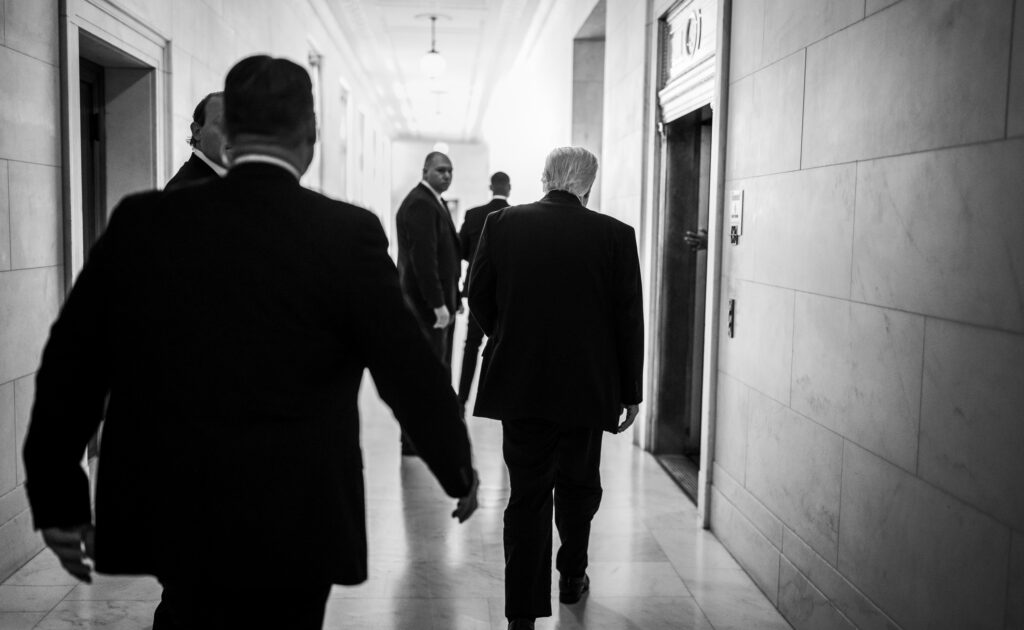
At issue is President Donald Trump’s January 2025 executive order seeking to prohibit children of illegal immigrants or temporary visa holders born in the U.S. from automatically becoming citizens. Trump attended the oral arguments in the high-stakes case, becoming the first sitting president to ever do so.
“We are the only Country in the World STUPID enough to allow ‘Birthright’ Citizenship,” Trump wrote on Truth Social following the arguments.
“Unrestricted birthright citizenship contradicts the practice of the overwhelming majority of modern nations,” Trump’s attorney, U.S. Solicitor General D. John Sauer, said in opening remarks. “It demeans the priceless and profound gift of American citizenship. It operates as a powerful pull factor for illegal immigration and rewards illegal aliens who not only violate the immigration laws but also jump in front of those who follow the rules.”
Allowing birthright citizenship by default has “spawned a sprawling industry of birth tourism as uncounted thousands of foreigners from potentially hostile nations have flocked to give birth in the United States in recent decades, creating a whole generation of American citizens abroad with no meaningful ties to the United States,” Sauer argued.
The 14th Amendment, which states “all persons born or naturalized in the United States and subject to the jurisdiction thereof, are citizens of the United States and of the state wherein they reside,” has long been interpreted to guarantee citizenship to those born on U.S. soil. Yet Trump’s legal team argues that six words – “and subject to the jurisdiction thereof” have long been misapplied.
His attorneys have argued that the citizenship clause, enacted following the Civil War, was intended for the children of newly-freed slaves – not the children of immigrants who are here illegally or temporarily and who are not “completely subject” to U.S. political jurisdiction.
The clause does “not extend citizenship to the children of temporary visa holders or illegal aliens,” Sauer told the justices. “Unlike the newly freed slaves, those visitors lack direct and immediate allegiance to the United States.”
Although the legal arguments are widely seen as presenting an uphill battle for the Trump administration, the justices asked tough questions of both sides.
Justice Amy Coney Barrett asked Sauer about a series of hypotheticals to see how the executive order would play out in different scenarios.
“I can imagine it being messy in some applications,” she said, asking him what would happen to newborns who are found and taken in. “What if you don’t know who the parents are?”
Justice Brett Kavanaugh asked why Congress codified the 14th Amendment, including the clause the Trump administration’s legal arguments rely on, in both 1940 and 1952 – with full knowledge that courts had long read that language to guarantee birthright citizenship. “Congress repeats that same language, knowing what the interpretation has been,” Kavanaugh said.
The American Civil Liberties Union, which is challenging Trump’s executive order, has argued that a long line of legal precedent and congressional law protects birthright citizenship.
“Ask any American what our citizenship rule is and they will tell you, everyone born here is a citizen alike,” ACLU attorney Cecillia Wang told the court. “That rule was enshrined in the 14th Amendment to put it out of the reach of any government official to destroy.”
Trump’s executive order would render “swaths of American laws” senseless, she argued.
“The 14th Amendment’s fixed bright line rule has contributed to the growth and thriving of our nation,” Wang said. Under the executive order, “thousands of American babies will immediately lose their citizenship,” she said.
The Court’s decision is expected in June or July, and some supporters of the administration’s case, such as Missouri Sen. Eric Schmitt, expect it to be “close.”
Image credit: The White House