Hmong families plan stay-home-from-school day to protest Minnesota district’s waffling on language, culture program
Minnesota’s St. Paul Public Schools may face a steep one-day drop in attendance on Monday, as families from the Hmong ethnic group commit to keep their children home in a protest against the…
Minnesota’s St. Paul Public Schools may face a steep one-day drop in attendance on Monday, as families from the Hmong ethnic group commit to keep their children home in a protest against the district.
“The stay-at-home day is the result of frustration with the district’s approach to managing its popular Hmong language and culture programs — and delay in providing a large enough school to accommodate all the students under one roof,” reports the Sahan Journal.
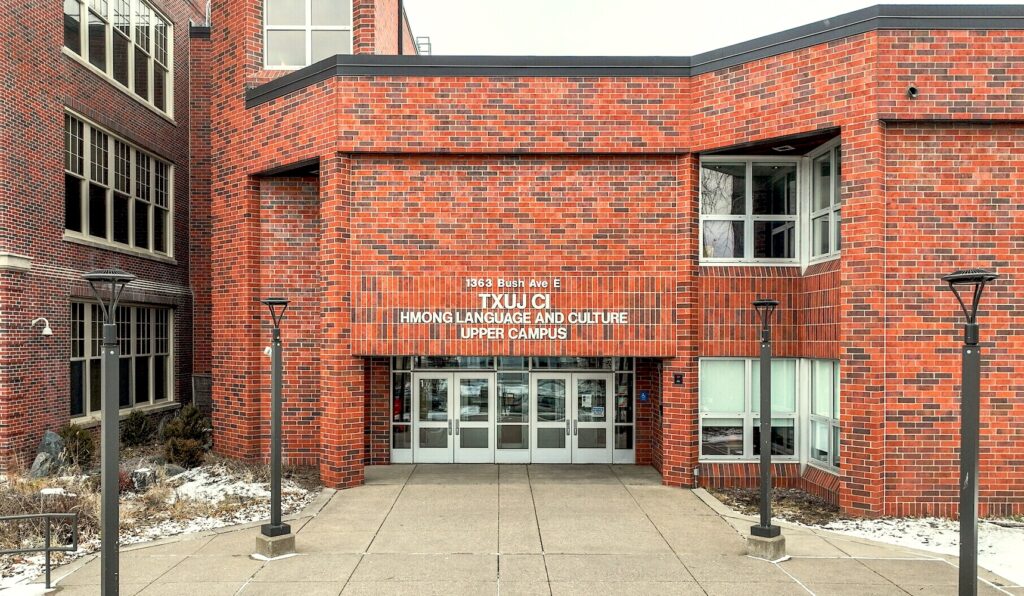
Although the Txuj Ci HMong Language and Culture School has the district’s highest elementary school enrollment at almost 700 students, protest organizers argue public-school administrators have increasingly marginalized their student group.
“We’ve been made invisible,” said Sai Thao, one parent organizing the action who estimates more than 2,000 children will stay home. “So staying home and being invisible hopefully brings that visibility to light.”
Failing to deliver on original promises
The district, which had been experiencing a decade of dwindling enrollment, reversed this trend in the 2024-25 academic year “through strategic community outreach and social media advertising,” explains a Feb. 4 SchoolMint blog post.
One of the schools selected for the SchoolMint campaign was the Txuj Ci school, which marked a 48% enrollment increase.
However, the higher numbers posed additional challenges for the district.
“As enrollment has grown, the elementary school has struggled to find space for its students,” the Sahan Journal noted. “Due to limited cafeteria space, some students don’t eat lunch until 2 p.m. Prekindergarten and fifth grade have in different years been shifted into other buildings.”
Although the school board voted in July to create a preK-8 school for the program, it wouldn’t open until sometime between 2031 and 2033 – a timeline too distant for many families.
“Why would you not want to support a program that is bringing enrollment into your school district?” said parent Shela Her.
Others voiced similar frustrations, adding they had worked on the overcrowding challenge for years without seeing any action from the district.
“They really want numbers,” said Ying Yang, another protest organizer, “but they don’t want our voices.”
One example involves a December 2023 facilities committee meeting, where Hmong families “recalled the district told them they would have a preK-8 building in three to five years,” according to the Sahan Journal.
“But the district later said the timeline for the preK-8 school would be closer to 10 years, which hit parents hard.”
Thao described the work group as “just devastated” by the delay.
“With the 10-year timeline, we have a school that is still growing, enrollment in demand, but really no room to accept enrollment,” she said.
‘The school district has not really done much to help us’
Additionally, the district has demonstrated a lack of willingness to work with constituents throughout the ordeal, according to Hmong protesters.
“Frustrations boiled over this fall when Superintendent Stacie Stanley said she could not recommend either of two proposed interim solutions, including one brought by parents,” the Sahan Journal reported.
Stanley’s announcement came at an Oct. 7 school board meeting, which caused parents such as Pao Vang to walk out “in disbelief” when he heard the Hmong studies and dual language programs might be separated.
“Vang’s older son is part of the Hmong dual language program, while his younger son is on the Hmong studies track,” the Sahan Journal explains. “He recalled the facilities committee discussing separating the programs two years ago and rejecting the idea.”
“It was not voted on,” Vang told journalists at the time. “It was not even very popular back then, and the parents didn’t like it at all. And yet here it is two and a half years later, after everything else, now they’re going back to that process.”
Board member Jim Vue, who is married to Thao, criticized the district’s “delay in considering the recommendation, shifting criteria for making a decision, and the fact that the work group had never considered co-locating at Hazel Park,” wrote the Sahan Journal.
“If this is how Saint Paul Public Schools works with community,” he said, “then it’s tough for me to say that we actually work with community.”
Vang, who also plans to keep his family home Dec. 15, is considering withdrawing his children altogether from the district if they separate the two programs.
“I feel like the school district has not really done much to help us as a school,” he said. “It’s always a solution of move this out, bring this back, doing puzzle pieces.”
Charter schools an increasingly attractive option
Like Vang, parent Bao Yang explained the district’s inaction has caused her to consider transferring her children to a charter school “like her nieces and nephews attend,” according to the Sahan Journal.
Charter schools, although technically under public-school management, have noted a nationwide enrollment increase since 2012, bucking the overall trend of falling attendance at public schools.
Since private groups manage charters and provide more freedom than traditional schools, charters are sometimes viewed as a form of school choice – especially as no student is ever zoned or assigned into a charter.
“It just seems like (charter-school attendees) don’t have to go through this,” Yang concluded. “They already have a building, and they were able to get an extension on the building, meaning they were able to expand it. And it just seems like maybe it’s not worth being in St. Paul Public Schools.”
The Dec. 15 protest comes a day before the school board’s scheduled vote about potentially moving the Hmong studies program, and if so, to which building.
Ying Yang, who has two children at Txuj Ci Lower School, has also discussed leaving the district with his wife if matters continue their current course.
“For (Yang), the space needs are acute,” the Sahan Journal explains. “His fourth-grader is one of those who eats lunch at 2 p.m. because of the overcrowding. That same child, who has an individualized education plan, sometimes needs to go into a separate ‘buddy room’ with an adult to reset. But there is no separate room available for her at Txuj Ci.”
Yang describes the process of waiting on the district as “almost like a carousel.”
“You ride a horse, you go around, and then you get off,” he said. “And then the next time they want you to get on the same horse and you ride again. So I’m not sure how much longer we can do this.”