Iowa bill would restrict partnerships between libraries, public schools, in effort to close loopholes, protect children
Public libraries in Iowa would no longer be able to create certain agreements with public or charter schools, or offer bookmobiles on school campuses, under a bill meant to protect children…
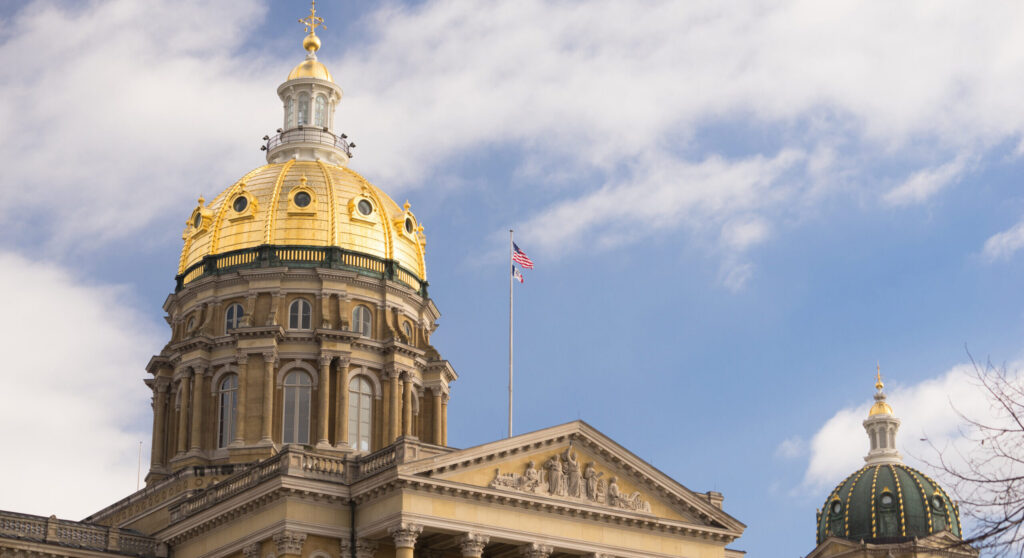
Public libraries in Iowa would no longer be able to create certain agreements with public or charter schools, or offer bookmobiles on school campuses, under a bill meant to protect children from sexual material.
The Iowa House Education Committee House approved the legislation Feb. 4, which was renumbered to House File 2324.
“The schools operate under certain standards of statutory law. Any contracts that come into that should also comply with them,” said State Rep. Helena Hayes, R-New Sharon, as reported by The Gazette. “I think that’s pretty standard and respected.”
Her reasoning stems from a 2023 law forbidding public-school libraries to offer books featuring sexual content – with student access to public libraries infringing upon this law, Hayes argued.
‘Shown to be harmful to minors’
Katherine Bogaards from the Protect My Innocence nonprofit agreed, describing these partnerships as “loopholes,” according to the Gazette.
“Once again, Iowa is facing a situation where schools are enabling access to materials that have been shown to be harmful to minors,” she noted.
This bill will ensure minors cannot access sexually explicit and obscene materials through the public education system, Bogaards argued.
Another supporter of the legislation – Jeff Pitts from the Iowa Faith and Freedom Coalition – testified he found a “sexually explicit” book at the Des Moines Public Library’s downtown location “on a shelf 2 feet off the ground,” the Gazette reported.
However, other testimonials from groups representing libraries and school districts opposed the bill.
These argued legislative approval “would decrease student access to libraries in rural areas and reduce efficiencies created by shared facilities,” the Gazette observed.
“This bill would prohibit partnerships between schools and public libraries, partnerships that already work to reduce the barriers for our students,” said Linda Smithson, president of the Iowa Association of School Librarians and the Clinton Community School District’s library director. “Transportation, internet access, family availability all affect whether our students can reach a public library.”
Tensions concerning public schools, libraries and sexually explicit materials have reverberated nationwide as different states reconsider and change policies concerning access.
In one recent example, Florida upheld a school district’s decision to remove an LGBT children’s book after its authors argued their First Amendment rights had been violated.
“The author plaintiffs have no First Amendment right to speak through the library,” U.S. District Judge Allen Winsor wrote in his decision. “Nor do the author plaintiffs have a First Amendment right to demand the library ignore the book’s viewpoint when determining whether to include it in its collection.”
Other incidents include the St. Joseph School District in Missouri, which offered books appearing to violate the state’s obscenity laws, and a bill in North Carolina aiming to give parents more control over monitoring public-school library materials.