Iowa district rolls out expensive, limited electric buses despite funding freeze
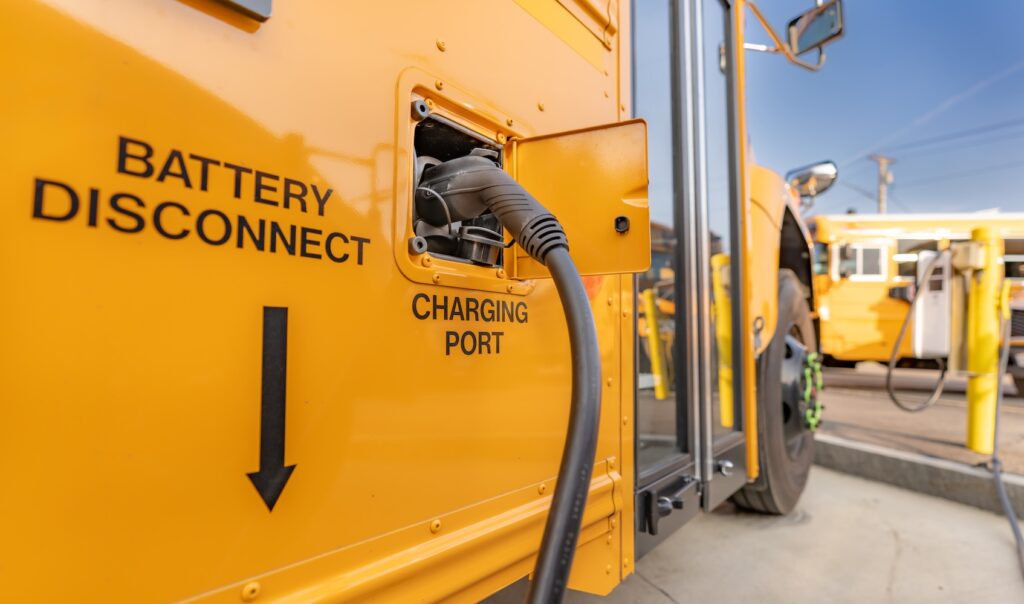
Iowa’s Sioux City district has launched several new electric buses even as the U.S. Environmental Protection Agency (EPA) program funding this initiative has been placed under review.
“The…
Iowa’s Sioux City district has launched several new electric buses even as the U.S. Environmental Protection Agency (EPA) program funding this initiative has been placed under review.
“The funding for the district’s new buses came through the EPA’s Clean School Bus Program, which allocated $5 billion nationwide to help schools replace older diesel buses with zero-emission models,” explained Iowa Public Radio.
“Less than $3 billion has been awarded so far. The EPA said it’s reviewing the program under an executive order from President Donald Trump to ensure tax dollars are spent efficiently.”
The district, which enrolls nearly 15,000 students, collected approximately $6 million for 15 electric buses, which cost about $400,000 each – compared to $170,000 for a standard diesel bus, the article noted.
“The new buses will make up about a quarter of the district’s fleet. Because of range limitations, they will only show up on local routes.”
Doug Stewart, the district’s transportation and fleet supervisor, outlined the rationale for keeping electric buses local only.
“The faster you drive it, the harder you drive it, the more battery it uses,” he said. “If we put it on the highway to try to go to Omaha, even though the mileage says we could get there, we wouldn’t be able to get back. So, it’s 100% going to be for in-town routes.”
Ongoing technical, safety concerns
Reactions to electric buses have varied nationwide, with some districts – including Iowa’s largest district, Des Moines Public Schools (DMPS) – choosing to avoid them altogether.
“A DMPS spokesperson said its transportation department had concerns about the practicality of electric buses due to driving patterns, weather conditions and infrastructure,” Iowa Public Radio observed.
“DMPS said it investigated other districts’ experiences with the buses and concluded it wasn’t in its interest at this time.”
Even Sioux City acknowledged these concerns, according to the article.
“At about 72 degrees, buses can be fully charged within two to three hours. When temperatures fall below 20 degrees, it can take up to 10 hours.”
Stewart expressed confidence in the district’s handling this extra time to charge during the night.
“We don’t run school buses after 5 p.m., so we have until 6 the next morning to get them ready,” he said.
Other districts such as Ann Arbor in Michigan have faced ongoing challenges related to maintenance and infrastructure.
“During an April 19 presentation to the Ann Arbor Public Schools Board of Education, the district’s environmental sustainability director, Emile Lauzzana, highlighted a number of issues with the district’s electric bus fleet,” the Washington Free Beacon reported in 2023.
“Those buses, Lauzzana said, have ‘a lot of downtime and performance issues’ and aren’t ‘fully on the road,’ despite the fact that they are ‘approximately five times more expensive than regular buses.’”
Meanwhile, infrastructure upgrades skyrocketed from original estimates of $50,000 to “more like $200,000.”
“I have a number of colleagues in different states who are facing similar challenges,” Lauzzana said at the time. “For the school bus market, it’s been challenging for us.”