Iran threatens $200 oil as attacks mount near Strait of Hormuz
The U.S. military is moving to counter Iran’s threat to shut down the Strait of Hormuz, a chokepoint that handles roughly 20% of the world’s crude oil shipments.
The move…
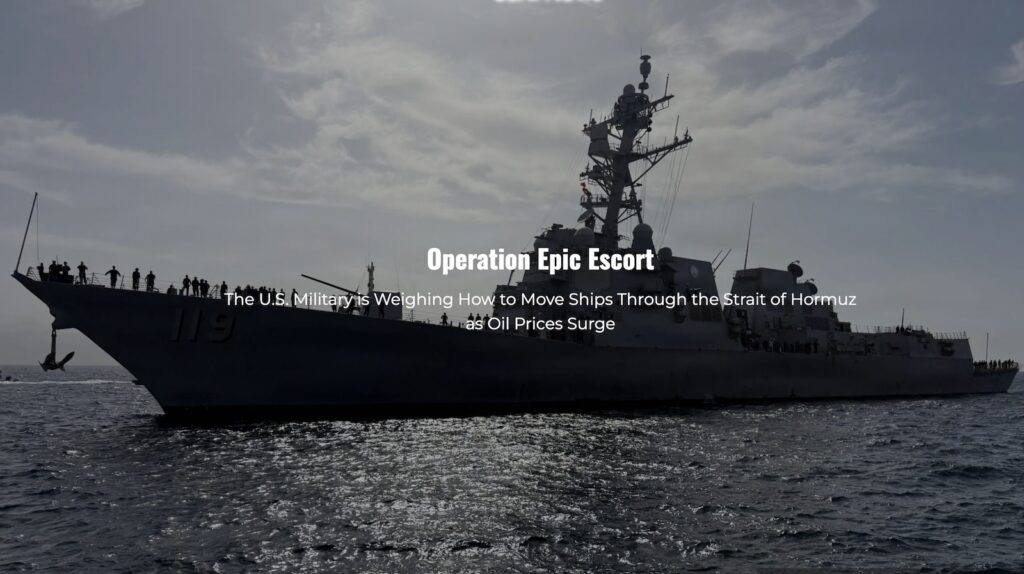
The U.S. military is moving to counter Iran’s threat to shut down the Strait of Hormuz, a chokepoint that handles roughly 20% of the world’s crude oil shipments.
The move comes after three ships were struck near the strait Wednesday as Iran vowed to stop traffic through the vital waterway, multiple media outlets reported.
Iran’s Islamic Revolutionary Guard Corps said this week it would not allow “one litre of oil” to leave the Persian Gulf while U.S.-Israeli strikes on Iran continue.
“Get ready for oil [to] be $200 a barrel,” a spokesman for Iran’s military command said, according to Reuters.
The Trump administration has matched the rhetoric, saying the United States would intensify attacks if Iran blocks shipments through the strait.
“If they do anything to stop the flow of oil or goods within the Straits of Hormuz, they will be hit by the world’s most powerful military 20 times harder than they have been hit thus far,” White House Press Secretary Karoline Leavitt said at a press briefing Monday.
Leavitt confirmed naval escorts remain an option President Donald Trump “will absolutely utilize if, and, when, necessary” to keep the strait open.
No escorts have taken place yet
The Pentagon is developing military options to restore traffic through the waterway, dubbed Operation Epic Escort.
If the United States provides protection, it likely would not resemble a traditional convoy.
Instead, it would require joint air, sea and unmanned assets, according to Dominick Donald, an adviser to Lloyd’s war-risk underwriters, as reported by USNI News.
The United States has spent 11 days systematically destroying Iranian naval assets that could make a sustained closure possible.
American forces sank 50 Iranian naval vessels in the first 10 days of Operation Epic Fury using fighters, bombers, artillery and sea-launched missiles, according to Joint Chiefs Chairman Gen. Dan Caine.
The operation also marked the first known use of ballistic missiles against naval vessels in U.S. combat history, The War Zone reported.
U.S. Central Command also reported striking and destroying 16 Iranian mine-laying vessels near the strait after CNN reported Iran had laid several dozen mines in recent days with the capability to deploy hundreds more.
Mines pose serious threat
Analysts say mines pose one of the most serious threats.
They are extremely difficult to clear even under favorable conditions, said defense analyst H.I. Sutton of Covert Shores, a naval open-source intelligence publication.
“The real mines, the ones to worry about, are bottom mines,” Sutton said. “They sit on the seabed. They detect when the ship goes overhead and they detonate. They can be very smart, even the ones that Iran has. And they can be very, very hard to clear.”
Iran’s midget submarine fleet, carrying North Korean-designed torpedoes, could also lay mines covertly.
In response, three ships with mine countermeasure packages are already in the region, backed by U.S. Navy Explosive Ordnance Disposal teams using unmanned mine-clearing systems.
Iran’s own calculus, however, works against a sustained closure because mines would also block Iranian supply routes.
“Any decision to employ them in a particular space denies it to the Iranians as well,” RAND Corp.’s Scott Savitz told USNI News.
Iran’s other tools for closing the strait are asymmetric.
Explosive-laden uncrewed surface vessels – essentially large motorboats loaded with explosives – struck a tanker off Kuwait on March 5, Sutton said.
He said the Revolutionary Guard craft operated from an underground base, a concept Iran has also used with Houthi forces in Yemen and could use to keep the strait closed.
Retired Capt. Glenn Allen, former commander of Mine Countermeasures Squadron 5 at the U.S. 5th Fleet, told USNI News there are several deterrents to Iran closing the strait, especially with mines.
“If they got desperate enough, would they use them? Yes, I believe they would,” Allen said. “But you also got to think about the risk that they’re taking even trying to get underway with a mine, versus the payback that they’re getting by using ballistic missiles or gun boats.”
Allen noted U.S. forces using Tomahawk missiles and other weapons could destroy vessels once underway, if they had not already been destroyed while docked.
Still, the administration says the United States will keep traffic flowing through the Strait of Hormuz – by force if necessary.
Trump said he hopes that will not be necessary but expressed confidence in the Navy.
“When the time comes, the U.S. Navy and its partners will escort tankers through the strait, if needed,” the president said, according to USNI.org.
(Image credit: Screenshot / Navy photo / USNI News)