Israel used Iran’s totalitarian surveillance system to track Khamenei before assassination
Tehran’s own network of street surveillance cameras was hacked by Israel to track Supreme Leader Ayatollah Ali Khamenei in the hours before the Iranian…
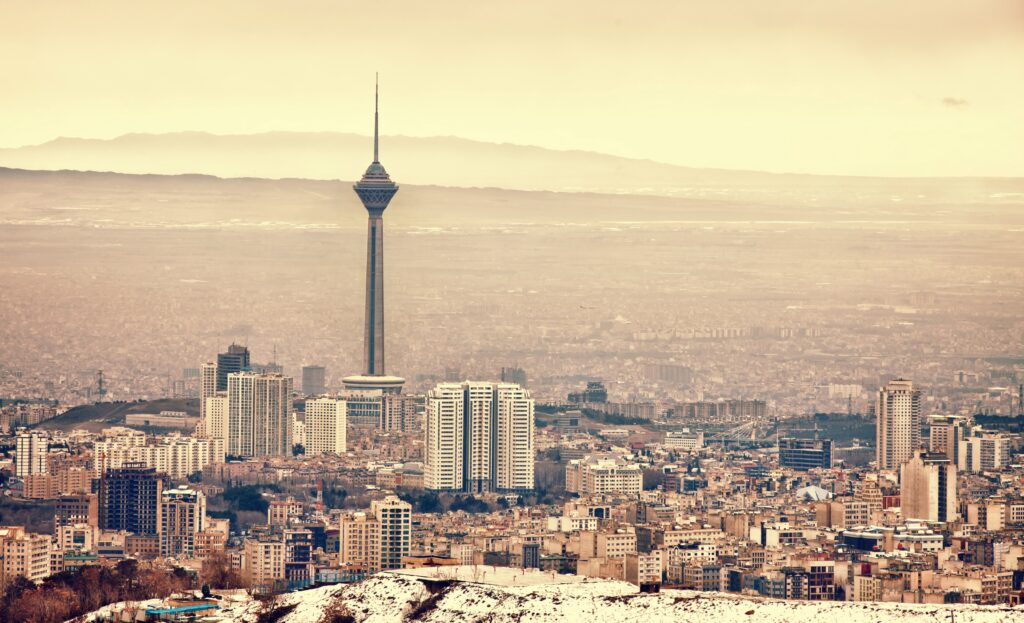
Tehran’s own network of street surveillance cameras was hacked by Israel to track Supreme Leader Ayatollah Ali Khamenei in the hours before the Iranian leader’s assassination.
Two intelligence sources who spoke to the Associated Press (AP) on condition of anonymity said for years Israel has been using hacked traffic cameras to monitor the movements of leaders in Iran.
It’s the latest example of surveillance state tools being used against the states that deploy them, noted Wired.
“Now hacking cameras has become part of the playbook of military activity,” Sergey Shykevich, who leads threat intelligence research at Tel Aviv–based security firm Check Point, told Wired.
One camera angle near Khamenei’s compound on Pasteur Street proved particularly useful, providing Israeli intelligence with insight into bodyguard routines, according to Iran International.
Complex algorithms compiled detailed dossiers on members of Khamenei’s security detail, including home addresses, duty hours, commute routes and which officials each guard was assigned to protect, said the Persian news service, citing reports from FT.com.
Israel also disrupted roughly a dozen mobile phone towers near the compound in the lead-up to the strike, preventing members of Khamenei’s protection detail from receiving potential warnings, noted Iran International.
A current Israeli intelligence official told FT that prior to the operation, “We knew Tehran like we know Jerusalem,” describing an intelligence picture built through signals intelligence, Mossad human sources and military intelligence analysis.
The camera compromise was not a secret, according to the AP.
Tehran’s surveillance network was first hacked in 2021.
Last year, a senior Iranian politician publicly warned that Israeli intelligence had penetrated the system, calling it a national security threat.
But apparently Iranian authorities took no corrective action.
Iran has been rapidly expanding its camera network in response to successive waves of internal protest, most recently the January demonstrations that ended in a government crackdown that killed thousands of Iranians, noted the AP.
The expansion of that network, intended to suppress dissent, provided Israeli intelligence with an expanded visibility into Iranian leadership.
Cybersecurity researchers have warned for years that surveillance cameras represent a systemic vulnerability to every country.
In 2019, security engineer Paul Marrapese demonstrated from his California home office that millions of cameras worldwide could be accessed with minimal effort.
A scan conducted this year found nearly three million exposed camera feeds globally, including nearly 2,000 inside Iran, he told AP.
Many cameras ship with default passwords and receive no security updates after installation.
“There are millions and millions and millions of these throughout the world,” Marrapese told AP. “They’re just dumb little things. It’s fish in a barrel.”
The camera hack tactic used by Israel is not limited to Israelis or to the Iran conflict.
In 2023, Hamas hacked surveillance cameras in southern Israel ahead of the Oct. 7 attack to monitor Israeli Defense Forces patrol patterns, said AP.
Russia conducted similar operations against Ukrainian camera infrastructure, including hacks of cameras near missile targets and at border crossings.
Conor Healy, director of research at surveillance industry publication IPVM, said the Israeli operation highlights a fundamental tension for governments that rely on camera networks to maintain internal control.
“The infrastructure authoritarian states build to make their rule unassailable may be what makes their leaders most visible to the people trying to kill them,” Healy told AP.
It’s also cheap.
“You get direct visibility without using any expensive military means such as satellites, often with better resolution,” Shykevich told Wired.
The result led to real world, first-order consequences in the U.S.-Israeli strike on Iran.
The CIA learned Khamenei and senior Iranian civilian and military leaders would be gathered at his Tehran compound on Saturday morning.
The agency then passed that intelligence to Israel, reported the New York Times, calling the information “an intelligence coup.”
U.S. and Israeli leaders quickly decided to open the war with a daylight decapitation strike.
That strike was made possible in part because of the ability of Israeli intelligence to track Iranian leaders in real time and confirm their location due to the camera hack.
Moments later Trump was able to flash a message to the troops: “Operation Epic Fury is approved. No aborts. Good luck.”