
Judicial inconsistency: First responders ask SCOTUS to strengthen religious protections with vaccine requirements
Eight firefighters from the state of Washington are asking the U.S. Supreme Court to clarify employer protocol regarding religious protections after a regional fire department…
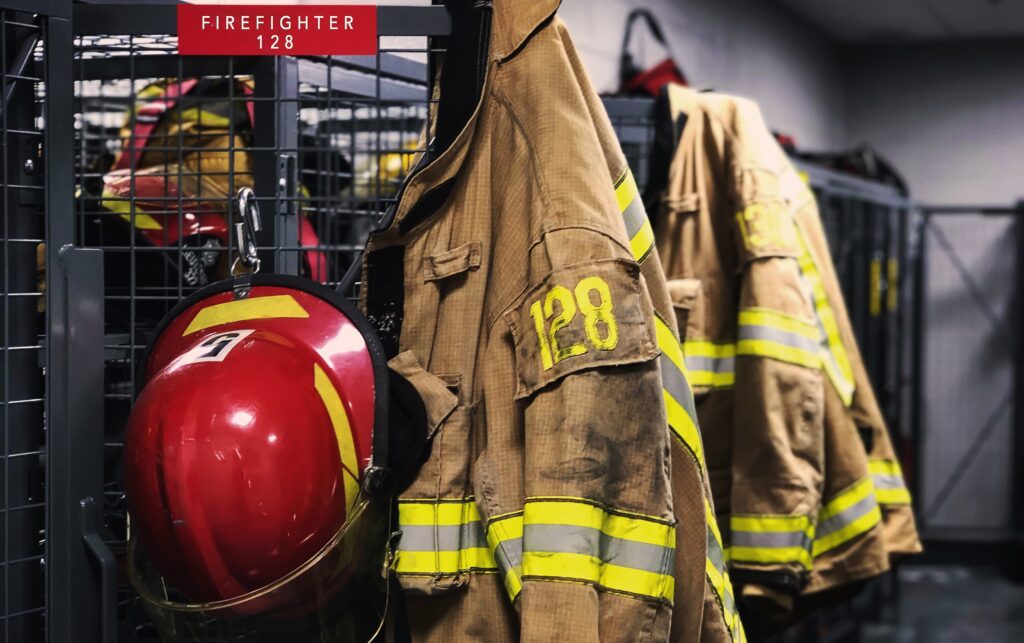
Eight firefighters from the state of Washington are asking the U.S. Supreme Court to clarify employer protocol regarding religious protections after a regional fire department denied their requests for religious exemption from the COVID-19 vaccination.
“Punishing first responders because of their religious beliefs is not only despicable, it’s illegal,” Senior Counsel for First Liberty Institute Cliff Martin said in a statement.
The case could further clarify Title VII of the Civil Rights Act of 1964, which prohibits discrimination on the basis of religious observance, practice and belief, “unless an employer demonstrates … undue hardship on the conduct of the employer’s business.” In 2023, the Supreme Court defined “undue hardship” to mean “substantial increased cost,” not merely trivial costs, according to a press release from First Liberty Institute.
“The decision strengthened legal protections for employees seeking religious accommodations, holding that federal law requires workplaces to accommodate their religious employees unless doing so would cause significant difficulty or expense on the business,” the release explains.
But circuit courts are divided over how to apply the law, Martin told The Lion in an interview. Three appellate courts hold that a reasonable concern of undue hardship is sufficient to deny religious accommodations, while three others say employers must prove actual undue hardship.
“Right now, the state of the law depends on where you live as to whether an undue hardship requires the employer to prove an actual undue hardship or just a reasonable concern,” Martin said. “That’s an untenable situation. We hope that the Supreme Court resolves it and declares, once and for all which of the circuits has it correct.”
The Supreme Court is more likely to take a case involving a circuit split because the courts are “applying federal law differently than others on the same topic and language,” Martin explained.
In 2021, eight firefighters, working at Snohomish Regional Fire and Rescue (SRFR), requested religious exemptions from a COVID-19 vaccination requirement while still adhering to various protection measures such as wearing masks, social distancing and frequent testing. SRFR, one of 18 independent fire districts in rural Snohomish County, Washington, however, denied the request, claiming the department may lose a contract with an agency if its employees were unvaccinated.
If the department was required to prove undue hardship, it could have presented statements from the agency saying the contract would end if employees were unvaccinated, Martin explained. But because no proof was required, the department simply stated reasonable concern of harm and denied its employees’ religious requests.
“Employees’ religious rights under federal law should not be so easily circumvented, nor should they turn on geography,” the petition to the Supreme Court states.
The eight first responders were placed on unpaid leave and forced to find employment elsewhere. The firefighters faced no opposition to their requests for religious exemption at other local fire departments, according to First Liberty’s press release. In fact, those unvaccinated firefighters often worked “shoulder to shoulder” with SRFR employees in fire-investigations or mutual-aid scenarios, which proved that SRFR’s concern of potential harm was entirely unfounded, Martin said.
While the firefighters sued, they never had the opportunity to appear before a jury because the district court denied their religious exemption on summary judgment, meaning only a judge considers the case. A motion for summary judgment claims the plaintiffs have no evidence and requests a judge to rule on the case based on established law, Martin explained.
But the firefighters presented sufficient evidence of harm, namely their eight months of lost pay and benefits, while the fire department’s supposed harm was speculative, Martin said. Despite these circumstances, the Ninth Circuit upheld the lower court’s decision in favor of the fire department.
“What the Ninth Circuit did was ignore the evidence that the plaintiff(s) had brought,” Martin said. “But a jury should be permitted to decide whether this was a real undue hardship or was just a nebulous excuse, or a pretextual excuse, to deny this requested religious accommodation.”
The Supreme Court’s possible ruling in the case would further clarify what is necessary for an employer to claim undue hardship to deny the religious requests of its employees, thereby establishing a universal expectation for all low courts to follow.
“This Court’s intervention is necessary to ensure that employees of faith in California and Massachusetts are afforded the same religious freedoms as employees in Pennsylvania and Wisconsin,” the petition states.