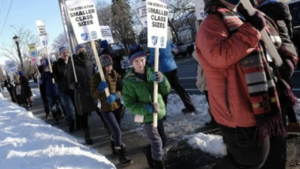
Minnesota schools plead with taxpayers to cover budget shortfalls through levy referenda
In a November ballot referendum, St. Paul Public Schools will ask voters to agree to higher taxes for covering an estimated $37 million budget deficit – not for new programs, but just to maintain…

In a November ballot referendum, St. Paul Public Schools will ask voters to agree to higher taxes for covering an estimated $37 million budget deficit – not for new programs, but just to maintain existing operations.
“Had it kept up with inflation over the past couple of decades, St. Paul Public Schools would have $50 million more in funding,” Superintendent Stacie Stanley told Hubbard’s KSTP News.
Historically, levy referenda in Minnesota have been limited in off-year elections to about 12 districts. This year could see as many as 50, according to another KSTP article.
The district, which serves 33,000 students across 68 schools, argues more funding is needed to keep a significant number of current jobs and programs.
“I will tell you that I don’t take that lightly, and our school board did not take that lightly at all,” Stanley said, adding the district has already cut $165 million from its budget between the 2024-25 and 2025-26 school years.
Schools need to ‘rationalize why they need extra money’
Minnesota’s neighboring state of Wisconsin is also facing a record number of public-school referenda – prompting new legislation to limit the number of times they can occur.
“We wrote the bill so that every four years, the school districts have a chance to say, ‘This is what we’re spending, this is what we have, this is what we need’ and rationalize why they need extra money,” said Rep. Cindi Duchow, R-Town of Delafield. “If every four years they can say for whatever reason they’re still not getting enough money, (voters) can say ‘yes’ or ‘no’ and it’s up to the taxpayers to make that decision.”
Meanwhile, voters have shown rising reluctance to agree to these requests for taxpayer assistance.
“Over the last six or seven years we have seen a somewhat of a decrease in the rate at which these referenda are approved,” said Mark Sommerhauser, communications director and policy researcher at the Wisconsin Policy Forum.
After COVID-19 pandemic assistance for schools stopped, districts turned to referenda in ever-increasing numbers, the forum’s records show.
“Special pandemic-era aid ended at the end of 2024,” said Andrew Reschovsky, professor emeritus of public affairs and applied economics at the University of Wisconsin-Madison. “So school districts are really facing a world where they no longer have this federal aid, but in almost all cases they still face problems of learning losses.”