
Mortgage fraud scandals reveal elite corruption affecting everyone
Allegations of mortgage fraud by President Donald Trump involving a trio of prominent Democrats have thrust a long-standing but rarely examined issue into the spotlight.
Have elites been…
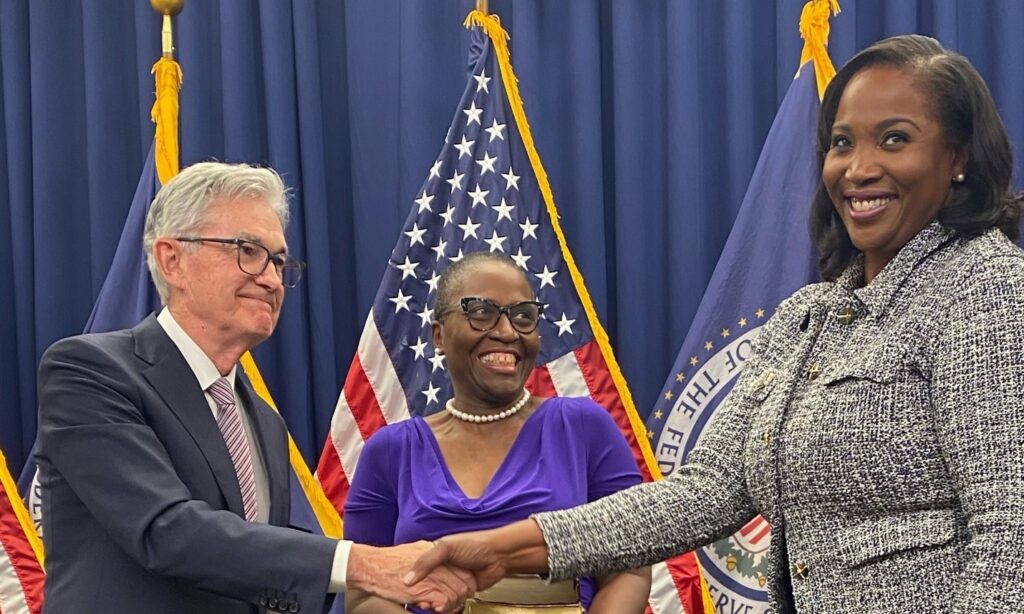
Allegations of mortgage fraud by President Donald Trump involving a trio of prominent Democrats have thrust a long-standing but rarely examined issue into the spotlight.
Have elites been exploiting a system that historically punishes mortgage fraud lightly, if at all, so it’s become a secret perk of the ruling class?
The controversy now engulfing elite Federal Reserve Governor Lisa Cook illustrates the point.
The Washington Post reported Cook signed documents claiming two different properties as her primary residence just weeks apart, likely securing favorable loan terms unavailable to ordinary borrowers. Cook later added a third property, which she described as a second home, but documents seem to indicate it’s an investment property.
She has not addressed the substance of the allegations, dismissing them as politically motivated.
Similar accusations of mortgage fraud have been leveled at New York Attorney General Letitia James and junior Sen. Adam Schiff, D-California.
The pattern is the same: powerful individuals accused of bending rules that would ruin ordinary borrowers, yet prosecutions remain rare.
The mechanism is simple for well-connected elites with both the income and knowledge.
By claiming a property as “owner-occupied,” borrowers secure lower rates, reduced down payments and more lenient loan‑to‑value thresholds, knowing their buddies will never prosecute them even if they’re caught.
A Philadelphia Federal Reserve study found fraudulent borrowers not only obtained better terms but also made up nearly one-third of the effective investor population.
They defaulted at a 75% higher rate than honest investors and routinely engaged in strategic defaults when home prices dipped, according to the study.
“Coupled with the fact that fraudulent investors take out larger loans, high default risk implies a high dollar share of defaults: frauds account for over 11 percent of all dollars in default over our entire sample, despite making up less than 4 percent of originations,” researchers concluded.
Despite this, enforcement of the law remains feeble and legacy media outlets often dismiss such efforts as political.
In response to the Cook story, for example, The Atlantic argued prosecuting mortgage fraud at scale would snare too many elites.
“How many members of Congress, federal judges, governors, attorneys general, and other federal and state leaders have submitted home-loan applications with falsehoods in them?” it asked.
“Too many, I think, to make felons of them all,” the magazine argued.
That’s not just journalistic detachment; that’s normalization of corruption.
It’s a mighty comedown for a publication that once had exclusive claim to publishing sketches by Mark Twain.
It should be noted that it was Twain who said, “It could probably be shown by facts and figures that there is no distinctly native American criminal class except Congress.”
But The Atlantic is far from an outlier in the media, dismissing such frauds.
Too much of the legacy media landscape echoes the sentiment: “How dare you prosecute mortgage fraud when so many leaders are implicated?”
The Washington Post’s lead elite, the uber-liberal, faux free market backstop, Megan McArdle, said, “Technically this kind of lie is a federal felony,” but argued it was too expensive to prosecute such petty crimes.
McArdle’s rationalization on behalf of her class is the very definition of systemic corruption.
Furthermore, studies show mortgage fraud is too expensive to ignore.
The 2023 Federal Reserve study on the subject, for example, was made in conjunction with studying housing bubbles, showing how mortgage fraud helped create such frothy conditions.
A 2010 study also described how widespread fraud creates “echo epidemics” – scams that become contagious when the powerful sanction it by inaction, as in the case of Enron.
The study authors call it “control fraud.”
Control fraud happens when those who control institutions weaponize them for personal gain.
The fraud spreads rapidly, creating waves of white‑collar street crime reminiscent of the savings and loan disaster.
Fraud such as this, when normalized among elites, ripples outward, infecting the system with impunity.
This isn’t theoretical.
The legal newsletter Financial Services Perspectives calls mortgage fraud an “escalating threat.”
“Notably, mortgage fraud due to fraudulent ‘scams’ was up 51% in 2023,” the newsletter warned.
One of the most common scams involved falsely claiming a property as a primary residence, said the legal bulletin – the same type of fraud highlighted in the James, Schiff and Cook cases.
However, the consequences of control fraud extend beyond partisan scandal.
The core issue isn’t a few bad actors. It’s a political-media-industrial complex tolerating and even normalizing fraud when committed by “their side” while cheering on prosecutions when it’s the other side.
Mortgage fraud has thus become less of a criminal violation and more of a privileged loophole for those with power and connections.
The law remains formally equal, but enforcement is not. And that’s the slipperiest consequence of all – not just a matter of control fraud, but of control.