New Hampshire marks nation’s steepest enrollment decline amid fourth-highest spending growth per student, analysis shows
Despite boosting its per-pupil spending by 60.5% over two decades, New Hampshire has experienced “the nation’s largest decline in enrollment,” a recent analysis concluded.
“New…
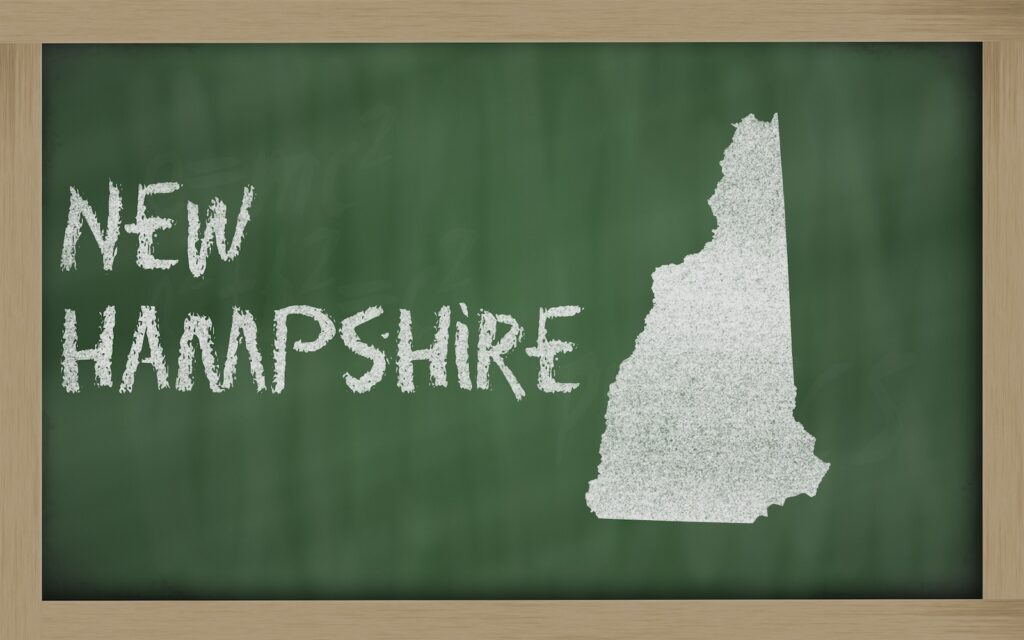
Despite boosting its per-pupil spending by 60.5% over two decades, New Hampshire has experienced “the nation’s largest decline in enrollment,” a recent analysis concluded.
“New Hampshire’s K-12 public school students have more resources devoted to their educations than ever before,” wrote Andrew Cline, president of the Josiah Bartlett Center for Public Policy. “Unfortunately, this increase in resources has not led to performance gains.”
Cline cited the Reason Foundation’s K-12 Education Spending Spotlight, as well as National Assessment of Educational Progress (NAEP) reading and math scores dropping by 21 points statewide over this timeframe.
“Nationally, scores fell by 7 points, which means that New Hampshire fell behind relative to other states despite posting one of the nation’s largest increases in spending,” Cline lamented.
Meanwhile, the Granite State’s student enrollment dwindled by 18.4%.
“Only the big, blue states of New York (75.8%), California (78.6%) and Illinois (62.5%) saw their public education expenditures rise at a faster rate, according to the analysis,” Cline wrote.
Employee benefits, non-teaching staff contributed to increased spending
Much of the per-pupil increase stemmed from schools spending more on employee benefits, in addition to hiring more “non-teachers” such as instructional aides, counselors, speech pathologists and social workers.
“Nationwide, non-teaching staff now account for over half, 52.5%, of all public school employees, up from 49.2% in 2002,” the Reason Foundation concluded, noting the number of teachers rose by only 7.6% in comparison.
“Since the start of the COVID-19 pandemic, the public school staffing surge has persisted. Despite public school enrollment falling by 1.18 million students between 2020 and 2023, public schools added over 81,000 non-teaching staff to their payrolls during that period.”
Teachers’ unions often argue educators are underpaid, but the foundation’s analysis highlights the increase in employee benefits more than tripling the rise in teacher salaries.
“Real spending on employee salaries grew modestly, rising from $8,449 per student to $9,098 per student, a 7.7% increase,” the report notes. “As a result, for every new $1 that public schools spent on employee salaries between 2002 and 2023, benefit expenditures rose by $3.27.”
In New Hampshire alone, the spending on public-school employee benefits from 2002 to 2023 increased by 151.6% – “ranking seventh in the country,” Cline wrote.
Christian schools growing statewide
Amid this backdrop, more families in New Hampshire are exploring alternative educational options, including Christian schools.
“I think that religious schools are probably seen as a wall – a bastion – against some of these current issues that tend to be very divisive,” said Mike Kingsley, a leader at Trinity Christian School in Concord. “And so the families that are saying, ‘We want our students in a conservative place where they’re going to be taught traditional values,’ see a religious school as being that.”
New Hampshire launched Education Freedom Accounts (EFAs) in 2021, which allowed parents to direct their child’s education using public funds.
Since then, 11 of the state’s 28 Christian schools have either opened or grown by at least 50%, according to the Concord Monitor.
“We just happen to be in an environment, and in an economic part of the state, where the demographic is such that EFAs have a huge impact on our growth,” said Rick Duba, head of school at Laconia Christian Academy.