
Nicaraguan political and religious prisoners agree to exile in U.S.-brokered deal with Sandinistas
Scores of Nicaraguan political prisoners, some of whom were held in prison simply for being members of Christian churches, have arrived in Guatemala in a U.S.-brokered deal, according to multiple…
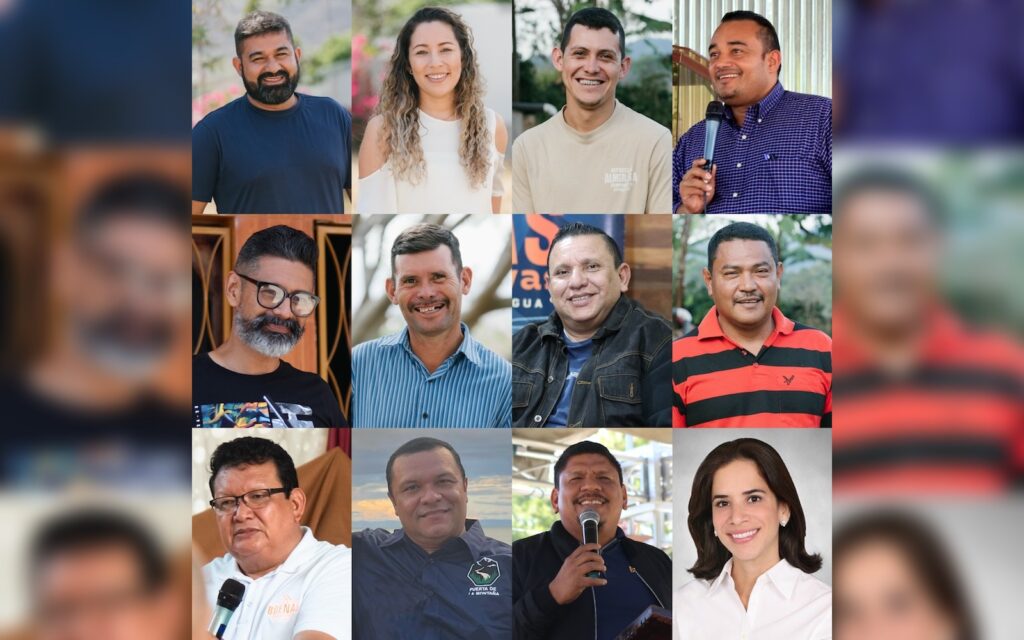
Scores of Nicaraguan political prisoners, some of whom were held in prison simply for being members of Christian churches, have arrived in Guatemala in a U.S.-brokered deal, according to multiple media accounts.
The former detainees, who were held by Nicaragua’s leftist Sandinista regime, will apply for entry to the U.S. or other countries, reported the Associated Press (AP).
“The United States and Guatemala reaffirm the rights of all persons to enjoy human rights and fundamental freedoms, including the rights to freedom of thought, conscience, and religion or belief and to freedom of expression, association, and peaceful assembly,” said a joint statement by the U.S. and Guatemala.
The White House said that the 135 prisoners had been freed on “humanitarian grounds” under the deal negotiated with Nicaraguan President Daniel Ortega and his wife, Vice President Rosario Murillo, reported Reuters.
“No one should be put in jail for peacefully exercising their fundamental rights of free expression, association, and practicing their religion,” U.S. National Security Advisor Jake Sullivan said in a statement about the deal.
The newly released prisoners include human rights workers, Catholic laypersons, and 13 individuals affiliated with a Texas-based Christian missionary organization, according to the World News Group (WNG).
WNG reported that among the detainees from the Christian missionary organization were three Americans.
The Christian ministry denied violating any Nicaraguan laws and said it has thoroughly cooperated with the Sandinista government since 2018.
The socialist Central American regime accused the Christian group of money laundering and organized crime in the production of eight in-country gospel campaigns.
The newly released prisoners were met by Eric Jacobstein, a deputy assistant secretary of state, said the AP.
“These are individuals, some of whom have been victims of torture … who’ve had an extremely difficult time; we did find them generally in very good health and spirits,” he said, according to the wire service.
Jacobstein noted to reporters the “true pettiness and cruelty” of the Sandinista regime under Ortega who imprisoned people for no reason.
The Sandinistas have been ratcheting up the persecution of any groups not under the direct control of the socialist party.
In August, WNG reported that the Nicaraguan Ministry of the Interior closed the American Chamber of Commerce and 150 similar business and other organizations, ostensibly for failure to report their finances.
The closures follow reports of increased persecution of Catholic ministries inside Nicaragua.
In one case, a house previously occupied by the Sisters of the Fraternity of the Poor Ones of Jesus Christ is now being used by police in the Directorate of Migration and Immigration, reported the Catholic News Agency.
In June, the office of the United Nation High Commissioner for Human Rights expressed concern with the Sandinistas’ “control over the judiciary … using it to implement a systematic campaign of repression. Unlawful and arbitrary arrests were often followed by trials that did not meet basic guarantees of due process.”
Earlier this week the regime codified in the National Assembly its practice of trying domestic and foreign political opponents in absentia and seizing their property as reparations, noted the AP.
Exiled Nicaraguan lawyer Uriel Pineda told the AP that the changes in the law were meant to strengthen the regime’s ability to “legalize the arbitrary (actions) that it has been committing, like the confiscation of property,” while at the same time “reinforcing the structure of repression, giving it a legal framework.”
This is Ortega’s second term in office under a Sandinista ascendency.
He served as president of Nicaragua from 1985 to 1990, until he was ousted in an election after the U.S. imposed sanctions on the country. In the 1990 election the U.S. made it clear that the sanctions would not be lifted if Ortega won reelection.
One of those freed tempered enthusiasm about the prisoner release, however, noting that exile still means that people are being held hostage by “forced displacement” from their home country.
“Nobody should be held prisoner for thinking differently,” Nicaraguan human rights advocate Haydeé Castillo said, reported the AP.
Photo courtesy of Mountain Gateway Mission