Philadelphia ponders $1 rideshare tax to avoid eliminating school staff
In an ever-mounting effort to find enough funds just to keep up with current public education spending, Philadelphia’s mayor has proposed a $1 rideshare tax across all rides within the…
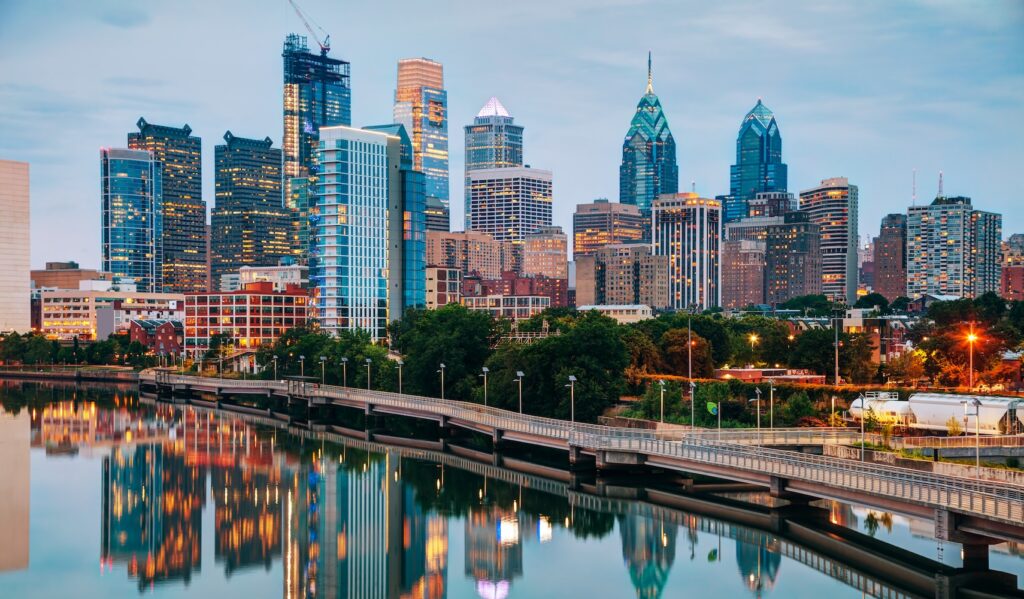
In an ever-mounting effort to find enough funds just to keep up with current public education spending, Philadelphia’s mayor has proposed a $1 rideshare tax across all rides within the city.
Eliminating hundreds of school positions “is not acceptable to me,” said Mayor Cherelle Parker at a March 23 press conference as reported by Chalkbeat Philadelphia. “We have to keep these staff members in schools where they’re very much needed.”
Parker had originally set the proposed rideshare tax at 20 cents for each ride, to raise an estimated $9.6 million.
However, she raised it to $1 after the district revealed a budget proposal cutting 340 staff posts.
The higher tax would save 240 of those – “approximately 130 teachers, 55 student climate staff, and 55 other school-based positions,” Chalkbeat noted.
“But even the higher tax rate on rideshares wouldn’t solve the district’s budget crisis by itself. After accounting for the $1-per-ride tax, the district would still plan to cut 100 school-based positions in the coming year, as well as 130 central office staff and 220 building substitute positions. Teachers would not be laid off, but would be reshuffled to fill vacant positions.”
Addressing a $300 million deficit
Increasing the tax to $1 would give the district an annual boost of about $48 million, beginning in the 2028 fiscal year, Chalkbeat wrote.
However, this pales in comparison to the district’s $300 million budget shortfall, which Superintendent Tony Watlington attributed to “decades of underfunding combined with the end of federal pandemic relief funds,” according to the article.
Public-school critics take issue with the underfunding argument, pointing out the massive discrepancy between the U.S. and other countries’ spending on education.
“In 2024, the U.S. spent $20,387 per pupil, compared to an average of $15,022 across the Organization for Economic Cooperation and Development,” observed the Heartland Institute’s editorial director Chris Talgo.
Furthermore, much of this funding will flow to administrators more than teachers, according to the former public-school teacher.
“Since 2019, the total number of public school staff has risen from 6.5 million to 6.8 million, but teachers fill less than half of all open staff positions. And they are now outnumbered by non-teachers on staff — 3.6 million to 3.2 million.”
Talgo concluded with a call for educational options outside the current government system: “Private and charter schools cost far less than public schools, do a far better job training students academically and are far safer.”