
Portland schools report ‘mid-year operating gap’ on top of $50 million deficit for next year
In yet another financial blow to Oregon’s largest district, Portland Public Schools has admitted a “mid-year operating gap” in addition to its $50 million budget shortfall for next…
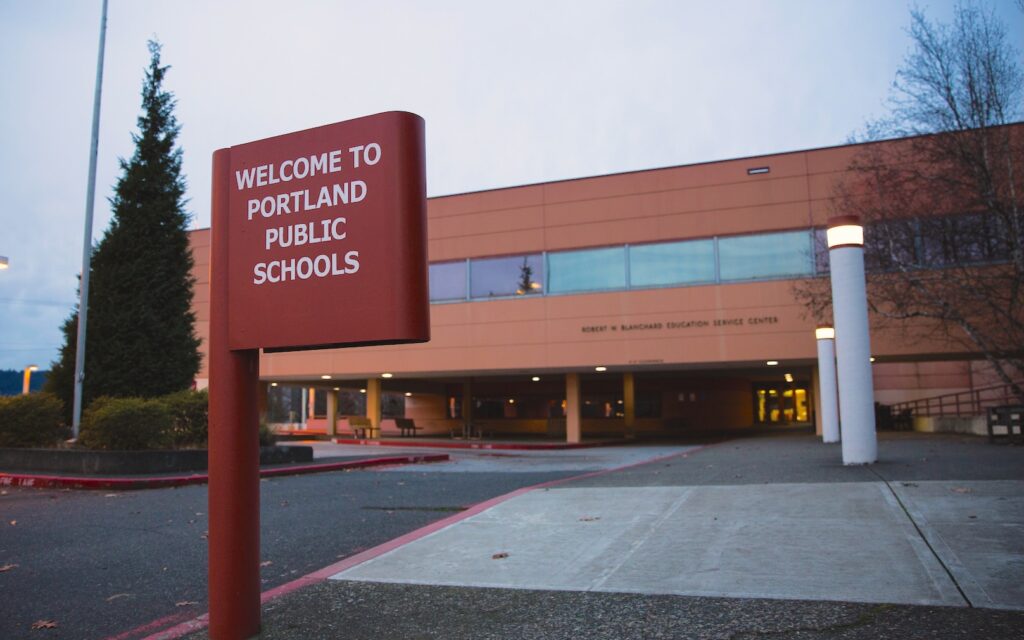
In yet another financial blow to Oregon’s largest district, Portland Public Schools has admitted a “mid-year operating gap” in addition to its $50 million budget shortfall for next year.
Staffers discovered the gap “when finalizing budget projections in the current fiscal year” – originally at $22.5 million but later reduced by cutting costs to $10 million, OPB reported.
“As a result of these additional costs, the district is taking immediate actions with a goal of closing the gap by June 30, so the budget problems in the current school year don’t carry over to the coming year.”
Michelle Morrison, the district’s chief financial officer, described the deficit as “a corrective action moment.”
“We always anticipated a need to reduce our workforce sometime this spring,” she wrote in a message to board members and staff. “This current reality may accelerate that timeline slightly. A final determination is still being made.”
The district has been cutting its budget by millions of dollars since the 2022-23 academic year.
As previously reported, part of the problem involves massive growth in administrative, non-teaching positions (88%) compared to student (8%) and teacher (9%) growth between 2000 and 2019.
Additional Oregon school districts revealing mid-year deficits include the Reynolds School District east of Portland in Multnomah County, according to OPB.
Financial mismanagement reported across districts nationwide
Oregon joins a growing list of states reporting last-minute budget gaps throughout the 2025-26 academic year – sometimes as schools opened, then recalibrating the deficits even later.
“It is really incompetence, bad accounting and administration’s inability to say no,” said Ruth B. Turner, superintendent of Montclair Public Schools in New Jersey, when reporting an $18 million deficit in September.
Another recent example involves Milwaukee Public Schools (MPS), where community advocates openly questioned how administrators allowed a $46 million shortfall to take place.
“You say this budget is a reflection of your values, so where does lack of transparency about financial mismanagement fall into your values?” asked special education teacher Will Fitzgerald at a Feb. 10 district committee meeting.
The district missed several deadlines in May to submit its financial reports, which led to outside intervention at the state level.
“A financial reporting scandal in 2024 led the (Wisconsin Department of Public Instruction) to withhold funds from MPS until district administrators got the books in order, and it also resulted in a series of audits that revealed the $46 million in overspending,” journalists wrote.
Other districts reporting financial shortfalls include the St. Joseph School District in Missouri, Minneapolis Public Schools, and Brockton Public Schools in Massachusetts.