Religious Liberty Commission tackles faith in education at third meeting
The Religious Liberty Commission emphasized the importance of religious freedom in K-12 and higher education on Monday at the Museum of the Bible in…
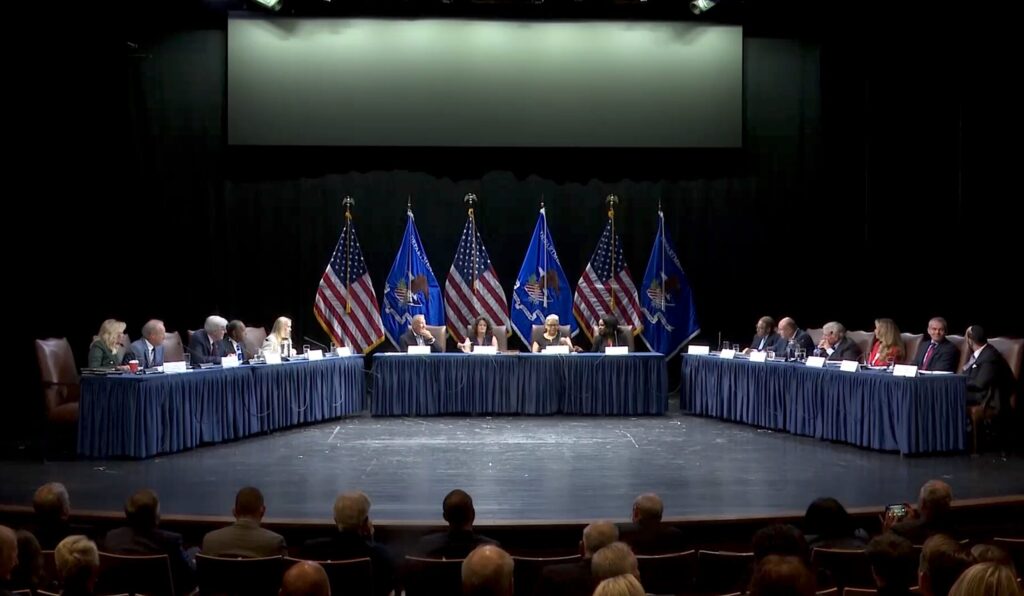
The Religious Liberty Commission emphasized the importance of religious freedom in K-12 and higher education on Monday at the Museum of the Bible in Washington, D.C.
“To defend a country, you need an army, but to defend a civilization, you need schools,” said Jason Bedrick, research fellow at the Heritage Foundation, quoting Rabbi Jonathan Sacks. “You need education as the conversation between generations. We need to teach our children, and they theirs, what we aspire to, and the ideals we were bequeathed by those who came before us.”
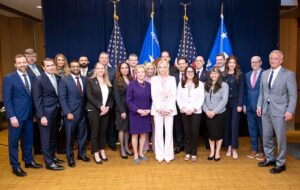
President Donald Trump established the Religious Liberty Commission under an executive order in May. The commission has held two prior meetings, aimed toward protecting both religious liberty and religious pluralism as American founding principles. The appointed members of the commission, also called commissioners, will provide Trump with a report in 2026 on strategies to protect these principles.
“People have the right and the freedom of religious liberty, and as long as we as a government can get out of the way and guarantee that, then it’s up to the pastors and it’s up to the people, and it’s up to the parents,” Commissioner Kelly Shackelford said.
The opening session of Monday’s meeting recognized Charlie Kirk, who was recently assassinated for his political and faith views, which included a strong stance on religious freedom. Following his remembrance, Hillsdale College President Larry Arnn surveyed the history of religious freedom in America, how it declined, and how the nation might return to it.
He discussed the various religious sects who came to America to establish “communities of enforced religion.” He said the multiplicity of religions flourished because of the “obedience of the moral law.”
Arnn discussed the nature of man as a rational being, drawn to ponder moral questions.
“Every college of any age was founded to teach the young. It is the path back to God and the path back to freedom, and it is the only path,” Arnn said. “If we do not tread that path, we will lose our freedom. And worse than that, we will deserve to lose it.”
Following Arnn, two teachers and a coach testified as witnesses to religious discrimination. Monica Gill shared how her successful lawsuit won freedom for teachers in Loudoun County “to speak truth and love,” especially regarding a student’s biological sex.
“God’s truth is more important than my job,” Gill said, explaining how she had to defy a county mandate to use a child’s “preferred pronouns” despite biological sex.
Coach Joseph Kennedy also spoke about how he was fired for practicing his faith publicly and then endured six years in a lawsuit. In 2022, the United States Supreme Court ruled in favor of Kennedy and protected his right of religious freedom.
Another panelist session focused on faith-based schools and how to restrain governmental overreach.
“The child is not the mere creature of the state. Those who nurture him and direct his destiny have the right, coupled with the high duty to recognize and prepare him for additional obligations,” Rabbi David Zwiebel said. “To insist today that private schools, including Jewish and other religious schools, become carbon copies of public schools, is just the latest iteration of the state’s effort to standardize its children.”
Panelists and commissioners also discussed the meaning of the establishment clause under the First Amendment, which has played an important role in court cases over religious freedom in education.
“The establishment clause means that secular religion cannot be established,” commissioner Eric Metaxas said. “If your view is opposing or pushing against a biblical or a Christian worldview, if you’re pushing against what you call a religious worldview, you are yourself taking a religious position. And that’s not neutral.”
John Bursch, senior counsel with Alliance Defending Freedom, outlined specific tactics the Trump administration should take to protect religious liberty. He emphasized the necessity for such protections to be established by law, not merely judicial precedent or constitutional rights. He explained how the law instructs the people in morality and thus protects religious freedom.
Bursch also said enacting laws that “talk about the truth of marriage” and “the reality of the human body” will both protect religious freedom and keep citizens or organizations from discriminating against religious practice. This is especially true for issues dealing with sexual orientation and gender identity.
“Religious liberty should not be a partisan issue,” Bursch said. “It’s a matter of human dignity, family rights and national flourishing.”
Another practical measure the government can take is supporting school choice, Bedrick said. Government funds should follow the students without giving federal authority to enforce policies in local schools.
“The government’s interest in ensuring that every child has access to a quality education does not imply that government should run the schools. Instead, public funds should follow the child to the educational environment that best meets his or her learning needs and aligns with his or her family’s values,” Bedrick said. “School choice respects parental rights and religious liberty and fosters a more diverse set of schooling options that better reflects the great diversity of American families than one size fits all status quo.”
Hannah Earl, director of the Center for Faith at the Department of Education, closed the committee by providing an update on how the DOE is withdrawing from government-imposed policies and defending religious freedom. She promised the end of “weaponization of policies” that “target” Christian education.
“Returning education to the states means returning education to parents and communities. That is necessarily a grassroots effort that will engage Americans at every level of government and civil society,” Earl said. “So I’m asking you to exercise your own spheres of influence as we move toward that goal.”
The next commision meeting – the fourth of eight planned through 2026 – is scheduled for Nov. 17 in Dallas, Texas.