
Report: Modern teens are dating, socializing less than previous generations
Modern teens are less likely to date, attend parties or visit friends frequently, new research shows.
Analysis from the Institute for Family Studies (IFS) compared the social habits of teens…

Modern teens are less likely to date, attend parties or visit friends frequently, new research shows.
Analysis from the Institute for Family Studies (IFS) compared the social habits of teens from 2024 to those of the 1980s and unearthed that shocking disparity in in-person socializing.
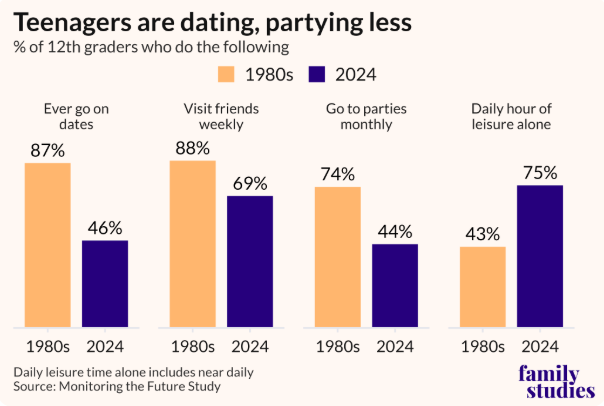
Almost all 12th graders in the ’80s reported having gone on a date (87%) whereas less than half of current 12th graders do so (46%).
Rates of visiting friends weekly dropped nearly 20 points, while attending parties dropped 30 points.
However, spending an hour of leisure time alone on a daily basis increased from 43% to 75%.
It’s not hard to figure out why.
With the advent of social media, youth can experience the illusion of socializing without actually being with their peers. Or they can fritter away hours on entertainment apps designed to be addictive.
Studies cited by the American Academy of Pediatrics estimate teenagers spend 8 to 9 hours a day on some form of media.
Overwhelming evidence has shown social media harms mental health and can even lead to suicidal behavior, while teachers testify to the disruption phones cause to learning and healthy socialization.
A 2025 study even linked higher social media use with lower language and memory skills in adolescents.
Now, big social media companies are facing lawsuits for designing products that clearly addict and harm children.
In an ongoing civil trial against Meta in Los Angeles, the plaintiff’s attorney is accusing the social media titan of purposefully choosing “business growth over safety features.”
“Social media companies intentionally designed their platforms to addict children for the purpose of selling the children’s minutes to advertisers,” the attorney explained. “And the consequences of that: we now have a generation of children that have been struggling with this social media addiction.”
However, teens’ lack of socialization may not be entirely the fault of media companies. A 2026 report from the Institute for Family Studies found most American children aren’t allowed to walk or bike even a mile from their home.
This lack of independence – which persists until adulthood – may limit teens’ ability to recreate outdoors or easily spend in-person time with friends.
Surprisingly, even though youth have less freedom and are less socially active than 40 years ago, they’re still perceived as undersupervised.
“Most Americans, we find, believe children get too little supervision, not too much, even though children today have less unsupervised time than children of almost any prior generation,” IFS report authors explained.
“To put it sharply, the type of parenting our society most actively supports is keeping children quiet by putting them in front of a screen.”
While screen time may be all too convenient in our device-laden culture, IFS authors insist parents should swim upstream.
“Raising children who climb trees, ride bikes, meet up with friends, and play instruments is hard work,” conclude the report authors. “But the benefits of allowing children to become more independent and resilient are real as well.
“If our aim is to nurture healthy families and help them grow in number, the institutions of civil society must learn to work with families in a broad social effort of raising resilient children.”