Republicans nearly extinct at Yale, other Ivy League schools
A recent report about ideology in academia by a Yale University watchdog warned ideological and political selection at elite colleges fail to represent American conservatives.
The Buckley…
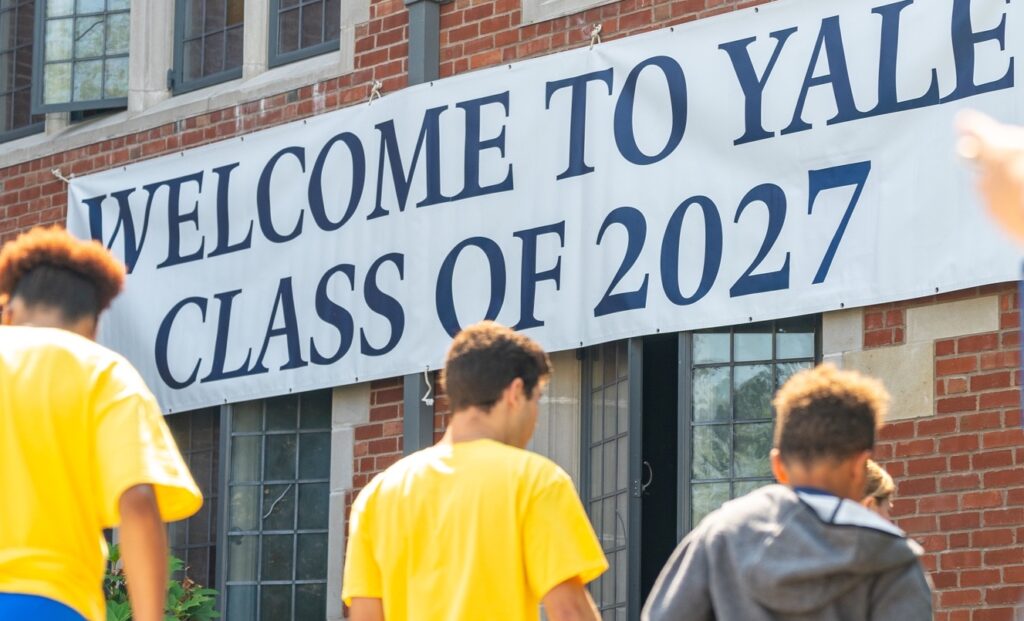
A recent report about ideology in academia by a Yale University watchdog warned ideological and political selection at elite colleges fail to represent American conservatives.
The Buckley Institute study revealed a significant ideological imbalance among faculty members at the university.
The report found the Ivy League school seemingly punishes those members of academia who are registered Republicans.
“The monolithic ideological lean of the Yale faculty indicates that the university is falling short in that regard,” said the report’s authors.
They noted the failure impedes the mission of Yale in fostering the free exchange of ideas.
The study, conducted in fall, analyzed the political affiliations of 1,666 faculty members across 43 undergraduate departments, the law school and the school of management.
The findings indicate 82.3% of faculty are registered Democrats or primarily support Democrat candidates, while only 15.4% identify as independents.
A mere 2.3% of faculty are Republicans.
Most notably, 27 of the 43 undergraduate departments have no registered Republican faculty members.
The report also provides detailed breakdowns of political affiliations across various academic disciplines at Yale, revealing humanities departments have the highest percentage of Democrats (88%), while engineering departments show slightly more political diversity, with 6.9% identifying as Republicans.
The report highlights a stark contrast between the political diversity of Yale’s faculty and the broader American electorate.
National data shows independents make up approximately 40% of voters, with Democrats and Republicans each accounting for around 30%, the report said.
In Connecticut, where Yale is located, independents represent 44% of voters, Republicans 21%, and Democrats 35%.
The Buckley Institute utilized L2 Voter Data, a private voter database widely used by journalists and political analytics firms, Federal Election Commission campaign donation records and public information to compile the data.
Other reports support the institute’s findings across multiple universities, according to one well-regarded constitutional scholar.
Popular legal commentator Professor Jonathan Turley criticized Yale University and other elite academic institutions for their lack of ideological diversity among faculty.
“Yale has finally achieved liberal nirvana … universities have been effectively cleansing their ranks of Republicans and conservatives,” said Turley, a legal scholar at George Washington University Law school.
This imbalance reflects a broader trend in higher education where universities have systematically excluded conservative voices, he argued.
“For now, most Yale departments have succeeded in creating a safe space for the ideologically intolerant,” Turley added.
He referenced similar studies, including one from Georgetown University, which he said found only 9% of law school professors at top institutions identify as conservative.
“The Harvard Crimson has documented how the school’s departments have virtually eliminated Republicans,” the legal scholar noted. “In one study of multiple departments last year, they found that more than 75 percent of the faculty self-identified as ‘liberal’ or ‘very liberal.’”
Only 5% identified as “conservative,” and only 0.4% as “very conservative.”
This lack of ideological diversity undermines intellectual discourse and stifles opposing viewpoints, according to Turley.
He contends this ideological concentration is not accidental, pointing to faculty hiring practices and professional incentives that discourage dissenting viewpoints.
Unlike freedom of religion, the constitutionally protected mandate of free association does not include protecting political affiliations or viewpoints in hiring.
There are only two widely accepted exceptions to this, both benefiting America’s political class.
In Washington, D.C., elite politicians found it expedient in 1977 to enshrine political affiliation as a human right inside the District; and government employees are free from workplace discrimination based on their politics, according to a U.S. Supreme Court decision.
But everyone else can be fired from their private employers for their political views.
Turley argued universities increasingly resist efforts to promote ideological diversity, framing such initiatives as incompatible with academic standards or intellectual rigor.
The Harvard Crimson, a campus newspaper, highlighted the degree of prejudice it found against conservatives at Harvard in one neat comparison.
“Think about that: someone is three times more likely to get into Harvard than to encounter a conservative faculty member here,” wrote a Crimson editor.
Turley warned such discrimination could lead to further polarization and intolerance in academia, urging donors and institutions to prioritize intellectual inclusivity.
The Yale report underscores the university’s deviation from its stated commitment to intellectual diversity and free speech as outlined in Yale’s Woodward Report, an annual report instituted in 1975 measuring free speech on campus, authors said.
“The Buckley Institute is the only organization dedicated to promoting intellectual diversity and free speech at Yale,” said the institute’s homepage. “Every year, we expose students to perspectives they won’t hear in the classroom, offer exclusive access to political and intellectual leaders, and provide a forum where students can speak freely about issues that matter.”