
Texas governor signs bathroom bill into law
Texas Gov. Greg Abbott signed into law Monday a measure banning government entities from allowing transgender-identifying people to use public bathrooms and other private facilities that don’t…
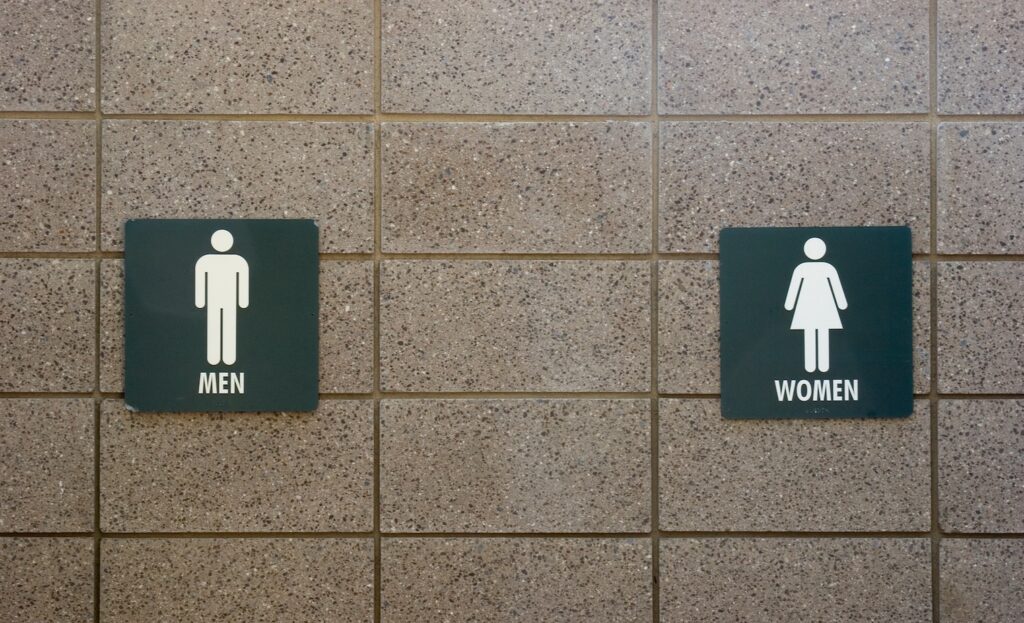
Texas Gov. Greg Abbott signed into law Monday a measure banning government entities from allowing transgender-identifying people to use public bathrooms and other private facilities that don’t match their biological sex.
“This is just common sense,” Abbott said in a short video he posted on social media. “I signed a law banning men in women’s restrooms. It is a common-sense public safety issue.”
The law, Senate Bill 8, was written by Sen. Mayes Middleton, R-Galveston. It prohibits cities, counties, school districts, universities, state agencies and correctional facilities from adopting policies permitting transgender people to use private facilities based on their so-called gender identity.
Abbott didn’t hold a public signing ceremony, opting instead to announce the new law online.
Any government entity violating the law will face fines of $25,000 for the first offense and $125,000 for subsequent violations. The law doesn’t levy fines against individual Texans nor create criminal penalties. Private businesses are not affected.
Middleton and other Republicans who supported the measure say it will protect women and girls.
“It’s common sense to want to make sure that we don’t allow men in women’s private spaces,” Middleton said last month. “These are boundaries that have existed for generations. They’re boundaries based on biological truth. They’re based on biblical truth, and so what this bill does is it restores those boundaries and makes them enforceable.”
The bill had been a long-term goal for Republicans in Texas.
In 2017, a similar proposal failed in the House after then-Speaker Joe Straus blocked it from coming to a vote.
Supporters also said the measure brings Texas in line with policies already adopted in several other Republican-led states, where lawmakers have argued restricting bathroom access based on biological sex is necessary to provide clarity for schools and government institutions.
Critics said the law unfairly targets transgender Texans and will open the door to harassment.
Rocío Fierro-Pérez, political director for the Texas Freedom Network, said the measure will invite “invasive policing” for people using bathrooms.
“This bill fuels stigma, harassment, and humiliation for transgender Texans, especially children, who are simply trying to go about their daily lives,” Fierro-Pérez said in a statement.
The law allows Texans to file complaints with the attorney general’s office if they believe a municipality or state agency has violated the statute.