The Supreme Court releases decisions about religious liberty, immigration rights
The U.S. Supreme Court decided Tuesday that a Louisiana man cannot seek damages for an alleged violation of his religious convictions after prison officials shaved his dreadlocks – something…
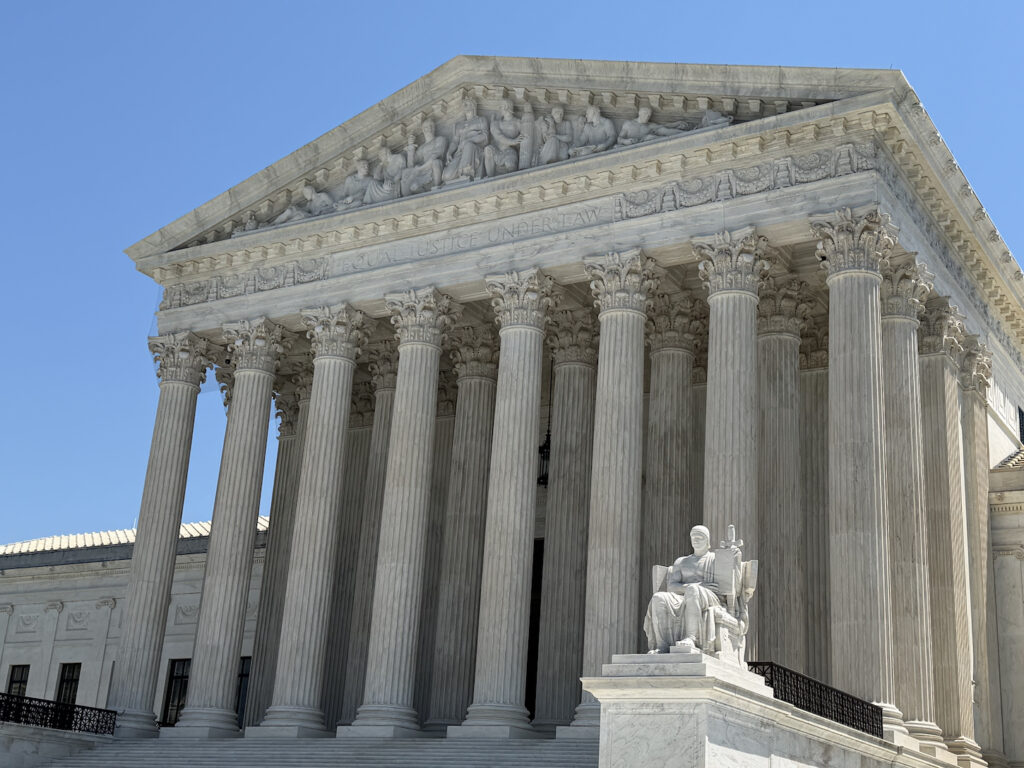
The U.S. Supreme Court decided Tuesday that a Louisiana man cannot seek damages for an alleged violation of his religious convictions after prison officials shaved his dreadlocks – something forbidden by his Rastafari faith. It was one of six opinions released Tuesday, with 12 more are expected by the end of this month.
In Landor v. Louisiana Department of Corrections, Damon Landor claimed he had a court order allowing him to keep his dreadlocks for religious reasons, but prison officials shaved his head bald. For Rastafarians, dreadlocks symbolize rejection of Western society and devotion to God. SCOTUS voted 6-3 and upheld the 5th U.S. Circuit Court of Appeals’ ruling that the Religious Land Use and Institutionalized Persons Act does not allow private individuals to seek monetary damages.
“Congress’s power to spend money does not include the power to regulate,” Justice Neil Gorsuch wrote in the opinion. “Spending Clause statutes can bind only those who voluntarily and knowingly undertake obligations by agreement with the federal government.”
That was the “essential element” missing from Landor’s case, Gorsuch continued, leading the court to dismiss it.
In another 6-3 decision, the high court ruled Tuesday that members of the Falun Gong religious movement could not sue Cisco Systems, a technology company, in U.S. courts under the Alien Tort Statute, or ATS. The religious group alleged Cisco developed technology that aided China in surveilling and persecuting its members. The ATS, a 1789 law enacted by the first Congress, allows some international disputes to be heard in American courts. But SCOTUS ruled this case does not fall under its protection, reversing a decision from the 9th U.S. Circuit Court of Appeals and narrowing the scope of cases the ATS covers.
“Courts may not create new causes of action for violations of international norms,” Justice Amy Coney Barrett wrote in her opinion. “[The ATS] does not provide for aiding-and-abetting liability.”
The court also ruled 6-3 in favor of Exxon Mobil and several states, finding that sovereign immunity does not shield Cuban companies under the Helms-Burton Act.
The Helms-Burton Act explicitly stripped Cuban agencies and instrumentalities of sovereign immunity, according to Justice Brett Kavanaugh’s opinion. The decision revives Exxon’s billion-dollar damages claim.
The court also returned Pung v. Isabella County and Blanche v. Lau to lower courts.
In Pung, the court sent the case back to Michigan, saying the county’s conduct did not impose excessive fines on the plaintiff after selling a property to cover unpaid property taxes.
In Blanche, the justices ruled 6-3 that border officers do not need tangible evidence that a green card holder committed a crime before treating the resident as seeking admission to the United States.
The remaining decisions include cases involving birthright citizenship, mail-in ballots and biological male athletes in women’s sports.