Three states weigh bills to end public school vaccine mandates
Amid a national debate about the safety of vaccines, several states may soon stop requiring immunization for school children.
New Hampshire, Iowa and West Virginia are considering legislation…
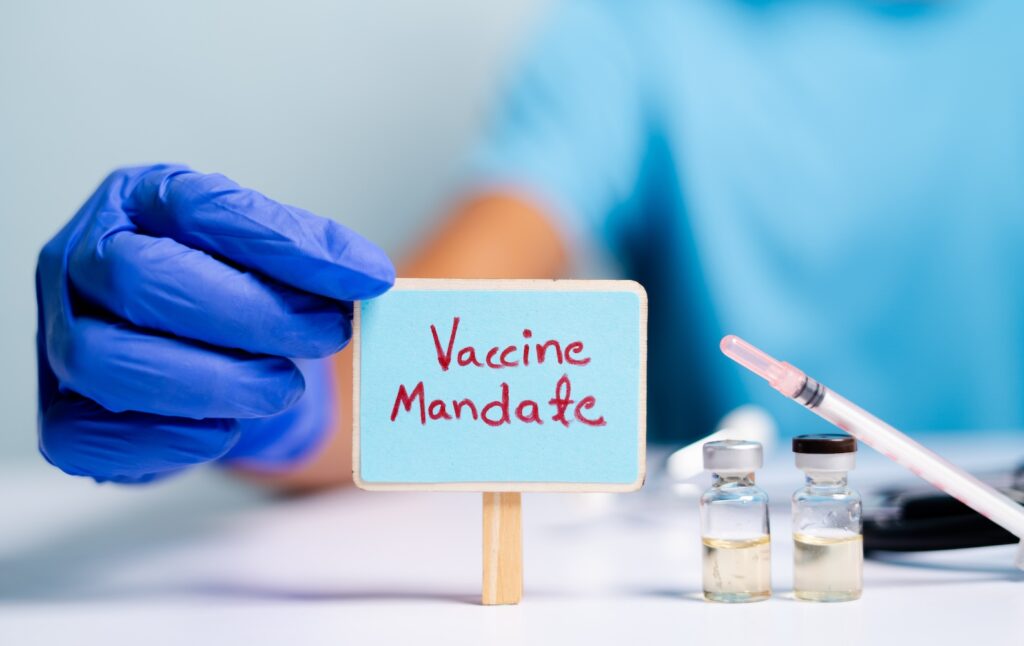
Amid a national debate about the safety of vaccines, several states may soon stop requiring immunization for school children.
New Hampshire, Iowa and West Virginia are considering legislation to terminate vaccine mandates for public school students, allowing parents to decide if and when to immunize their children.
Currently, all 50 states and the District of Columbia have vaccine mandates, although Florida has signaled it too will consider eliminating such requirements.
New Hampshire
House Bill 1811, sponsored by eight Republicans, would repeal the law requiring all children be vaccinated to attend a public or private school or daycare.
State Rep. Matt Drew, R-Manchester, the bill’s lead sponsor, argued the government shouldn’t be twisting people’s arms to accept vaccines.
“Public trust cannot survive coercion,” Drew said. “Mandates are a clear statement of inherent mistrust. If your product is so bad that people won’t use it voluntarily, that’s a big flashing neon sign that it is probably unsafe, ineffective or both.”
However, Dr. Benjamin Chan, epidemiologist for the New Hampshire Department of Health and Human Services, defended the current law, saying mandates have “driven down the rates of diseases and outbreaks to the point that we just don’t see them in a clinic setting anymore.”
He further argued the state’s religious exemption to vaccine mandates preserves the “balance” between individual choice and public health.
However, not every state has robust vaccine exemption policies for non-medical reasons.
Twenty-nine states – including New Hampshire – allow only religious exemptions. Four states – California, New York, Connecticut and Maine – have no exemption.
Only 17 states offer broad exemptions for both religious and/or personal reasons.
West Virginia
Until recently, West Virginia was one of the few states without a vaccine exemption policy.
But in January 2025, Gov. Patrick Morrisey signed an executive order affirming parents’ rights to opt out of immunization on religious grounds.
Morrisey called his state “a radical outlier when it comes to onerous vaccine mandates – one of only five states in the nation without a statutorily-based, religious exemption.”
While the governor’s executive order has faced legal challenges, the tides have clearly turned in favor of parental choice.
Now, the West Virginia Legislature is considering House Bill 5090, which would end all compulsory vaccines for public school students.
Six other bills were also filed to cement into law religious or philosophical exemptions for vaccines.
Iowa
In the Hawkeye State, HB 2171 to end immunization requirements for K-12 schools has already been approved by a House committee, despite pushback from Democrats and hospital lobbyists.
State Rep. Brooke Boden, R-Indianola, argued in a hearing that parents shouldn’t be pigeonholed by vaccine exemption standards.
“You either really have to have a medical concern or you have to claim that you’re religious,” Boden stated. “I think that’s coercing parents into a situation in which they’re not able to utilize their parental right [and] find the right vaccination schedule for their child.”
Nationwide, vaccination rates are already declining as families become more skeptical.
In 2025, NBC reported 75% of U.S. counties reported declines in childhood vaccination rates, and more than half said their exemption rates had doubled.
Additionally, the Centers for Disease Control and Prevention recently updated its recommended vaccine schedule to reduce the number of universally recommended shots.
Now, it advises parents to decide in conjunction with their doctor if and when immunizations for diseases such as seasonal influenza, COVID-19, rotavirus, RSV, Hepatitis A and B, and meningococcal diseases are right for their children.