UK’s Starmer announces ban on social media for children under 16
The UK intends to ban access to social media for children under 16, effective in spring 2027, Prime Minister Keir Starmer announced Monday.
“I am simply not prepared to be a bystander when…
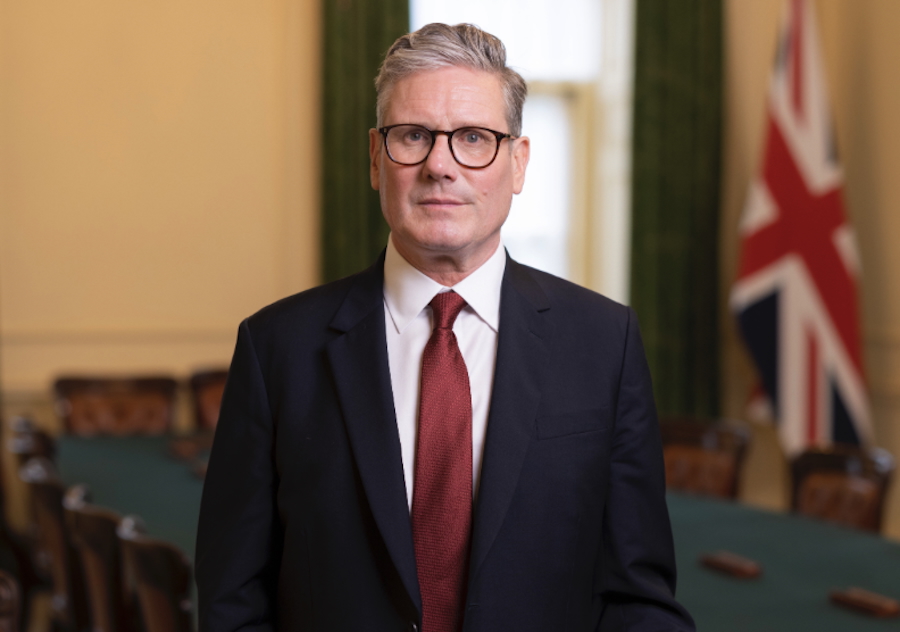
The UK intends to ban access to social media for children under 16, effective in spring 2027, Prime Minister Keir Starmer announced Monday.
“I am simply not prepared to be a bystander when the safety and happiness of our children are at stake,” Starmer said on Facebook. “We will ban social media access for under 16s and give children their childhoods back.”
The ban would see the UK join the European Union, Malaysia, China, Indonesia, Brazil and Australia, which enforced the first social media ban in December 2025.
Accounts on Instagram, TikTok, Threads, X, YouTube and Reddit would be affected, according to Starmer’s announcement.
Great Britain News presenter Bev Turner told The Daily Wire she is particularly concerned about the age-recognition technology, which will be used to enforce the ban. Like Australia’s system, the technology employs facial recognition and scans social media posts and other interactions online.
“You can’t prove a 13-year-old is using TikTok unless you can prove a 30-year-old is using TikTok,” Turner told The Daily Wire. “It will be facial scanning. It will be having to give up your anonymity online so the government and big tech can always see what you’re doing, what you’re posting.”
Starmer also promised the UK will go beyond Australian policies by banning streaming and gaming services such as Twitch and Kick, which allow children to connect with adults via chat boxes and livestreams.
In Australia, 75% of children still hold social media accounts just five months after the ban, according to a report from the National Bureau of Economic Research. Fooling the age-verification technology is not complicated, and children have used fake birthdays to access accounts, The New York Times reported.
Starmer admitted children will inevitably work around age-verification technology but said established rules to protect them are better than none.
“I know some children will try to get around it, and some children may get around it, but that is not a good reason to take [away] the act of banning,” he said.
Despite Australia’s minimal success, 90% of UK parents, children and tech workers requested a ban for children under 16 in a government request for public comment, the Associated Press reported.
While many countries are following Australia’s suit, America might not be one of them. The U.S. embassy in London warned the UK that an outright ban would infringe on free speech and instead suggested providing support and resources for families.
Turner accused Starmer of overstepping his power by pressuring companies such as Google or Apple to reduce their encryption technology, allowing the UK government to monitor and sweep information off the nation’s smartphones. The use of this technology, called client-side technology, is the beginning of the complete loss of privacy for the British people, Turner said.
According to Turner, the catalyst for the social media ban was Starmer’s authoritarian response to the Belfast riots – a wave of violent, anti-migrant protests after a stabbing in Northern Ireland last week. Instead of addressing the violence, Starmer condemned social media as the cause, Turner said.
She credited the timing of his ban to the UK’s by-election next week. The election will fill an empty seat in parliament that could potentially challenge Starmer’s position as Prime Minister. Starmer has been repeatedly asked to step down because of his handling of three major policies, according to the BBC, and Turner said the by-election could be the end of his term.
“[The ban is] genuinely the stuff of nightmares,” she said. “But those of us who have been watching Keir Starmer closely know that this was always his intention.”