UN agency calls for censorship of pro-lifers, labeling abortion opposition as ‘misinformation’
A United Nations health entity is calling on digital platforms and governments to restrict pro-life speech by redefining opposition to abortion as “misinformation,” a move…
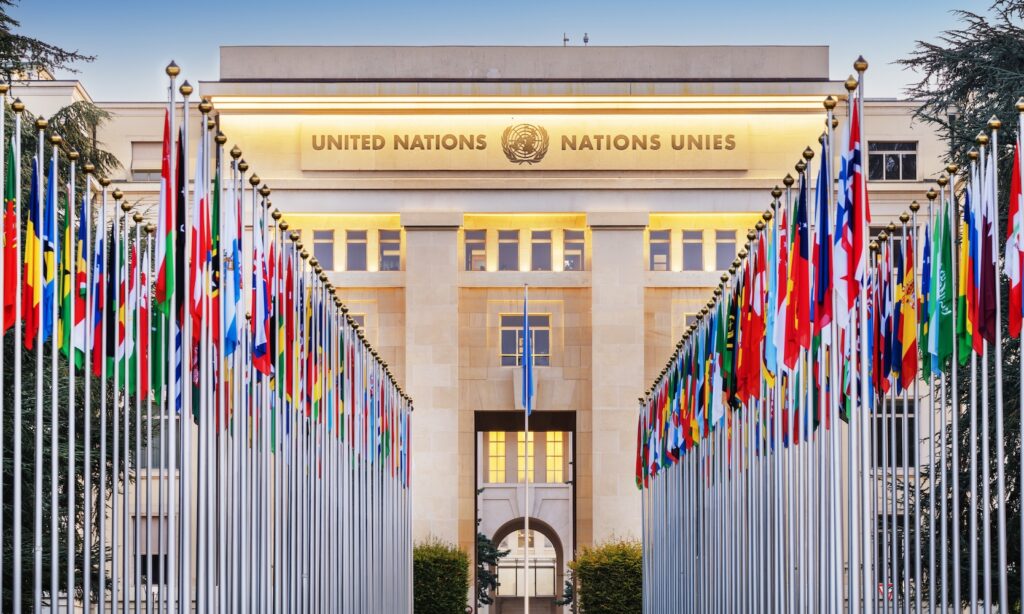
A United Nations health entity is calling on digital platforms and governments to restrict pro-life speech by redefining opposition to abortion as “misinformation,” a move directly limiting religious expression and pro-life advocacy.
The UN’s Human Reproduction Programme, housed within the World Health Organization, recently published a paper arguing online content critical of abortion access should be treated as a human rights violation and suppressed, the Center for Family and Human Rights reports. The authors argue abortion is a right under “sexual and reproductive health and rights,” a phrase that has never been adopted in any binding international agreement.
The paper relies heavily on interpretations from UN experts and committees that issue advisory opinions but lack the power to create new human rights. It does not acknowledge the 1994 International Conference on Population and Development in Cairo, where countries agreed abortion laws are the responsibility of individual governments, not international organizations.
The HRP authors define misinformation as “false, inaccurate, or misleading information shared without intent to deceive.” They argue disinformation has the potential to “deliberately erode human rights protections and restrict access to evidence-based care.”
Using this definition, the paper treats pro-life arguments as inherently suspect. One cited study claims “inaccurate beliefs about fetal pain were linked with antiabortion views, shaping attitudes toward access and policy.” It argues there is no settled medical consensus on fetal pain, and the study labels those supporting abortion limits as “anti-choice.”
The report also attacks Project 2025, accusing it of attempting to “embed misinformation into federal governance.” The authors cite an article in Ms. Magazine, a liberal publication supporting abortion advocacy, to support its accusation.
The paper also targets religious institutions. It criticizes a Canadian Catholic hospital for blocking access to abortion clinic websites and warns of a “rising anti-rights movement in Ethiopia, aligned with the US Christian Right.” It argues “religious ideologies” undermine equality, effectively framing faith-based moral convictions as obstacles to human rights.
While authors acknowledge genuine online threats such as medical scams and unqualified advice on social media, they place moral opposition to abortion in the same category. If adopted into policy, the recommendations would pressure social media platforms to censor pro-life viewpoints rather than tolerate debate rooted in conscience and belief.
Pro-life advocates warn labeling moral disagreement as misinformation is a direct attack on religious freedom and parental authority. They also see limits on pro-life advocacy as an assault on human life.