Homeschooling can provide quality, cost-effective Catholic education, Michigan attorney argues
Homeschooling has long suffered like a neglected sister in the family of Catholic education, an attorney and father of seven argues in a recent commentary.
“Homeschooling has developed outside…
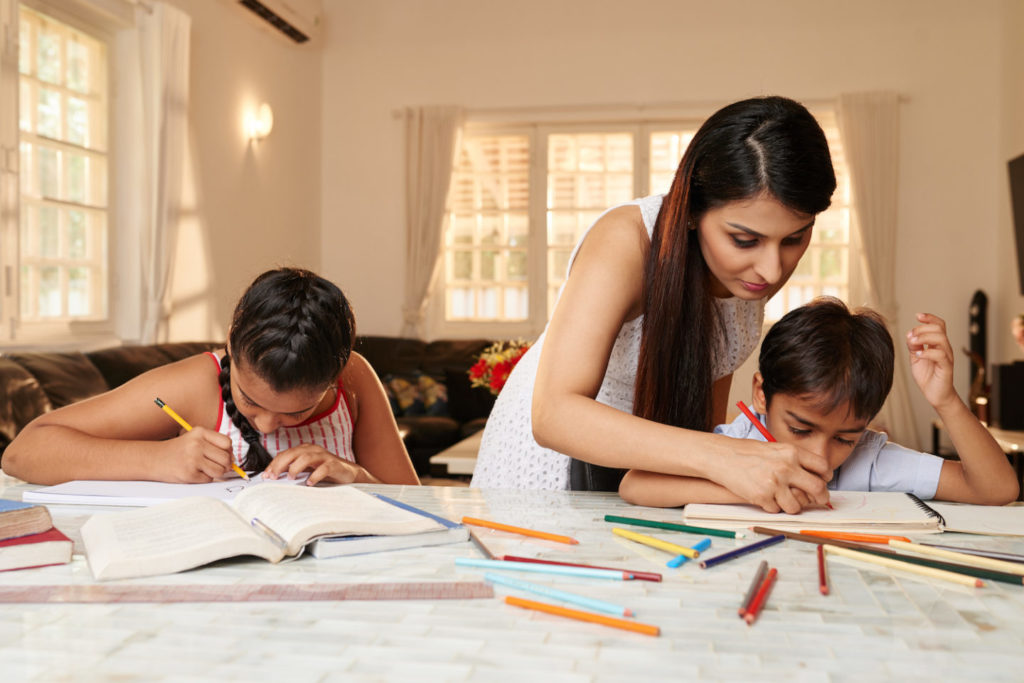
Homeschooling has long suffered like a neglected sister in the family of Catholic education, an attorney and father of seven argues in a recent commentary.
“Homeschooling has developed outside the Church without support or guidance – and sometimes in the face of overt hostility,” writes J.C. Miller for Crisis Magazine. “But a detached observer could see that homeschooling provides a more cost-effective way, from a purely Church-resources perspective, of educating future faithful and future priests. Maybe priest shortages and budget struggles will push some Church leaders to be more favorable to homeschooling.”
To prove his point, Miller highlights recent studies finding homeschooled college students tended to have higher religious attendance, surpassing their public-school and even parochial-school counterparts.
They also chose religious vocations “at three to four times” the general Catholic population’s rate, according to Miller.
“The data indicates that homeschoolers are much more likely to embrace a religious vocation and more likely to retain their religious faith and practice in college. It’s time for Catholics to seriously examine the impact of homeschooling on the Church and what we should do in response.”
Homeschooling ‘out of a positive desire, not out of fear’
As previously reported by The Lion, an increasing number of Catholic parents are choosing to homeschool an estimated 400,000-500,000 children nationwide.
“These parents feel called to homeschool; they’re doing it out of a positive desire, not out of fear,” said Fr. Joe Martin, a priest of the Archdiocese of St. Louis who was homeschooled for 12 years. “They are getting together to do a co-op with different offerings, then they’re also praying and having retreats for the moms they are offering morning and evenings of reflections.
“These families do not have beef with the school. They just realized it doesn’t fit their family.”
Miller’s experience with a Michigan homeschool hybrid program caused him to view homeschooling as “another type of Catholic school” often using faith-based curriculum such as Seton Home Study School and Kolbe Academy.
“This means that homeschooling should not be seen as a rival or a threat, any more than another parish’s school down the road is, and that Catholics who homeschool are not taking away tuition dollars,” he writes.
Another ‘species of Catholic school’
Miller offers other suggestions for Church-supported homeschooling, including the use of facility spaces and hybrid programs.
“A regional, weekly homeschool Mass would certainly send a message and create opportunities to get together,” he suggests. “Where possible under league rules, and certainly where Catholics get to set the league rules, sports teams can be open to homeschoolers.”
Catholics should also explore ways to support stay-at-home parents choosing to forego one income for full-time home education, according to Miller.
“This is certainly a challenge in modern America, but we’ve got a lot of smart Catholics who can come up with ideas – like a local guild that helps Catholics to start or improve small businesses or finding ways to get people on church group health insurance plans.”
Ultimately, homeschooling needs greater recognition as a “species of Catholic school” equivalent to other Church-approved options, Miller argues.
“Figuring out how to support homeschoolers is important,” he concludes, “but Church leaders first need to decide to embrace homeschoolers and homeschooling.”