
Analysis: Immigration enforcement job applications hit records as Trump ramps up enforcement
The U.S. Citizenship and Immigration Services (USCIS) announced it has received more than 35,000 applications for its newly created “Homeland Defender” position.
The number of…
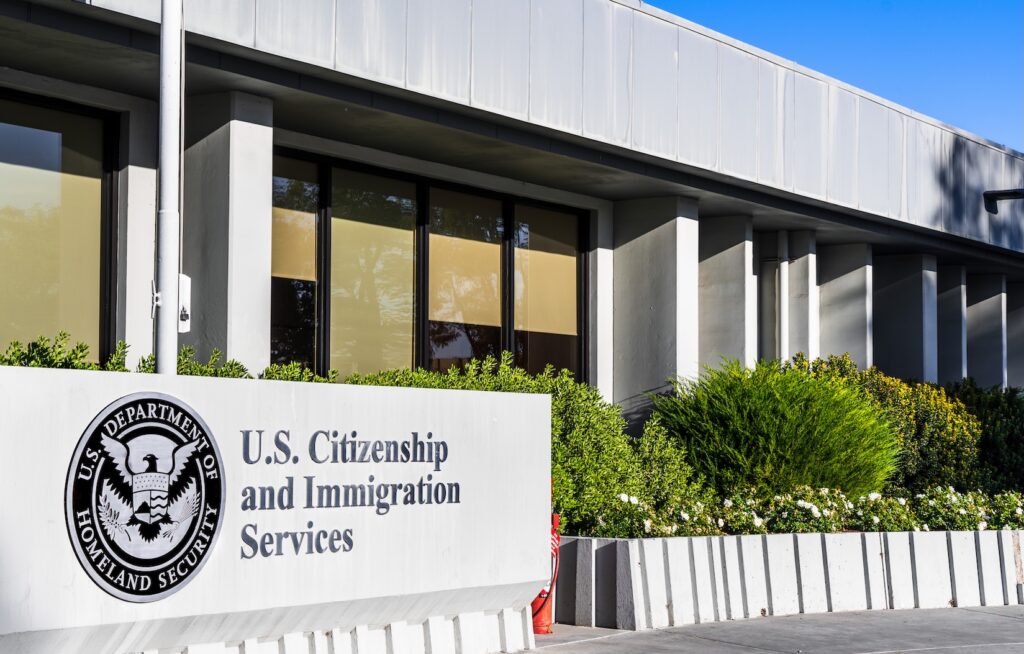
The U.S. Citizenship and Immigration Services (USCIS) announced it has received more than 35,000 applications for its newly created “Homeland Defender” position.
The number of applicants marks the highest ever recorded for any job in the agency’s history, USCIS said.
The announcement comes as the agency has intensified its enforcement posture.
This follows a major fraud investigation dubbed Operation Twin Shield, which targeted immigration benefit fraud in the Minneapolis–St. Paul region, USCIS said.
“USCIS is not wasting time; we are committed to implementing President Trump’s priorities,” said agency Director Joseph Edlow. “These candidates are not just applying for a job – they are applying to guard our values and defend our homeland.”
The heightened public participation reflects broad support for immigration policy enforcement.
The agency said the Homeland Defender role is a core component in reinforcing the integrity of immigration processing and bolstering national security.
Homeland Defenders are responsible for conducting detailed reviews of immigration benefit applications, verifying compliance with federal laws and identifying possible fraud or misuse, according to the job description.
The work includes in-person interviews, security vetting and close coordination with Customs and Border Protection, Immigration and Customs Enforcement and other federal law enforcement agencies.
Legal observers have said it’s unclear how the new position will affect legal immigration applications and deportations.
“For potential clients, this could mean adjustments in the processing times and scrutiny levels for visa, green card, and citizenship applications,” said one North Carolina law firm specializing in immigration law.
Still, USCIS has struggled with processing backlogs in recent years and officials have emphasized efficiency as a priority in previous announcements of large-scale hiring.
In December 2022, the USCIS under then-President Joe Biden said its “surging hiring and establishing an agency-wide focus on operational efficiency” could resolve the backlog of cases for deportation and legal immigration decisions.
The timing of the latest hiring surge overlaps with the intensified fraud crackdown under Operation Twin Shield.
The Minneapolis anti-fraud operation this September uncovered suspected fraud in at least 275 cases, including allegations of bogus marriages, fake death certificates and other schemes designed to manipulate U.S. immigration benefits.
The possibility of uncovering additional fraud is limited by workforce size. USCIS said investigators found evidence of fraud in 44% of roughly 650 interviews conducted from 1,000 cases flagged with fraud indicators in the metro area.
While 35,000 Homeland Defender applications are noteworthy, how many will translate into hires remains an open question.
Critics of the administration’s zero-tolerance immigration policy previously noted the numbers of immigration enforcement employees fell short of fulfilling Trump’s broad goal to institute the largest mass deportation effort in U.S. history.
Clearly there’s an appetite by some segment of the working public to fill the jobs of Homeland Defender, but the question remains whether the government has the appetite to digest all applications.
“There’s not enough people to do the work that we’re required to do by law and by public expectation,” Michael Knowles, the local president for one of the unions representing employees at USCIS, told NPR.
Knowles said the workforce required to do the job has always been inadequate, even before Trump’s much-anticipated crackdown.
Department of Homeland Security (DHS) Secretary Kristi Noem acknowledged as much when she took over DHS, the parent agency for USCIS. She argues the administration has the responsibility to provide the resources to deliver on the Trump mission to make immigration enforcement a priority.
“Now, as secretary, that’s my responsibility,” she told staff. “But it also is my responsibility to do everything that I can to give you the resources that you need to do your job. You need the training, you need the equipment, and the resources to make sure you’re prepared for every single situation you find yourself in.”
Once identified, USCIS will need to vet applicants for suitability and clearance, a process that typically takes several months for federal law enforcement positions. Given the parallel ramp-up in enforcement scope, the agency may face capacity bottlenecks in managing both intake of employees and oversight of investigations.
In short, USCIS’s announcement of a record-setting 35,000-plus applications for the Homeland Defender role marks a clear sign of momentum for the agency, but execution is key.
Coupled with the fallout from Operation Twin Shield’s fraud findings, the agency is asserting a new posture of more capacity, more enforcement and more delivery of national security under immigration laws.