Analysis: Trump hits Iran, Venezuela with sanctions in bold foreign policy moves
The Trump administration has imposed a new round of sanctions targeting Iranian and Venezuelan individuals and companies tied to Iran’s drone and missile supply chain.
The move comes amid…
The Trump administration has imposed a new round of sanctions targeting Iranian and Venezuelan individuals and companies tied to Iran’s drone and missile supply chain.
The move comes amid mounting economic unrest inside Iran and renewed pressure from Washington following President Donald Trump’s recent meeting with Israeli Prime Minister Benjamin Netanyahu.
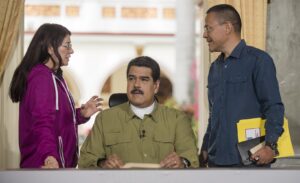
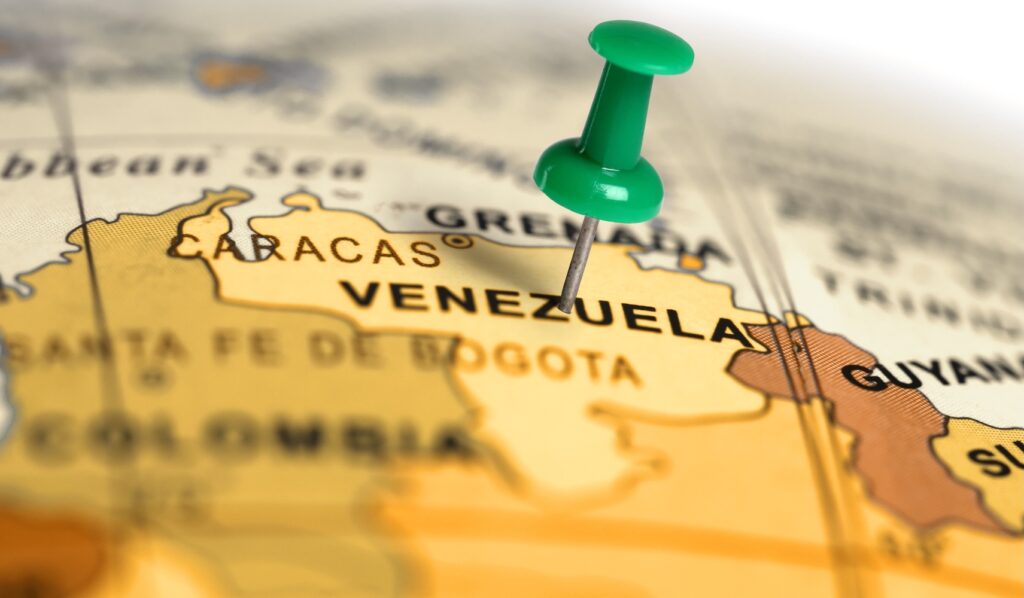
It also follows administration actions pressuring Venezuela’s Maduro regime, which critics say is part of an international drug smuggling network.
Taken together, the sanctions show a muscular foreign policy by the Trump administration to force foes on the defensive internationally.
“The president promised on the campaign trail that he would demolish the foreign terrorist organizations and drug cartels around the world, especially right here in our own hemisphere. And you have seen that he is delivering on that promise,” said White House Press Secretary Karoline Leavitt.
The sanctions, announced by the U.S. Department of the Treasury, target entities accused of producing and transferring Iranian drones, including a Venezuelan firm alleged to have served as an intermediary.
U.S. officials said the measures are intended to disrupt Iran’s weapons development network and restrict its access to the international financial system.
“Treasury is holding Iran and Venezuela accountable for their aggressive and reckless proliferation of deadly weapons around the world,” said Treasury Under Secretary for Terrorism and Financial Intelligence John K. Hurley. “We will continue to take swift action to deprive those who enable Iran’s military-industrial complex access to the U.S. financial system.”
Speaking earlier this week, Trump warned the United States could carry out additional military strikes if Iran attempts to reconstitute elements of its nuclear program. The remarks followed his talks with Netanyahu in Florida and reinforced a message of escalating pressure aimed at Tehran’s military and strategic capabilities.
“Now I hear that Iran is trying to build up again, and if they are, we’re going to have to knock them down,” Trump said of a renewed Iranian nuclear weapons program. “We’ll knock the hell out of them.”
Administration officials have framed the sanctions as part of a broader effort to constrain Iran’s regional influence and weapons exports.
Washington is particularly worried about drone technology, which played a growing role in conflicts involving Iran and its proxies. Iran launched more than 1,000 drones against Israel in the recent war with Hamas terrorists in Gaza.
Iran has denied wrongdoing and says its drone program is defensive.
The inclusion of Venezuelan entities highlights Trump’s focus on renewing pressure on regimes with historical opposition to U.S. policies.
Treasury said previously it has sanctioned companies and individuals from “the United Arab Emirates (UAE), Türkiye, China, Hong Kong, India, Germany, and Ukraine” over Iranian drone development.
Inside Iran, the sanctions arrive at a moment of acute economic vulnerability. The U.S. action coincides with a third straight day of protests across multiple Iranian cities, sparked initially by the rapid collapse of the Iranian rial and rising inflation.
The protests later included student demonstrations and broader political demands.
While the protests remain uneven and decentralized, their timing has drawn attention amid a visibly tougher posture from Washington.
Iran’s rial has hit record lows against the dollar in recent days, driving up the price of basic goods and triggering shop closures in some commercial districts.
While Iranian authorities have acknowledged public frustration and accepted the resignation of the central bank chief, security forces have continued to disperse demonstrations in several locations.
“We stand with Iranians in the streets of Tehran and across the country as they protest a radical regime that has brought them nothing but economic downturn and war,” said Ambassador Mike Waltz, the U.S. representative to the United Nations.
Iran’s president has instructed government officials to listen to what he described as “legitimate” economic demands, a response consistent with previous episodes of unrest driven by currency shocks and inflation.
Trump’s renewed emphasis on Iran comes as his administration signals a more assertive Middle East strategy anchored in regional partnerships included in the Abraham Accords.
While the White House has stopped short of explicitly endorsing regime change in Iran, the convergence of sanctions enforcement, public warnings and regional coordination has intensified pressure on Tehran at a sensitive moment.
U.S. officials have not publicly linked the sanctions to Iran’s protests, but the timing underscores a broader pressure campaign avoiding explicit involvement in Iran’s domestic political affairs.
For Venezuela, the sanctions mark another blow in a campaign that Trump administration officials have indicated is more about fighting drug smuggling than regime change.
Russia and China, both sponsors of Venezuela and Iran, are also likely to be the target of Trump’s messaging on sanctions and other actions.
On Dec. 10, Trump announced U.S. forces had seized The Skipper, a sanctioned oil tanker transporting Venezuelan oil. The ship belongs to a “shadow fleet” of tankers carrying oil for Russia, Iran and Venezuela to countries such as China to avoid sanctions.
“Russia and China would have outsized vulnerabilities in a world of greater sanctions enforcement that may include physical seizures,” said Clayton Seigle at the Center for Strategic and International Studies.
With sanctions expanding across borders, increasingly paired with public warnings, the Trump administration is showing it’s not afraid to press its advantage in the Middle East and the Western Hemisphere.
As unrest simmers in Iran and Washington renews its focus on Venezuela’s drug and smuggling networks, officials appear determined to sustain pressure on U.S. adversaries while leaving the political consequences to unfold inside the borders of foreign foes.