Trump sends military forces offshore of Venezuela to pressure drug cartels
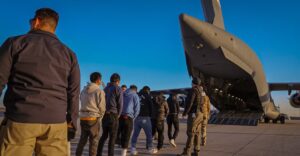
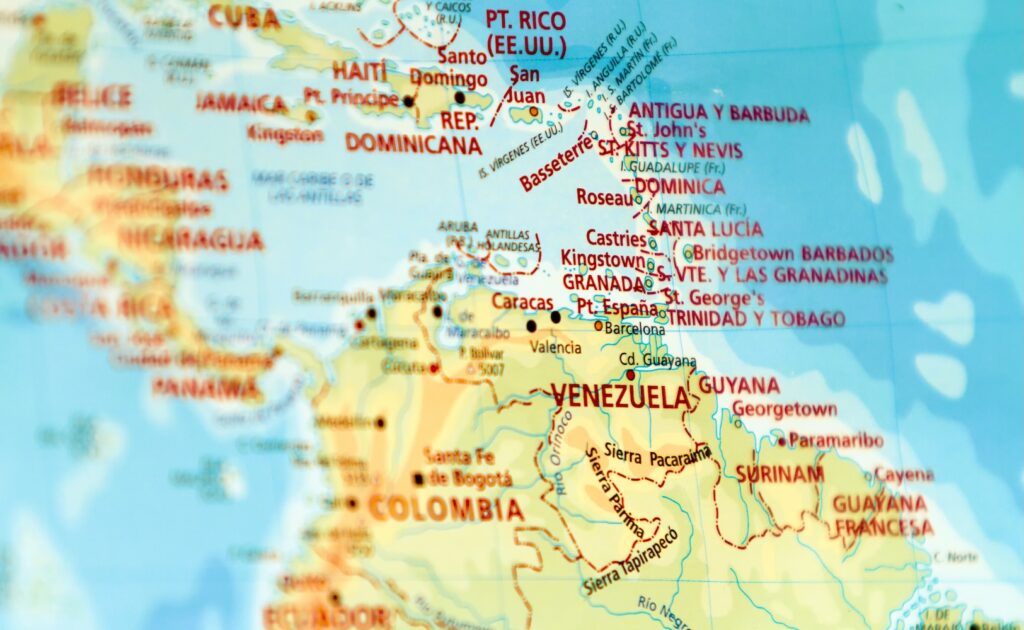
The U.S. is sending naval and ground forces off the coast of Venezuela as President Donald Trump expands pressure on the Latin American country to curb drug trafficking.
Three U.S. Aegis…
The U.S. is sending naval and ground forces off the coast of Venezuela as President Donald Trump expands pressure on the Latin American country to curb drug trafficking.
Three U.S. Aegis guided-missile destroyers – the USS Gravely, USS Jason Dunham and USS Sampson – are expected to arrive near Venezuela by Thursday, with some interdiction forces already on station.
The fleet is expected to be joined later by the Iwo Jima Amphibious Ready Group, home of the 22nd Marine Expeditionary Force.
An anonymous Pentagon official told the Associated Press the force is designed to combat narcotics operations and is expected to be in the region for several months.
The military moves come as Trump increased the bounty the U.S. placed on Venezuelan President Nicolás Maduro to an unprecedented $50 million for drug-related crimes.
“In March 2020, Maduro was charged in the Southern District of New York for narco-terrorism, conspiracy to import cocaine, possession of machine guns and destructive devices,” noted the State Department.
Maduro responded to the reward money increase by activating his domestic militia group, which some have compared to the Nazis’ Brownshirts.
The country’s Bolivarian militia is primarily deployed to bolster political loyalty to the Maduro regime, which uses “class, gender, and political identities … [as] cornerstones of the militia members’ allegiance to the force.”
CBS News estimated the militia numbers about 4.5 million members, but that’s unlikely.
One social media post noted Venezuela doesn’t even have 4.5 million working toilets, let alone millions of working rifles to arm a militia.
While Trump is most likely trying to ramp up the pressure on Maduro with counter-narcotics operations, a limited military action aimed at capturing the Venezuelan president isn’t out of the question.
Not coincidentally, the Trump administration made the deportation of Venezuelan gang members in Tren de Aragua one of its first priorities after the inauguration.
Critics of the Maduro regime have said the dictator uses the overseas gang to carry out assassinations against political opponents.
“The Tren de Aragua is a state-sponsored criminal organization born of the policies of the Venezuelan government, which blend the state with criminal networks,” noted the conservative think tank Heritage Foundation.
Dismantling the gang overseas should be one of the administration’s high priorities, which would presumably include cutting off support from its state sponsor, according to Heritage.
Multiple media outlets reported Trump considered a military option in taking out the socialist Maduro regime during the U.S. president’s first term.
Maduro previously threatened to invade Puerto Rico, a U.S. territory.
Trump Secretary of State Marco Rubio has repeatedly suggested the U.S. would be safer without a Maduro regime.
“We’re going to work on that policy because I’m going to tell you something,” Rubio said. “He is allowing Iran to operate out of Venezuela. He is allowing the Chinese to operate out of Venezuela. He’s threatening his neighbors in the region. He has flooded us with gang members – flooded with these Tren de Aragua gang members that are in this country doing terrible things. Why would we want someone like that to be there?”
Removal of Maduro would accomplish several administration goals.
It would be a severe strategic setback to both China and Russia in the Western hemisphere.
While there are no confirmed reports of Chinese troop deployments in Venezuela, the communist country has strong economic ties to the oil-rich nation.
Venezuela, which has the largest global oil reserves, ranks strategically just behind North Korea and Iran in China’s security hierarchy.
On the other hand, Russia has repeatedly deployed troops in the Latin American country, a sore spot for Trump.
A Venezuelan regime more favorable to the U.S. could mean the country would be allowed to access the international oil market again.
Downward pressure on oil prices could deprive Russian President Vladimir Putin of the high energy prices he is using to finance his war in Ukraine.
In February, Trump announced he was stopping the limited exemption former president Joe Biden gave Venezuela for selling oil.
“We are hereby reversing the concessions that Crooked Joe Biden gave to Nicolás Maduro, of Venezuela, on the oil transaction agreement, dated November 26, 2022,” Trump wrote on social media.
In January, CNN contributor Stefano Pozzebon, a Colombian, speculated Maduro’s threats against the U.S. were simply made to get Trump’s attention while the U.S. president dealt with other issues such as Ukraine.
However, the arrival of three U.S. destroyers and a Marine expeditionary force just miles from the coast of Venezuela indicates otherwise.