Christian Teacher of the Year: Adam Stevenson uses a classical approach to go beyond the cerebral, form Christian character
When it comes to measuring success in education, students and parents must look deeper than just academics. People are “more than brains,” after all.
So says Upper School Principal Adam…

When it comes to measuring success in education, students and parents must look deeper than just academics. People are “more than brains,” after all.
So says Upper School Principal Adam Stevenson, of Seattle Classical Christian School, drawing on 15 years in the trenches teaching and guiding high school students.
“We’re just more than brains, you know? So what we offer … is the whole person,” Stevenson tells The Lion, elaborating on the promise of this kind of Christian education.
“Let me show you our portrait of the graduate: We want your son or daughter to love God. We want them to cherish beauty. We want them to be invested citizens. We want them to speak eloquently. We want them to value humility and wisdom.
“Now you can be smart and do those things. You can also be a pretty ugly sinner and be smart. So we want your kids to be smart, absolutely. But that isn’t the only thing we recognize in your son or daughter. Success to us looks like them someday being a faithful husband or wife, a diligent worker at their job, hopefully, a good, kind parent.”
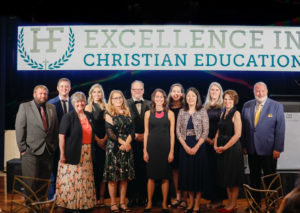
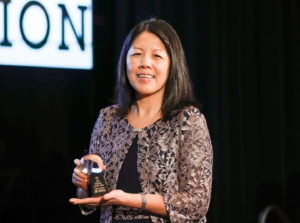
It’s why how students learn is as important as what they learn, according to the veteran educator, who this year has been named one of 12 Christian Teachers of the Year by the Herzog Foundation, which publishes The Lion.
Imitating the greats
One of Stevenson’s methods involves “imitation papers where (students) copy the form and style of great works of literature,” from the Bible to Plato.
“Imitation precedes art, which means that before we can create our own original masterpieces, we practice imitating the great artists, writers and thinkers of the past.
“For example, when teaching the biblical prophets, students wrote prophecy papers where they had to address an audience with a prophetic message that incorporated the themes we studied. While teaching the Gospels to ninth-graders one year, I had students write a parable that incorporated the structures and themes of Jesus’ parables into their own parable.”
In so doing, students not only learn to appreciate the writer they’re imitating; they also express their own thoughts and arguments about important contemporary issues.
In one striking example, Stevenson recounts a student who took a forbidden shortcut by using artificial intelligence to compose one of the assignments. It became an important learning opportunity for the high schooler, who a few months later submitted a deeply personal Socratic dialogue about “whether someone can be a family member without being biologically related.”
“Wow. I pulled him aside with a tear,” Stevenson says of his reaction to the paper written by the young man, who is adopted. “I said, ‘Well, this is the best thing you’ve ever written and guess what? There is no possible way that you could have ever had AI write this. I’m so proud of you.’
“So I gave them the structure. I gave them practice reading the thing. And this is the other thing about classical – any good teacher does this. … If kids don’t do the thing, practice the thing – learning, speaking, whatever – they will never get good at the thing. So the classroom has to be the gym, getting practice.”
Practical payoff
The classical approach also has practical payoff for students, even in a world teeming with artificial intelligence.
“We’re not a college prep school on purpose,” Stevenson tells The Lion. “We think of the things that we teach you, our students will be good (at) for the rest of their life.”
For example, a key component older students work on is rhetoric, where they learn how to be an effective communicator.
“Some kind of in-person communication, effective in-person communication, is going to be needed forever,” he says. “I mean, evangelism – the ability to communicate. We know that religious conversions happen personally,” drawing on rhetoric.
And it’s more than simply the skill of speaking. It includes the idea of ethos, or the “the character of the person speaking.
“The kind of person we’ve become is a form of rhetoric. Am I trustworthy? … We’ll still need hyper effective communicators, not only in what they say, but who they are, which as a Christian, classical school – that’s what we care about.”
Thus, however technology may advance, the ancient principles of rhetoric will apply.
“Our own human communication will still be something,” Stevenson says. “I have friends who work at Microsoft and Amazon. They manage teams, and they still have to communicate” with people of all ages and backgrounds. “So there’s even some of that, even if it’s not a part of the job in terms of what you actually do – coding or marketing. You have to communicate with the team and use a wide variety of humans who are very different.
“The leaders who can manage that well, they’re going to rise to the top.”
The Christian Teacher of the Year honor is part of the Herzog Foundation’s Excellence in Christian Education award series. Each of the 12 winners will attend a special professional development and recognition event in Washington, D.C.