
Clarence Thomas says progressivism opposes American principles, calls citizens to sacred devotion
Since the early 20th century, the idea of progressivism has “coexisted uneasily with the principles of the Declaration [of Independence],” which it “openly opposed,” Supreme Court Justice…
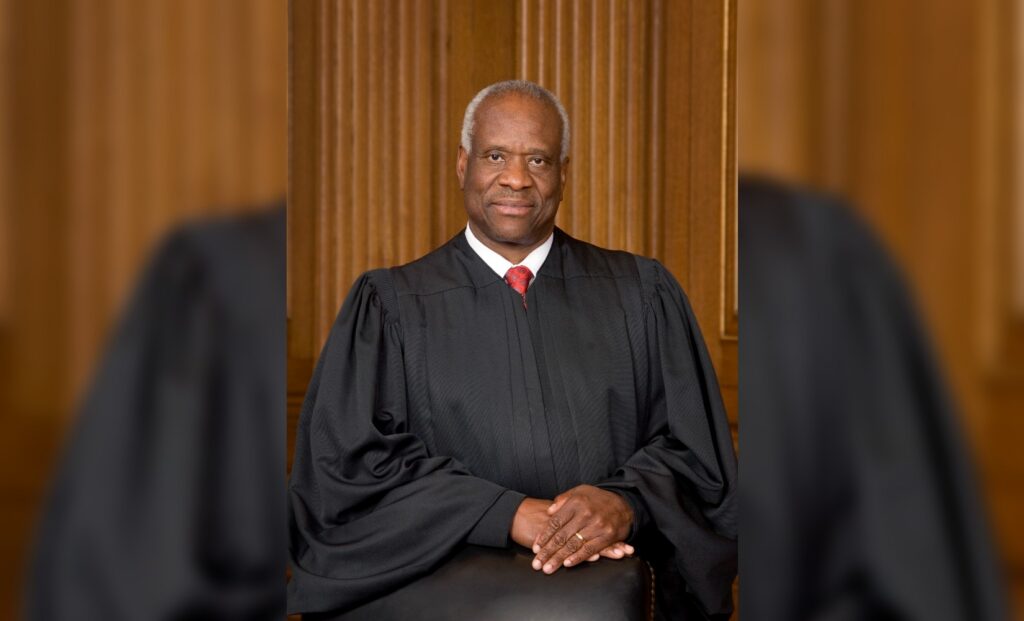
Since the early 20th century, the idea of progressivism has “coexisted uneasily with the principles of the Declaration [of Independence],” which it “openly opposed,” Supreme Court Justice Clarence Thomas told an audience at the University of Texas Wednesday.
“Progressivism seeks to replace the basic premises of the Declaration of Independence, and hence our form of government,” Thomas said. “It holds that our rights and our dignities come not from God, but from government.”
Progressivism – originally a European idea of the early 20th century – embedded itself in American thinking, primarily through the leadership of President Woodrow Wilson. The progressive philosophy, however, redefined liberty “to be enjoyed at the grace of the government,” not as a gift from God, Thomas said.
“Progressives strove to undo the Declaration’s commitment to equality (and) natural rights, both of which they denied were self-evident,” he said.
Progressives believed the principles of the Declaration were too idealistic and unrealistic and instead hailed an ever-evolving, authoritarian government as “nearly perfect,” in Wilson’s words, according to Thomas. But the Progressive Era produced “the most awful century that the world has ever seen,” Thomas said, referring to World War II and the rise of the Soviet Union.
Thomas visited the University of Texas at Austin to deliver remarks for the celebration of America’s 250th anniversary of the Declaration of Independence at the invitation of the university’s School of Civic Leadership.
He called the Declaration “one of the greatest anti-slavery documents in the history of Western civilization,” highlighting how the nation could not long exist with the contradiction slavery posed to the principles of life and liberty.
Its principles are not mere statements of God-given rights but are embodied in the actions of the people, Thomas said. Thomas, who grew up in Georgia under racial segregation, said he learned the principles of the Declaration first and foremost from his grandparents, who raised him.
“The principles of the Declaration of Independence, as I encountered them, are a way of life,” he said. “They are not an abstract theory that you only learn in college or law school, but the basic premises of our Constitution and government that you can learn from the people all around you.”
The Founding Fathers demonstrated this “way of life” in their mutual pledge to give their “lives, fortunes and sacred honor” to defend these principles, Thomas said.
“Nothing in the Declaration of Independence, I now realize, matters without that final sentence,” Thomas said. “Without that sentence, the rest of the Declaration is but mere words on parchment paper – nice words, but nonetheless, just words.”
This commitment has sustained America through centuries of war, hatred and opposing ideas – such as progressivism – and citizens must return to such a pledge to sustain the nation, Thomas said.
“It is a devotion expressed in the final sentence of the Declaration, the willingness to do anything for our principles, that has throughout American history been most indispensable,” he said. “It is that devotion that we are missing today and that we must find in our hearts if this nation is to endure.”
Thomas also said he has relied on his faith as “a greater source of strength than yourself.” This dutiful task requires small choices by every American to defend morality, oppose discrimination, participate in the local community and raise the next generation, he said.
“We must find in ourselves that same level of courage that the signers of the Declaration had so that we can do for our future what they did for theirs,” he said.