Families that could left public schools during COVID and didn’t return for these reasons
Families that could afford alternatives fled public schools during the COVID-19 pandemic, seeking reliable in-person instruction and greater academic rigor – and many have not returned, even years…
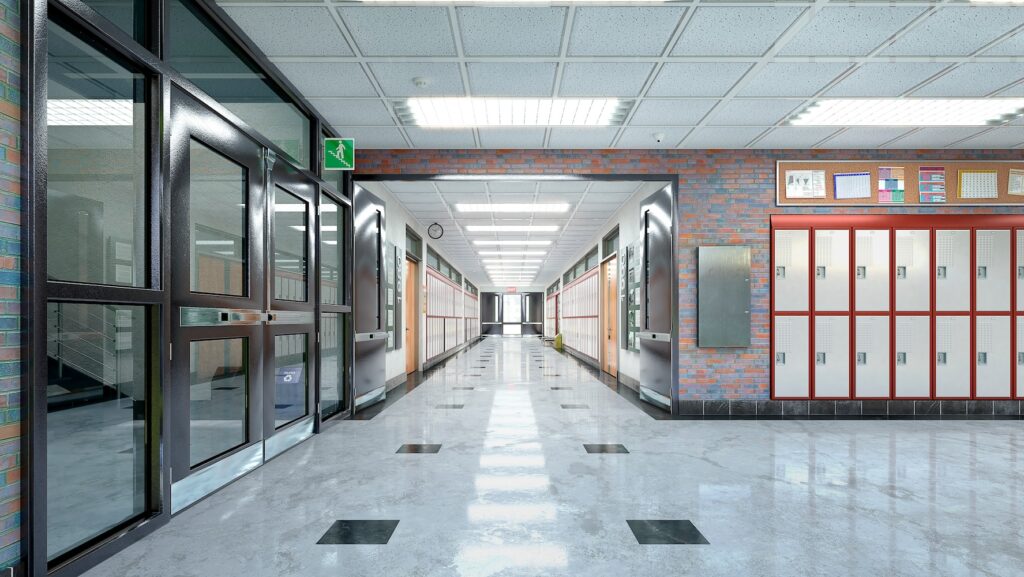
Families that could afford alternatives fled public schools during the COVID-19 pandemic, seeking reliable in-person instruction and greater academic rigor – and many have not returned, even years later, according to a recent report.
“The families of the highest-performing K-12 students, and those with access to greater resources, increasingly disaffiliate from traditional public schools,” writes Kevin Mahnken for The 74.
The report, based on an article from the Education Next journal, suggests several factors for the enrollment decline: delayed in-person instruction, increased concerns over public education and constraints on advanced coursework access.
Repercussions from COVID-19
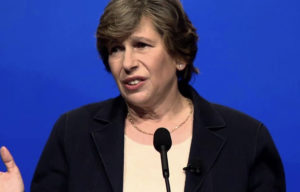
Public-school advocates such as Randi Weingarten, president of the American Federation of Teachers, resisted the return to in-person learning during the COVID-19 pandemic.
“Remote and hybrid are really the only two ways you can reopen,” Weingarten argued in a 2020 interview, despite later assertions she “always advocated for safe reopening of schools.”
The delay in reopening classrooms led to “pandemic learning loss” nationwide, with several states – including North Carolina and Michigan – still posting standardized test scores lower in 2025 than they were before the pandemic.
“Today’s M-STEP results underscore an urgent truth: too many Michigan students are still not getting what they need to succeed,” said Pamela Pugh, president of Michigan’s State Board of Education, when the reports were released. “We need a Legislature that puts students over politics.”
However, families with financial means didn’t wait for public schools to reopen but turned to private educational alternatives, according to The 74.
“The sharp declines – matched by simultaneous moves to private schools and homeschooling – were driven overwhelmingly by a flight from the most affluent school districts, which lost many more students than all of the state’s low- and middle-income communities combined.”
University of Michigan economist Brian Jacob told journalists he was “not surprised” to discover these parents hadn’t yet switched back to public education despite the eventual reopening.
“There was evidence that more affluent families were shifting kids away from public schools during COVID because they wanted more in-person instruction,” he said. “It may be that schools are going to have to work a lot harder to win back some of the families they lost.”
‘Notably cool’ feelings toward public education
The 74 also cited a Gallup study last February showing a record 73% of U.S. adults saying they were dissatisfied with the state of public education – a marked increase from 57% in 2001.
“Even today, with COVID quarantines and Zoom classrooms long in the past, Americans’ feelings about public schools are notably cool by historic standards,” Mahnken concluded.
The most common reasons given for their dissatisfaction involved curriculum concerns, low-quality learning, failures to teach basic subjects, political agendas and a lack of addressing real-life skills.
“Parents, directly invested in their local schools and regularly exposed to their children’s teachers, are more sanguine about the issue than other respondents,” Mahnken noted. “But they have also become more likely to say that K–12 education is headed in the wrong direction than in years past.”
Although public-school advocates have blamed recent poor academic outcomes on the COVID-19 pandemic, critics argue Americans have grown increasingly frustrated with public education’s performance over decades.
“Everybody is tired of hearing about the pandemic,” said Jane Swift, former Republican governor of Massachusetts, who serves on the National Assessments Governing Board.
“This is not an issue that is driven solely by the pandemic. Looking at this data, it’s clear that we’re in enormous risk of losing an entire generation of learners unless we show some focus and leadership.”
Joshua Goodman, Boston University economist, pointed to his own experience talking with parents considering “independent schools out of impatience with both a lack of rigor and growing behavioral problems in their neighborhood schools.”
“I haven’t seen school districts grappling with the questions of why they lost all these families,” he said, “and whether they actually want to do the work to bring them back into schools.”
More limits, restraints on access to advanced coursework
The last factor, constraints on accessing advanced coursework, has caused increasing “frustration among parents in some of the (Massachusetts) area’s wealthiest towns,” according to The 74.
“Brookline and Newton, each boasting some of the highest home values in the state, have reportedly lost sizable portions of their pre-COVID enrollment to nearby private schools,” Mahnken wrote.
“As one Newton teacher recounted in the conservative Free Press, those migrations largely followed the district’s move away from ‘tracked’ math classes.”
Many critics of advanced placement classes or programs challenge them on terms of equity, characterizing them as “racist” or “privileged.”
In one recent example, New York City Mayor Zohran Mamdani proposed removing gifted and talented programs from public schools while running his campaign, drawing the ire of several analysts.
“Faced with a huge number of students with comparably dismal scores in math, English, and science, Mamdani is going to bulldoze higher-achieving programs,” concluded Jonathan Turley in a commentary published by The Hill.
“These schools spend massively while cranking out kids with little hope to compete in the new economy or escape a cycle of poverty. This new ideal of ‘grading for equity’ is designed to manipulate test standards to create the appearance of success.”
Such moves to eliminate advanced coursework are “virtually pushing high-achieving families and students out of public education,” Turley argued.
“Gifted and talented programs are a source of pride for many families as students work with advanced technology and theories. Mamdani himself attended one such high school, Bronx High School of Science in Kingsbridge Heights.”
Taken together, these factors are fostering “a new equilibrium for the 2020s” where families with more financial means and high-performing students are withdrawing faster from public schools than lower-income households, The 74 concluded.
Goodman, like Turley, questioned public education’s decreased focus on academic performance in recent years.
“The question that worries me is whether this means that public schools have now cemented a reputation as not being the place where high-achieving students attend,” he noted. “If you’re a family that’s looking for a challenging curriculum, and you have a talented student, you’re no longer seeing public schools in quite that light.”