Fight brews over changes to Oklahoma history standards that remove Christianity, founding principles
A battle is taking shape in Oklahoma over the state’s social studies standards, which have undergone an unexpected – and possibly illegal – revision, and…
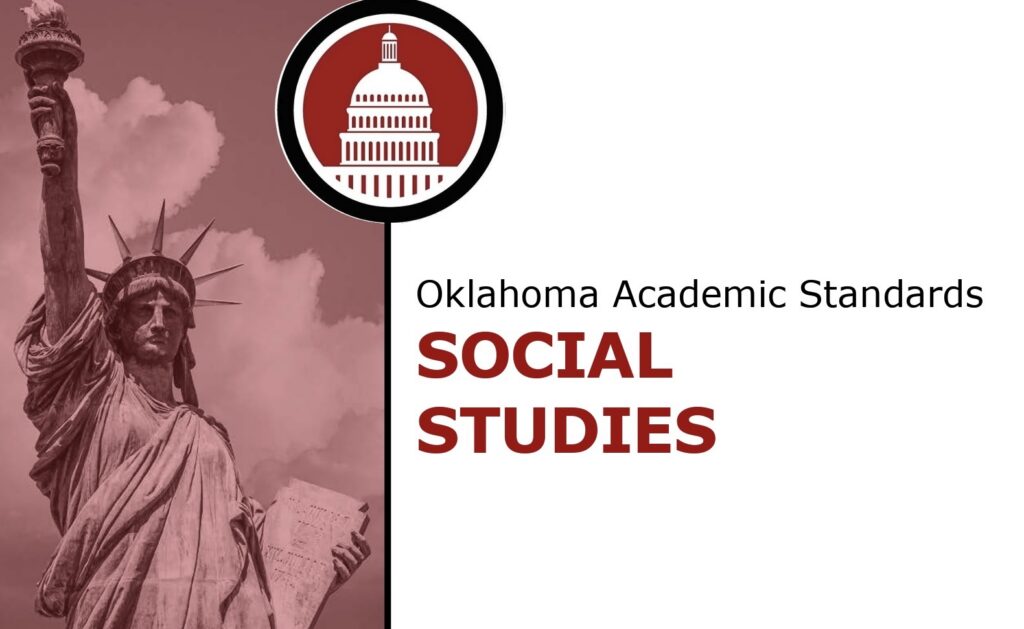
A battle is taking shape in Oklahoma over the state’s social studies standards, which have undergone an unexpected – and possibly illegal – revision, and Wednesday is the last day for public comments.
The standards, which govern what students in the state’s public schools must learn about history, were revised in 2025, when Superintendent of Public Instruction Ryan Walters, an ardent conservative and vocal Christian, was in office. Walters resigned Oct. 1 to lead Teacher Freedom Alliance, a movement against wayward teachers’ unions.
Opponents of Walters’ unabashed pro-Christian advocacy are using his departure, and a successful legal challenge to some last-minute changes approved in the 2025 standards, to revamp them entirely, stripping most references to God, Christianity and free-market principles.
Critics of the changes say the move is being pulled off by bureaucrats aligned with liberal causes and teachers’ unions and does not reflect the will of Oklahomans.
“This is a rollback of the standards,” Tucker Cross, who was policy and research director under Walters, told The Lion in an interview. “A lot of conservatives just have no idea. They don’t even know what’s going on yet in our state because it’s been very hush-hush, sort of boring bureaucratic stuff that no one really notices. And now we’re in a situation where we’re just now sort of waking up and realizing how much has been deleted from the approved conservative standards that we had from a year ago.”
Cross, who now runs a small classical school, said the issue reflects a larger battle for students’ minds.
“You have these hyper-secularists who are essentially trying to erase our history and prevent children from knowing the basic facts of the founding of our country. So even just mentioning the nation’s mottos, E pluribus unum and ‘In God We Trust,’ have been removed.”
One count found Christianity is mentioned just three times in the newly proposed regulations, compared to 14 times in the last version, and it is not linked to America’s founding principles.
Also gone are foundations of self-reliance, quotations from the Preamble to the Constitution and economic principles “that would ensure that a student would understand what capitalism is and what capitalism is not – being able to recognize free-market dynamics, being able to appreciate the nuance between things like monopoly and oligopoly and true free markets, being able to examine the effects of government policy on the economy – all those things are gone,” Cross said.
Also removed were two entire courses: Ancient and Medieval World History and History of 20th-Century Totalitarianism, which were approved as electives in the 2025 standards, which updated the 2019 version.
Cross said the Oklahoma Supreme Court ruled Walters violated procedural rules by trying to make last-minute changes to the standards, which opened a window for bureaucrats to rewrite them.
“There was a small group who sued and it went to the state Supreme Court,” Cross explained. “The court ruled they had to redo the standards process, not because any of the content was deemed unconstitutional but because they had not followed procedure correctly.”
Although the state’s leaders are conservative, Cross said bureaucrats in the Education Department – where he used to work – tend to align with teachers’ unions and major textbook companies, both of which lean liberal.
“In reality, these people are using standards from out of state, from other organizations that are typically left of center,” he said, adding that the 2019 standards are “almost copy and paste from the National Council for the Social Studies.
“They take this sort of Beltway, Washington, D.C., professional network batch of social studies standards. They send them to Oklahoma. The teachers make a few tweaks here and there, and voila, these are somehow purely organic Oklahoma standards.”
Cross said public comment on Oklahoma’s standards closes Wednesday. He said the online form is cumbersome because it requires comment on every single change, instead of allowing comment on particular changes or general comments.
Once that phase closes, opponents of the proposed changes will lobby State Board of Education members and legislators to reject them.
“The board is not even going to vote on approving the standards until the end of March, and then that goes over to the Legislature for them to approve, I believe, in April, so there’s still time here right now,” Cross said. “We just need people to know what’s going on. We need to get the word out.
“We need people to be talking about this because people just don’t know. State bureaucracies have a way of making big changes look like very boring small tweaks that you have to click 20 times on a webpage to find, and unless you have people paying attention and getting the word out, the vast majority of Oklahomans will never even know the changes being made right under their noses.”
Cross did not rule out actions beyond advocacy.
“If we don’t see any response from leadership then more organizing is likely going to have to happen, and there will have to be a sort of concerted, united voice saying we are not going to tolerate this anymore.”
The battle is also playing out in other conservative states such as Iowa, which passed a 2024 law to revamp its history standards to “the best in America,” only to have “a prominent diversity, equity and inclusion advocate” tasked with rewriting them, The Federalist reported.
And Republican lawmakers are trying to change to South Dakota’s social studies standards, “which were developed with help from nonpartisan scholars from the state, as well as from the National Association of Scholars and Hillsdale College,” which has partnered with the Trump administration to boost history education in honor of the nation’s 250th birthday.