
Helping special education students: Another reason to support Texas’ school choice plan
As the Texas House appears ready to pass a much-anticipated $1 billion school choice bill, there’s a surprising detail that’s a win for the state, parents and the measure’s chances of success:…
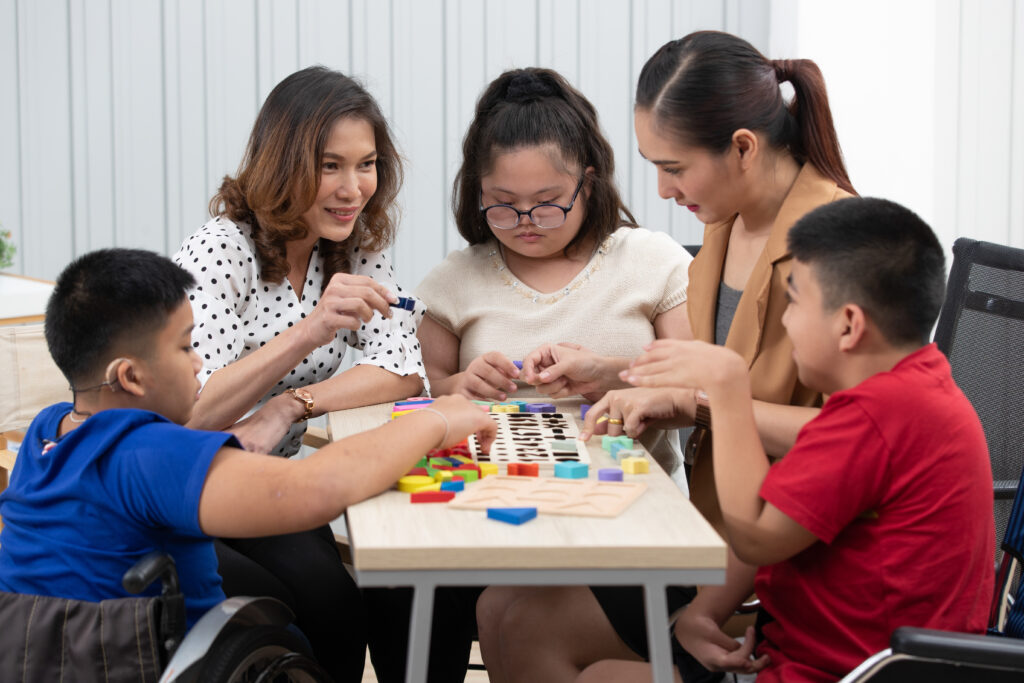
As the Texas House appears ready to pass a much-anticipated $1 billion school choice bill, there’s a surprising detail that’s a win for the state, parents and the measure’s chances of success: a priority on special education students.
House Bill 3 contains something lacking in the Senate version, which passed earlier this month: it spells out clearly the priority order for funding. And top on the list is special needs students from families earning less than 500% of the federal poverty level, or $160,750 for a family of four.
The Senate approved $11,500 for those families, slightly more than the $10,000 scholarships students without special needs could receive, but the House plan would allow for up to $30,000, based on what the state normally spends on special education services in public schools, Houston Public Media reports.
The money can be used for private school tuition and educational expenses such as tutoring, materials and therapy.
So why is putting special needs students first a win? Three reasons:
(1) Flexibility
When dealing with a special needs child with complex needs, flexibility is key. Gut check: which entity is better equipped to help such a child, a unionized government school with legal mandates and highly regulated staff or an independent private school?
While regulation may sound appealing and has its place, many parents do not find the system “user-friendly” or catered to student needs.
There are multiple legal cases across the country of parents suing their public school districts to ensure their child gets the help they need. Sometimes it’s not easy to get the help you want or to convince the authorities your child deserves or would thrive with certain therapies. The bureaucracy can be slow, difficult and confusing, sometimes even hostile. And once a decision is rendered, there can be little alternative but to sue. One Connecticut parent even joined his local school board to help sway policy toward helping his child, even as his lawsuit progressed!
Now step back and look at private schools. Not every school takes special needs students, but those that do clearly want them there. They also know their limitations and can say no to students with needs they are unable to meet. Teachers’ unions will cry about certifications, but many certified special education teachers, and teachers in general, are quitting to start private schools because they want the freedom to do what they know is right, not simply what the law or their supervisor says.
There’s also the X-factor of students who were labeled special needs in public school, particularly the learning disabled, who actually need a community in order to learn. Once they joined a smaller, closer-knit private school that welcomed them as family, their learning and behavioral issues fell off and they began to thrive. Sometimes special education is a trap and an unnecessary diagnosis. Not for every kid, but for some.
At the Lion, we’ve written about several Christian private schools that were started specifically for special needs students. They are doing great work serving their target population, satisfying both students and parents.
(2) Cost
The second reason for prioritizing special needs students is cost. This bears with school choice in general, since most programs give less in scholarships than what the state spends per public school pupil, effectively saving the state money. It’s no different with special needs students.
While $30,000, and even $11,500, may seem like a lot, special education costs public schools far more. One Idaho politician said his state can spend as much as $100,000 on one special education student alone. While that may be an extreme case, it’s not unheard of, as the state is legally required to provide various therapies and staff to help students with severe needs.
The state would still be obligated to provide some services, even if a student moves to private school, but with broad school choice, it’s possible that more private schools will enter the special education “market” and devise programs for this population. Private schools educate because they want to, not because they have to.
Private and religious schools have long done more with less, achieving superior results with less per-pupil spending than most public schools. Why would special education be any different?
(3) Pro-life
The third reason is that supporting special needs students and families is pro-life. The full meaning of pro-life is to support life at every stage and circumstance, including the disabled. (Let’s not forget, the Nazis targeted people with mental and physical disabilities, along with Jews and other groups).
Texas is an extremely pro-life state. This fact could help sway rural lawmakers from areas where school choice has traditionally been a harder sell. Communities that care about the well-being of their special needs kids can get behind giving them the flexibility to find the education that works best for them, even if it is outside the local public school.
And if parents love the care their children are receiving at their local school, they can stay there. The change is voluntary.
That’s the essence of school choice: empowering parents and embracing free market ideas.
Public schools work for some students, including some with special needs. But many students and parents would jump at the chance to have a smaller, more personal and flexible option, one beholden not simply to a bunch of legal requirements but to the happiness and well-being of the parent and child involved.
That’s what school choice offers in Texas.
The House plan makes sense and will let those motivated to serve students prove themselves with satisfied “customers” on both sides of the public and private school aisle.
In 2025 and beyond, let freedom ring!