Hormuz reopens but Europe’s ‘six-week’ jet fuel crisis aided by defense, energy policy failures, not just Strait closure
Europe faces imminent flight cancellations as jet fuel reserves dwindle to roughly six weeks of supply, the International Energy Agency (IEA) warned – just before President Donald Trump…

Europe faces imminent flight cancellations as jet fuel reserves dwindle to roughly six weeks of supply, the International Energy Agency (IEA) warned – just before President Donald Trump announced Friday the Strait of Hormuz is open for shipping.
IEA Executive Director Fatih Birol delivered the assessment Thursday in a wide-ranging exclusive interview with the Associated Press (AP).
“I can tell you soon we will hear the news that some of the flights from city A to city B might be canceled as a result of lack of jet fuel,” Birol told the AP about the consequences of not opening the Strait of Hormuz soon.
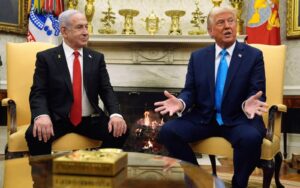
The crisis underscores a blunt warning President Donald Trump has been making to European nations: they are underfunding their defense, while expecting the U.S. to secure European interest all over the world.
“I’m demanding that these countries come in and protect their own territory, because it is their territory. It’s the place from which they get their energy,” Trump told reporters on Air Force One in March. “And they should come and they should help us protect it.”
Late-week developments – such as a ceasefire agreement between Israel and Lebanon and the reopening of Hormuz to shipping – may help in the long run, but it could take time for Europe to replenish supply.
The IEA has documented the accelerating severity of the crisis in detail, the result of policy failures for Europe over several decades.
The agency said global oil supply plummeted by 10.1 million barrels per day to 97 million barrels per day in March, according to its Oil Market Report.
“Continued attacks on energy infrastructure in the Middle East and ongoing restrictions to tanker movements through the Strait of Hormuz (are) leading to the largest disruption in history,” the report said.
Crude and oil product flows through the Strait dropped from approximately 20 million barrels per day before the war to just over 2 million barrels per day in March.
Even with alternative export routes through the west coast of Saudi Arabia and a UAE port, Gulf countries have been forced to cut total oil production by more than 14 million barrels per day, the IEA said.
Birol blamed Iran’s so-called “toll booth,” under which Tehran has extracted fees from some flag states in exchange for permitting their tankers to transit, the AP reported.
He warned allowing the practice to become permanent would set a precedent applicable to any strategic waterway, including the Malacca Strait.
“If we change it once, it may be difficult to get it back,” Birol added.
The precedent concern is not abstract.
Iran’s selective access arrangements have already stratified global shipping along political lines.
Iran granted passage to vessels from China, Russia, India, Iraq, Pakistan, Malaysia, Thailand, and the Philippines in a series of bilateral deals through late March and early April.
Other countries were out of luck.
However, for a decade and a half, U.S. military planners reportedly have anticipated the move by Tehran to lock down energy supplies for all but favored nations.
The counter-blow by American forces is to set up a blockade in the Strait, restricting Iran’s use of it, which U.S. Central Command did earlier this week.
The IEA’s April report identified resuming flows through the Strait of Hormuz as the single most important variable in easing pressure on energy supplies, prices and the global economy.
“The cure is opening up the Strait of Hormuz,” Birol told a podcast at the beginning of April.
He said Europe brought the crisis on itself, not just by the lack of military spending, but by pretending it’s simply an Asian problem.
Birol also noted Europe over-relied on Russian energy sources and backed away from cheap nuclear power.
Birol told AP the impact would manifest as higher gasoline prices, higher natural gas prices and higher electricity prices.
Trump is sensitive to the crisis for Europe.
He warned Iran against charging tolls and selectively granting access to favorites, while raising the possibility of forcibly opening the Strait.
But he called the opening “a joint venture,” which would presumably include Gulf and European allies.
Subsequently, NATO Secretary-General Rutte has pressed allies for concrete Hormuz commitments to open the Strait, according to Reuters.
As for air travel, European jet fuel prices have never returned to the stable range from roughly 1985 to 2003, when prices traded in a narrow slot below $300 per metric ton, according to a chart provided by Reuters.
Since 2004 the market has been defined by successive shock cycles, each with a higher floor than the last: the 2008 spike was $1,450, the post-2022 Ukraine war surge was $1,600, and now the current Hormuz crisis has driven prices to a record $1,800.
But if adjusted for inflation, the 2008 spike would be roughly $2,100 to $2,200 in today’s prices, while the 2022 surge would be roughly equal to today’s price.