
Missouri’s newest law bans unregulated hemp products, tightening cannabis rules
Intoxicating hemp products are heading out of Missouri gas stations and convenience stores after Gov. Mike Kehoe signed a new law Thursday to close a loophole allowing unregulated delta-THC products…

Intoxicating hemp products are heading out of Missouri gas stations and convenience stores after Gov. Mike Kehoe signed a new law Thursday to close a loophole allowing unregulated delta-THC products to be sold anywhere.
The Intoxicating Cannabinoid Control Act aligns the state definition of hemp with the federal definition. Starting this November, only state-licensed marijuana dispensaries can sell hemp items such as Delta-8 THC, Delta-10, or THCA products that get users high.
The legislation puts hemp-derived products under existing marijuana regulations. Unlicensed businesses must stop making or selling these items. It also gives cannabis industry workers the right to unionize and bargain collectively.
“For too long, bad actors have exploited loopholes to market intoxicating products – including candy-like gummies or look-alike products without meaningful oversight or accountability,” Kehoe said. “This legislation ensures Missourians know the products sold in their communities are safe, regulated and kept out of the hands of children.”
Attorney General Catherine Hanaway is praising the new law. She says the legislation builds on current enforcement efforts. Her office now has specific authority to hold bad actors accountable.
“A storefront and a sales counter do not make an illegal drug operation into a legitimate business,” Hanaway said. “We will do everything in our power to protect Missouri neighborhoods. My office is eager to work with law enforcement and agency partners to continue safeguarding consumers and upholding the rule of law.”
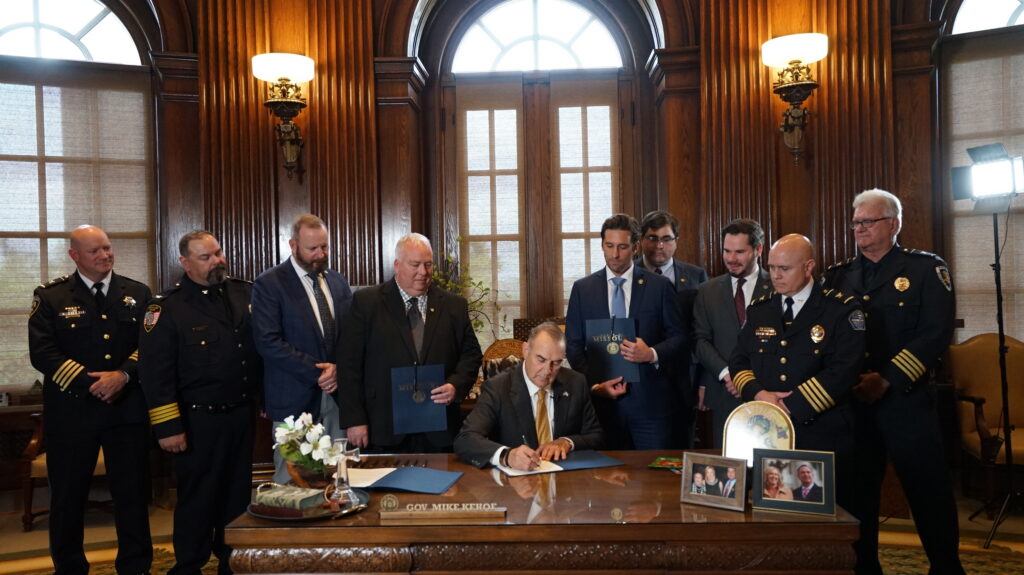
The governor signed three other pieces of legislation into law Thursday. One measure requires public schools and colleges to track antisemitic incidents and treat them just like racial discrimination.
Another new law creates a consumer licensing fund. It directs fees collected from payday lenders toward state regulation costs.
Finally, a third bill overhauls St. Louis tourism. It merges St. Louis Regional Sports Authority and the Regional Convention and Visitors Commission into a single 15-member board. The legislation also changes how the city and county collect and spend hotel taxes.