Nashville adding weapon detection systems to middle schools in wake of deadly shooting
Weapon detection systems will be expanded from high schools to middle schools in the Metropolitan Nashville Public School district, according to WSMV 4 News.
As previously reported by The…

Weapon detection systems will be expanded from high schools to middle schools in the Metropolitan Nashville Public School district, according to WSMV 4 News.
As previously reported by The Lion, a 17-year-old opened fire at Antioch High School in January, killing two students and wounding another. Just four months earlier, a 16-year-old student had been arrested for bringing a loaded gun to the same school.
The facility did not have stationary metal detectors at the time of the shooting.
“If it adds to the safety to the kids of Nashville, whatever it may be, I think it’s worth the cost,” parent Taylor Barnette told WSMV 4 in a video.
The district, which enrolls more than 80,000 students across 160 schools, will spend about $1.1 million annually by expanding the Evolv weapon detection scanners to middle schools, journalists noted. This is in addition to the current $1.25 million annual cost for high school scanners.
Some parents disagreed with the decision.
“If you treat people like they’re prisoners, they’re going to act like it,” argued Dayna Scianna in the video. “So you’re having more violence in schools because we’re trying to crack down on violence that isn’t happening.”
The systems don’t need to be added in all middle and high schools, but only in the ones reporting challenges regarding gun violence, according to Scianna.
“We should put more of the money toward the places that are having the severe problems.”
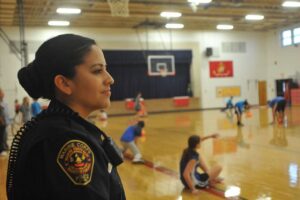
The expansion comes during the “highest ever coverage” of school resource officers (SROs), with one officer in every middle school and at least two in every high school, WSMV 4 noted.
Safety and security ‘at the forefront’
Public, private and charter schools nationwide are re-evaluating safety measures after several high-profile shootings, including the Aug. 27 shooting in Minneapolis killing two children and injuring 17 others.
“Our prayers go out to Annunciation Catholic School: that could [have been] Presbyterian Academy,” said Dr. Rob Brown, head of school at the K-12 private Christian school First Presbyterian Academy (FPA) in South Carolina.
“Safety and security has certainly become more at the forefront of our thinking as school leaders than it was when I started 20-plus years ago. We didn’t have to think about ballistic material on windows or doors.”
Like Tennessee, South Carolina has also been increasing the number of SROs in state schools. Although charter schools can apply for government security grants, the state’s private schools cannot.
“If you’re going to send your child to a private school, some of that money is allocated to their tuition,” said Adam Crisp, COO of several Signal security franchises. “Some of that needs to go towards the security.”
Brown credited donations toward private-school security – including ballistic shields provided through FPA’s Armor Fund – as important contributions toward student safety.
“Grants and funding that would provide for us to have those off-duty deputies on our campus, so that we’re not having to provide the funding ourselves as a private school, would be extremely beneficial,” he said.
“It’s important for us to steward our resources well, to reflect carefully when situations occur, so we can keep our students as safe as possible.”