Nearly 10% of freshmen can’t do middle-school math, university reports
A shocking percentage of California college students don’t grasp middle-school math concepts, one university concluded.
The University of California San Diego reported 12% of its…

A shocking percentage of California college students don’t grasp middle-school math concepts, one university concluded.
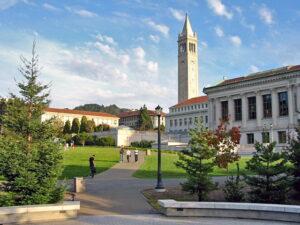
The University of California San Diego reported 12% of its incoming freshmen require remedial math courses, with over 8% needing to be retaught middle or elementary school concepts.
That’s 30 times higher than before the COVID-19 pandemic.
“Between 2020 and 2025, the number of freshmen whose math placement exam results indicate they do not meet middle school standards grew nearly thirtyfold,” the report reads. “This deterioration coincided with the COVID-19 pandemic and its effects on education, the elimination of standardized testing, grade inflation, and the expansion of admissions from under-resourced high schools.”
Meanwhile, language isn’t faring much better than math, with 20% of freshmen (not including international students) failing to meet entry-level writing requirements.
These outcomes are consistent with the K-12 data reported by the California Department of Education (CDE). Less than one-third of 11th graders are proficient in math, and only 57% in language, according to the department.
UC San Diego’s recommendations include:
- Creating a math index to predict students’ likelihood of needing remedial math
- Reassessing math requirements by major
- Required math placement testing by June 1 for all incoming students
Yet, the report authors acknowledge enrolling students who lack basic math and writing skills is a recipe for disaster.
“Admitting large numbers of students who are profoundly underprepared risks harming the very students we hope to support, by setting them up for failure,” the report concludes. “It also puts significant strain on faculty who work to maintain rigorous instructional standards.”
In 2023, UC professors protested the lowering of math standards to include alternative pathways, arguing it wouldn’t prepare students for college.
One physics department said the alternative pathways would “severely curtail” students’ career options. Another said the alternatives may be marketed as friendlier to women and poorer schools but would “offer less preparation.”
The problem isn’t unique to California. National policymakers have recognized a decline in both reading and math since long before the pandemic.
Martin West, vice chair of the National Assessment Governing, told a Senate committee in September that “achievement was already falling before 2019 across all subjects NAEP [National Assessment of Educational Progress] assesses.”
“In math, pandemic-era disruptions accelerated this downward trend,” West explained. “But the story for reading and U.S. history is one of steady deterioration since the early 2010s. There’s no reason to expect that a return to pre-pandemic learning conditions will stop or reverse the declines.”
K-12 shortcomings inevitably lead to unprepared college freshmen.
According to 2024 national data, more than 50% of 12th graders enrolled in a four-year university even though only one-third were proficient in high school math or reading.
Math skills will continue to be a problem even after graduation.
One Florida survey found nearly half of business owners are concerned about the math skills of the next generation of employees, since such skills are necessary for everything from balancing budgets to engineering.
Many employers (41%) also reported seeing a decline in math skills over the last five years.