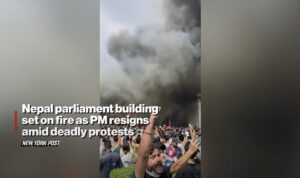
Ousted Bangladesh PM gets death sentence over protest crackdown
Bangladesh’s deposed leader, Sheikh Hasina, was found guilty for “crimes against humanity” and sentenced Monday to death by a domestic court, reported multiple media…
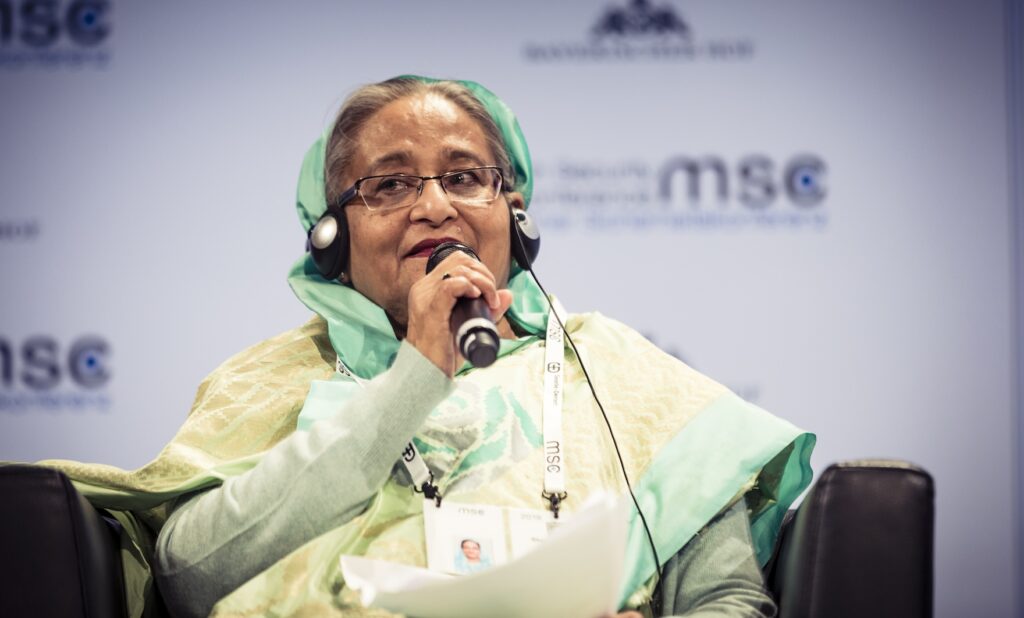
Bangladesh’s deposed leader, Sheikh Hasina, was found guilty for “crimes against humanity” and sentenced Monday to death by a domestic court, reported multiple media outlets.
The longtime prime minister, who first took office in 1996, served for five years, was defeated and then regained the position in 2009 until she was forcibly deposed last year, was tried in absentia and is currently in exile in India.
Last month, Hasina, 78, who still serves as the head of the Awami League, which is likely the broadest political party in Bangladesh, decried the trial, noting she will not return home, predicting a guilty verdict.
“These proceedings are a politically motivated charade,” she told Reuters. “They’ve been brought by kangaroo courts, with guilty verdicts a foregone conclusion. I was mostly denied prior notice or any meaningful opportunity to defend myself.”
Hasina and one of her aides were accused of atrocities related to last year’s student uprising, which started as protest over patronage jobs and political influence, a longtime complaint by all political parties in Bangladesh.
The complaints are similar to those Hasina herself made when she was in opposition after the assassination of her parents, three of her siblings and the family’s household staff by Bangladeshi Army officers in 1975, reports the Associated Press (AP).
As last year’s protests unfolded, she was accused of using excessive force against students.
In a typical confrontation, students hurled bricks and stones as police fired tear gas, rubber bullets and pellets to clear the streets, reported local media.
“There have been plenty of protests during Awami League’s regime over the last 15 years, but nothing as large, long, and violent as this one,” Michael Kugelman, director of the South Asia Institute at the Wilson Center, told the AP.
NBC News estimated the total number of dead from the protests at around 300 at the time Hasina resigned.
But the interim government, supported by the army, now claims the number of fatalities is closer to 800, reported the AP.
The BBC claims the number of protest-related deaths is 1,400.
“We lost control of the situation, but to characterize what happened as a premeditated assault on citizens is simply to misread the facts,” Hasina said Monday in a statement responding to the death sentence.
“I mourn all of the deaths that occurred in July and August of last year, on both sides of the political divide,” she said. “But neither I nor other political leaders ordered the killing of protesters.”
Bangladesh has seen a familiar cycle: mass protests, army intervention, the collapse of the sitting government and the emergence of a military-backed interim authority.
Gen. Waker-uz-Zaman, the current army chief of staff, who helped deploy military forces against the students, later declined to support the Hasina government, but allowed her to leave for India via army transport, reported Reuters.
Waker-uz-Zaman then helped select the interim government.
“Keep faith in the military, we will investigate all the killings and punish the responsible,” he said, according to the AP. “I have ordered that no army and police will indulge in any kind of firing.”
“Now, the students’ duty is to stay calm and help us,” he added.
The International Crimes Tribunal in Bangladesh, which handled the Hasina case for the army, is a domestic court created under a 1973 law to prosecute atrocities from the 1971 Liberation War.
Despite its name, it has no international jurisdiction and is not a UN-backed tribunal or recognized under international treaty.
The court has been criticized by some scholars for violating fair-trial rights under Bangladesh’s constitution.
Police said several homemade bombs went off in Dhaka on Sunday, intensifying tensions as the country awaited the verdict for Hasina.