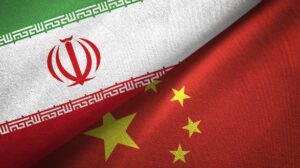
Pakistan’s US-Iran peace gambit shows China’s vulnerability
Pakistan is hosting backdoor U.S.-Iran peace talks this week, confirming a strategic realignment with Washington that is leaving China increasingly isolated.
The shift may be a better measure…

Pakistan is hosting backdoor U.S.-Iran peace talks this week, confirming a strategic realignment with Washington that is leaving China increasingly isolated.
The shift may be a better measure of how the U.S.-Iran conflict is being perceived outside of the media ecosphere in the West.
Last week, The Lion reported that Pakistan’s airstrikes against Taliban positions in Afghanistan were a signal of deepening strategic alignment between Islamabad and Washington.
As Pakistan joins a growing list of countries that seem to have China on its “do not call” list, that signal has apparently been confirmed.
Pakistan’s powerful army chief has been holding direct calls with President Donald Trump to find a resolution to the fighting, reported Bloomberg.
Pakistan even offered to host talks between the U.S. and Iran.
“Subject to concurrence by the U.S. and Iran, Pakistan stands ready and honoured to be the host to facilitate meaningful and conclusive talks for a comprehensive settlement of the ongoing conflict,” said Pakistan’s Prime Minister Shehbaz Sharif.
It was an offer Trump promptly shared on Truth Social, a tacit endorsement that would have been unthinkable 18 months ago when U.S.-Pakistan relations were at a post-Afghanistan low.
Intermediaries had already delivered Trump’s 15-point peace plan to the Iranian government through Pakistan, reported the Associated Press, citing government officials who spoke on the condition of anonymity.
Pakistan has been working to facilitate negotiations between Iran and the U.S. since Pakistani Foreign Minister Ishaq Dar visited Saudi Arabia last week, one analyst told NPR.
The same analyst noted that U.S. envoy Steve Witkoff has a direct connection to Field Marshal Gen. Asim Munir, Pakistan’s army chief.
The back-to-back moves – Pakistan striking Taliban targets in Afghanistan one week and brokering a U.S.-Iran ceasefire framework the next – are likely not coincidental.
Instead, they form the architecture of new strategic relationships taking shape in real time across the globe, with China getting squeezed from every direction.
Trump asked China to delay the Beijing summit by “a month or so,” noted CNBC.
The Paris trade talks, which were supposed to pave the way for that landmark Trump-Xi meeting in China and give Xi some economic certainty, have instead left the Chinese leader holding his hat, with no significant pronouncements.
South Korea’s Prime Minister Kim Min-seok also canceled his planned visit to China this week, citing an urgent need to remain home to manage the widening economic impacts of the Iran conflict.
The Korea Times noted the prime minister simply provided an explanation through diplomatic channels to Xi, hardly highlighting the importance of the economic relationship with China.
Then came news Japan has decided to downgrade its description of its relationship with China from “one of its most important” to “strategic” and “mutually beneficial,” reported Reuters.
The announcement comes just a week after Japanese Prime Minister Sanae Takaichi emerged buoyant after a round of talks in Washington with Trump himself.
China was so outraged by the change that its state media made a not-so-veiled military threat, saying the Japanese action “risks eroding dialogue-based order in Asia.”
That’s three of China’s most important trading relationships – the U.S., Japan and South Korea – putting Beijing on hold in the same week that Pakistan, the key country China has cultivated for decades through Belt and Road investment, stepped forward as Washington’s peace maker in the Middle East.
China’s Iran relationship is at the crux of the shift.
The relationship has failed, not just diplomatically, but militarily and electronically, a variety of experts claim.
“China has shown displeasure with Iran after a report about the poor performance of its most hyped military equipment in ongoing war,” noted one Indian defense analyst. “Beijing had supplied 3 HQ-9B air defense systems to Iran, destroyed by U.S. forces within hours, hurting future Chinese arms exports.”
The administration previously accused Tehran, Beijing, Russia and North Korea of belonging to the “Axis of Autocracy” due to their close economic and military ties.
China serves as Iran’s largest trading partner and a supplier of critical technology supporting Iranian electronic warfare, which has not fared well in the conflict.
That relationship, which Beijing previously viewed as leverage, has now become a liability.
Other countries have noticed the trend.
Turkey and Egypt have also been passing messages between the U.S. and Iran, with the foreign ministers of the three countries holding separate talks with Witkoff, noted Axios.
Beijing is not in that group, even as Trump has urged China to become a partner in securing the Straits of Hormuz, one of the most important energy trade routes for China.
But China is so beholden to a damaged Iran that it can’t even protect its own trade routes to help itself.
Thus, Xi is left watching Pakistan walk straight into the American camp.
And the realignment toward Washington may be a better indicator of how the war is going for the U.S. than anything coming out of the Western foreign policy classes.